2/28/2009

Larger Museums Now Feeling a Financial Impact

The Philadelphia Inquirer is reporting the Philadelphia Museum of ARt plans on cutting staff, reduce the number of future exhibitions, cut salaries and may also raise rates. The reduction in the museum's endowment appears to be the main culprit.

I dont want to get too political here on the AW Blog, but with President Obama recently announced tax increases on earnings above $250,000.00, I can only wonder if some of the charitable donations of the wealthy and upper income levels will soon be scaled back. We have already seen some of that happen with suffering corporations curtailing their charitable activities and support for the cultural arts. According to the portion of the tax plan/budget I have seen, earners in the top brackets (above $250,000.00) will encounter higher progressive rates and stricter limits on itemized reductions by reducing the effects of itemized deductions, including charitable donations, and thus increasing the tax liability. This could also impact the appraisal profession, if less individuals are donating and gifting personal property, there will be fewer appraisals.

According to Philly.com the article states Facing a dramatic downturn in its endowment and waning city support, the Philadelphia Museum of Art is cutting staff, delaying exhibitions, curtailing programs, trimming salaries and — subject to city approval — increasing admission fees.

The cuts will bring the museum’s operating budget down by about $1.7 million to $52 million for the current fiscal year, which ends June 30, and, the museum hopes, will stave off a deficit the following year forecast as high as $5 million.

The museum will eliminate 30 positions — about seven percent of the staff — in all areas, though no curators are being let go. Of those 30 jobs, 16 are layoffs of current personnel, with the remaining positions lost by not filling vacancies.

Senior staff will take salary cuts of between five and 10 percent, said interim CEO Gail M. Harrity yesterday.

Painful as the reductions are, they might not be the last. “If endowment keeps being reduced in value there are going to be further steps taken. We would anticipate further reductions in personnel and operating,” said chairman H.F. “Gerry” Lenfest.

Along those same lines the Atlanta Journal Constitution is reporting that Atlanta's High Museum will cut staff and initiate pay cuts and the Baltimore Sun is reporting the Walters Museum is cutting staff and seeking ways to reduce spending.

To read the article on the Philadelphia Museum click HERE, to read on Atlanta's High Museum click HERE, for more on the Walters in Baltimore, click HERE.

2/27/2009

Excerpt from the Journal of Advanced Appraisal Studies

The following is an excerpt from an article by Christine Guernsey, ISA AM on marketing an appraisal practice. Christine has over 20 years of experience in marketing and promoting fine art. Her article is entitled Creating a Marketing Plan: Mapping Your Way to Future Appraisal Business Success.

An excerpt from the article:

A good solution for an alternative to traditional marketing plans is a Marketing Map – a fiscal year planned route that gets your business “from here to there” in terms of opportunities and successes, without getting your business sidetracked and lost. A marketing map is strategic like a marketing plan. Just as you would map out a road trip before you travel, you must also “map out” your plans for conducting future business. The map helps the appraiser to understand:
  • What your business is all about
  • Who your current customers and potential customers are.
  • How you reach your potential customers.
  • How you close the deal with your potential customers.
  • How your potential customers become repeat customers.
With a properly executed marketing map along with strategies assigned to particular months, weeks and days, an elaborate “to do list” is formed and guides the appraiser systematically to successful end results. When this marketing map is kept on a computer (in a word processing program), the map can include results as tasks are completed. This allows the appraiser to analyze whether the task was successful and whether or not it should be repeated or tweaked.

Some appraisers would say a marketing map is just too much work. They are already too busy to be bothered, too short staffed and need to just “go out and do it”. A savvy marketer would argue that these appraisers who are “too busy” are in actuality just spinning their wheels. The time spent creating a marketing map, allows an appraiser to systematically bring in more business in a much more organized fashion. It keeps an appraiser from being overwhelmed and ensures end of fiscal year success.

The major components of a marketing map are:
  • Mission Statement
  • Positioning Decisions
  • Marketing Objectives, Strategies, and Tactics
  • Implementation
  • Goals versus Results
A marketing map is usually kept in a simple outline form either on a computer or a three-ring binder and referred to often. It is a working document, meaning it is on-going and changeable in nature as will be discussed later.

------

The 2009 edition of the Journal will soon be available for purchase at www.appraisaljournal.org , the cost is $55.00 and proceeds support the educational initiatives of the Foundation for Appraisal Education. The Journal consists of 20 articles with nearly 350 pages of appraisal related content. It is fast becoming the publication of record for the personal property appraisal profession. Wendell Garrett of the Magazine Antiques called the Journal of Advanced Appraisal Studies 2008 edition "Sound in scholarship, lively in presentation, sharp in focus. These articles bring to life the accuracy, interest and importance of judging and evaluating the practice of appraising. A must have for anyone in the appraisal field."

Sotheby's Reports 4th Quarter Loss

Forbes and the Associated Press are reporting that Sotheby's has posted an $8.5 million loss, or 13 cents per share loss for the 4th quarter. Last year, the fourth quarter was strong for Sotheby's with $102.4 million in earnings and $1.55 per share. Much of the blame for the 4th quarter loss are lot guarantees and the turbulent economy.

Most of the economic issues for many business started in the 4th quarter of 2008, although there were signs of problems early on. For the year, earnings at Sotheby's totaled $28.3 million, or 43 cents per share, compared to $213.1 million, or $3.25 per share for 2007. 2008 revenue dropped from $917.7 million in 2007 to $691.6 million in 2008. As can be see from past earnings , the 4th quarter, because of the large moder, impressionist and contemporary sales, is an important and typicall a strong quarter for the international auction house.

The report states For the full fiscal year, earnings fell 87 percent to $28.3 million, or 43 cents per share, from $213.1 million, or $3.25 per share, a year ago. Full-year revenue dropped 25 percent to $691.6 million, from $917.7 million in 2007.

In 2009, Sotheby's expects to book about $9 million in additional restructuring charges. When it is completed in the first quarter of 2010, Sotheby's expects the plan to achieve annual cost savings of roughly $21 million for costs related to salaries and facilities.

In combination with other cost-cutting efforts, Sotheby's expects to save about $100 million in 2009 compared with its 2008 results.


To read the Forbes posting click HERE.


2/26/2009

Sports Memorabilia Showing Resistance to Economic Pressures

Forbes.com recently published an article on the current strength of the sports memorabilia market. It notes that while many other financial investment have been showing sign weakness due to the current economic situation, quality sports memorabilia has resisted much of the recent slide. But as you get deeper into the Frobes.com article, you start getting deja vu all over again (how about that, a Yogi Berra quote in a post on sports memorabilia).

The article reports that high quality and rare items are holding steady and may be considered a solid investment, while the more common items have seen prices fall. Although I am not an expert in sports memorabilia valuation, it really does not seem all that different than many of the other fine and decorative arts categories. Quality and rarity are still going to bring some good prices, while the more readily available items are showing signs of weakness and sliding values. The article points out that many current player items are quickly losing value, while other areas of retired players have better potential of holding value during the current economic downturn. Some of these items are very expensive and valuable, while many are more reasonably priced and available. In effect, having few barriers to entry, so long as the sports memorabilia investors knows what they are doing or has advice from an expert. This is so important, especially for appraisers, as there are so many forgeries and fakes being circulated throughout the market and being held within private collections.

The article states Even as a rough economy has shot a soft underbelly into parts of memorabilia world, the steady flow of quality pieces making their way into the market has most prices standing firm. "Overall, prices are holding their own or appreciating steadily," says Leila Dunbar, a former Sotheby's (nyse: BID - news - people ) senior vice president who now runs her own appraisal and consulting business for sports and entertainment collectibles. No one is saying that about any other asset class right now.

The article continues While second-tier items with a glut of volume on the market (think Derek Jeter) aren't holding up under the volatile economy, the relatively rare stuff has a mostly recession-proof history. Last fall, in the midst of the banking upheaval, a Honus Wagner baseball card sold for $790,000, while a cap signed by the 1927 Yankees went for $94,000.

Buyers know that chances to add these types of items to their collections don't come along often, so they're ready to spend at auction time. It also helps that a signed piece of sports gear in good condition is a pure asset, with no underlying profit and loss statement to swing its value.

To read the Forbes.com article, click HERE.

2/25/2009

Results: Christie's YSL Sale Totals $478.65 Million

The final session has ended and the Yves St Laurent sale has totaled an incredible $478.65 million dollars with buyers premium. Earlier estimates for the full sale were around the $380 million area. The YSL sale was held over the past three days with several different sessions. One for Impressionist and Modern, one for Old Master and 19th Century paintings, one for silver, one for 20th century decorative arts, and one for sculpture and one for oriental art. The final total and sales volume is rather amazing. The sale through rates for all sessions were excellent, as were many values being above the estimate ranges. Overall the sale had 689 lots and only 31 failed to sell, for a sell through rate of 96% for the full sale.

The final figures break down as follows:

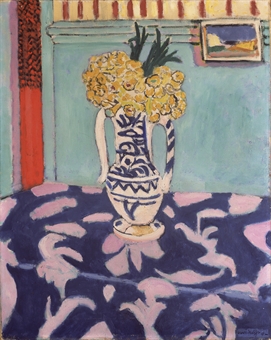
  • Session I, Impressionist and Modern Art, realizing $266 million with 7 world records for art at auction. The top lot being a 1911 Henri Matisse selling at $46.4 million, an auction record.
  • Session II, Old Master and 19th Century Paintings and Drawings, with 24 lots, selling 18 for a total of $28.76 million including buyer premiums
  • Session III, was the silver session, with 111 lots, all selling. The sale total was $25.73 million
  • Session IV was 20th Century decorative arts totaling $76.5 million with world record for most expensive work of 20th Century decorative arts at auction. The session saw 12 world records set for sales at auction 150 lots were offered in this session with 143 selling, a 95% sell through rate.
  • Session V is sculpture, final details of this session are still pending but appears to be over $28 million
  • Session VI Asian Objects totaled $54.52 million, wtih 64 lots and only 1 not selling. The high estimate for the session was $31.54 million. The session included with two Qing bronze animal heads bringing $40 million (these two lots alone topping the high estimate the session by nearly $8.5 million). The Chinese government tried to stop the sale of these two lots through the French courts by failed. They have also threatened to sue the purchasers of the Qing bronze animal heads. That did not stop the bidding, as the estimates were $10 million range for each head.
What was good to see in this sale was the strong prices for items across the various categories selling. This sale had many excellent items with strong provenance selling at or above the pre sale estimates. This held true for the Modern and Impressionist art, the Old Masters, silver with 111 of 111 lots selling, 20th century decorative arts was very strong as well as the oriental items.

Will this sale kick start other sales, in my opinion, probably not due to the unusually high quality of the items, provenance, size and hype associated with this sale. Many new auction records have been set at this sale, and the sale has to be considered a strong success, especially given the current state of the economy. Even in good times, I am not sure if the sale could have performed better.

That being said, lets take the good news of this sale and enjoy it for a while.

Art Loans and Art as Collateral

Allen Salkin of the NY Times recently published a story on the art loan business entitled That Old Master? It's at the Pawnshop. We have posted on this specialty segment of the financial sector in the past on the AW Blog, with some reactions to the practice being more positive than others. Some are bank divisions using art and collectibles as collateral, while others are more in the mode of pawn brokers, actually taking possession of the property before lending.

To review some of the previous AW Blog posts on art loans follow the links.
  • Citi Banks Art lending click HERE
  • Banks Tighten Art Loan Credit click HERE
  • On Fine Art Loans, click HERE
  • Fine Art as Loan collateral, click HERE

As economic issues impact the availability of more standard lending practices and collateral (such as real estate which has typically seen a loss in value) more and more collectors with large equity stakes in fine art and who have cash flow issues are looking to their collections as an options to monetize. According to the article, in the current economic climate, the art loan business is showing some very strong sings of growth.

The article is very interesting, and as appraisers, especially those in and around large metropolitan banking and financial centers may wish to start cultivating business with some of these specialty lenders. Although the article does not state specifically what the loan process is, I would think an appraisal would be helpful in determining a value and loan to value ratio for the art pledged as collateral.

Salkin states Art Capital’s headquarters in the former Sotheby’s building on Madison Avenue looks at first glance like an art gallery. Two Warhols, a pair of Rubens portraits of Roman emperors and a pink nude by the contemporary Mexican painter Victor Rodriguez hang on the cool white walls. A sculpture of a faun by Rembrandt Bugatti sits on a windowsill in a conference room where transactions are discussed.

But it would be more accurate to describe the airy space as something far less genteel: a pawnshop.

Art Capital issues loans of $500,000 or more at interest rates from 6 percent to 16 percent. Fail to pay and you lose your Rubens; several of the works on display in Art Capital’s office on Madison became subject to sale after their owners defaulted.

The company expects to make about $120 million in art-related loans in 2009, up from $80 million in 2008. At a Manhattan-based competitor, Art Finance Partners, “we are up 40 percent in originations in the last six months,” said Meghan Carleton, a partner.

ArtLoan (see above link On Fine Art Loans), a similar company in San Francisco, is actually regulated by California’s pawn laws. It opened in 2004 and has seen “exponential” growth in the last year even though it charges interest rates of 18 percent to 24 percent, said Ray Parker Gaylord, an owner.

To read the full NY Times article, click HERE.

2/24/2009

Results: Christie's YSL Sale Day II

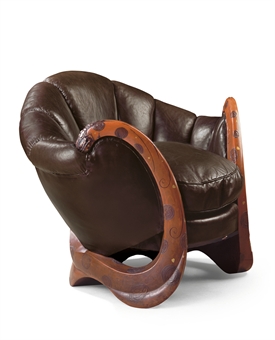
The records keep falling at the YSL in Paris. Today, the hammer fell at $28.1 million for a dragon chair by French designer Eileen Gray. This was the highest price paid at auction for a 20th century design piece of furniture.

Yesterday the sale totaled $262 million with buyer premiums for 61 lots of art, with 59 selling, while setting 7 auction price records as well. See yesterdays post on the auction for more information.

The silver component of the sale brought in $25.7 million including buyer premiums with all 111 lots selling, all of the top ten selling for amounts far greater than the high estimates. The Old Master and 19th Century session offered 24 lots with 18 selling, totaling $28.76 million including buyer premiums. Mos of the top ten sellers in this session sold within or above the estimate ranges. With the conclusion of these two additional sessions the sale so far has raised $316.521 million including buyers premium. This figure does not include the final two sessions, with part two of the decorative session and the final session of sculpture selling on Wed the 25th.

Bloomberg reports The leather-upholstered armchair by Irish-born French designer Eileen Gray, dating from about 1920 and featuring lacquered wood arms in the form of dragons, had been expected to fetch between 2 million and 3 million euros, said Christie’s. The chair was bought by a bidder in the room whose name was not immediately available. The underbidder was competing on the telephone.

University Museums

With all of the current news and publicity surrounding Brandies University and the possible closing or re purposing of the Rose Art Museum, Holland Cotter writes an interesting article in the NY Times. Cotter argues that once an academic institutions deaccessions a collection, it will never again gain back the culture or stature that it lost for purely financial gain. He also mentions that once the funds are spent, they are gone, as opposed to the enduring nature of academic museums. Cotter also touches on academic museums having different missions, with small shows as opposed to the larger exhibitions of some of the larger and more affluent institutions.

Cotter states All the shows are fairly small. All are, in different ways, beautiful. All are closely researched studies on fascinating subjects we know too little about. Yet each is just a shade too specialized or unglamorous or experimental to find a home in our public art institutions. If it weren’t for academic museums, these shows wouldn’t happen. And that would be a real loss. University museums are unlike other museums. They are not intended to be powerhouse displays of masterworks, though some have their share of these. They are, before all else, teaching instruments intended for hands-on use by students and scholars. As such, they often house objects that are considered of second- and third-tier value at auction but that fill out a deep and detailed account of cultural history.

The article is a very interesting and good read, with a sound perspective on academic museums. Click HERE to read.

2/23/2009

Results: Christie's YSL Sale Session I

The first session of the Yves St Laurent sale is history, and the results are impressive. The first session realized a total of $262 million with premiums, with three more sales session to come over the next few days. Sales records were broken for individual paintings by Matiesse, Mondrian and Brancusi. A Picasso from his cubist period, carrying one of the higher sales estimates of $31.9 million in the sale failed to sell. Of the 61 lots offered only two lots failed to sell, for nearly a 97% buy through rate.

If you have not yet taken the time to review the sale of fine and decorative arts, I would highly recommend doing so. The collection is not only amazing as to its quality, but also to its size and depth.The first session which contained 61 lots, will be followed by three additional sessions with over 600 additional lots to still cross the podium. The first session with its 61 lots had a pre sale estimate of approximately $164 million, with the realized total with premiums going nearly $100 million over the estimate even without the results from of the bought in Picasso. I will post more results and more in depth analysis on the AW Blog as the information becomes available.

The interest and press coverage of the sale is growing greatly, with many mainstream newspapers picking up the story.

Scott Reyburn of Bloomberg reports that Collectors are watching prices closely at a time when the London-based auction house and its rival Sotheby’s have been cutting jobs. The proportion of lots selling at some auctions -- and prices of works -- have dropped in the economic slump.

“I can now phone up my clients and say there is nothing wrong with the market,” Paolo Vedovi, director of Brussels- based Galerie Vedovi, said in an interview. “I don’t know whether it will affect us as dealers.”

Reyburn continues The first session of the auction in the cast-iron-and-glass space of the Grand Palais, comprising 61 works of Impressionist and modern art, had a presale estimate of at least 128.9 million euros.

The record for a single collection at auction, from 1997, was previously $206.5 million with fees, set with a Christie’s, New York, sale of modern artworks owned by the Manhattan collectors Victor and Sally Ganz.

The BBC also reported on the sale, stating Ahead of the sale, some of the finest works were taken on tour to potential buyers in Brussels, London and New York. Experts hope the sale will give the depressed art market a much-needed boost. A handful of record sales have masked a barren period in the auction world, with prices tumbling and works from some renowned artists failing to find buyers at all.

To read the Bloomberg article click HERE to read the BBC article, click HERE. For an LA Times article, click HERE.

Update: Park West Gallery to Suspend Sales of Dali Prints for Cruise Auctions

Mike Martindale of the Detroit Free Press is reporting that Park West Gallery of Southfield Michigan, the large supplier of art sold on cruise ships, will suspend print sales by Salvatore Dali at cruise auctions. According to the article Park West, currently involved in litigation with the Fine Art Registry (FAR) of Phoenix Arizona is accusing FAR of "cyber terrorism" based upon allegations about Park West posted on the FAR website. Park West currently has a lawsuit filed against FAR in Michigan for defamation, while a similar filing by Park West against FAR was recently dismissed by a Florida judge.

Martindale reports In a statement Friday, Robin Danek, Park West's director of marketing communications, said, "Park West has temporarily suspended restocking of some Salvador Dali works at our cruise auctions. The decision was based on current market conditions. Like any company that sells products, Park West regularly makes inventory decisions based on sales data, market conditions and other business factors."

Matindale continues In December, 10 art collectors joined a lawsuit filed in an Oakland Circuit Court alleging Park West sold them nearly $600,000 in artworks containing fake signatures, including those of Dali. Park West countersued. The matters are all assigned to Circuit Court Judge Nanci Grant.

Appraisers should find the suspension statement by the Park West Gallery director of marketing interesting. He states the reason for the suspension of Dali sales was based on current market conditions. Many appraiser encounter these conditions as they research comparable property in general, while many of our clients have now discovered the current negative effects of market conditions. The Park West explanation appears lacking in specifics and details. I would have liked to have seen a more robust rationale, such as why only Dali prints if the decision is based upon market conditions. As appraisers we know and have not only seen but documented the impact of current market conditions and the troublesome economy within many categories of the fine and decorative arts.

As I have mentioned before on the AW blog, as appraisers we often encounter art purchased on cruise ships. As the lawsuits continue, and with an eventual verdict or an eventual settlement of the lawsuits between Fine Art Registry and Park West appraisers will almost certainly benefit when evaluating and valuing this category of art.

To read the full Detroit News article, click HERE. Or for more information, you can visit the websites of Park West Gallery by clicking HERE or the Fine Art Registry by clicking HERE.

Buyers of Antiques Outnumbered by Sellers?

The International Herald Tribune just ran a very interesting article that all appraisers should read. It is entitled Touch Market for Sellers of Antiques and Heirlooms. The short article touches on the dropping value of antiques and collectibles in the current economic climate. Although the article really offers nothing new, and nothing that we have not already posted about on the AW Blog, it does in fact re-enforce the current economic climate and state of the middle to lower antique and collectibles market.

I know from personal experience many of the phone calls I am getting are from potential clients who really dont want or need an appraisal, but are looking for ways of disposing of property. It is difficult in this market, and sales values and expectations need to be explained in detail to potential clients.

The IHT article states Across the U.S., collectibles dealers and antiques appraisers are delivering bad news, and feeling pain themselves. The reason is simple: potential buyers are outnumbered by desperate sellers.

The article continues Families trying to unload keepsakes for cash are learning that an economy at risk of falling into a deflationary period is taking a heavy toll on the value of these assets, just as it is for traditional investments such as stocks and homes.

Pam Danziger, who studies consumer behavior as president of Unity Marketing, said people who start collections often make a mistake by considering them an investment. And that leads to disappointment when they try to sell them to people who don't share their emotional ties to the items.

"Even if things are 100 years old, it doesn't necessarily mean they're rare or valuable to anyone else," she said.

While experts generally agree that demand remains high and prices good for very rare and top-of-the-line items, the market for mid-range and lower-quality collectibles is down sharply.

"The majority of items have a value under $10,000, and that's the material that's been hit the hardest," said Mike Gutierrez, a sports memorabilia expert for Heritage Auctions in Dallas.

To read the full article, click HERE.

2/22/2009

ADAA - Art Show

Katya Kazakina of Bloomberg is reporting on the Art Dealers Association of Americas Art Show in New York City. The 21st annual show is considered by many as another barometer of the art market. This year, the showin the Park Avenue Armory with 70 dealers is without lead sponsor Lehman Brothers which recently filed for bankruptcy and the attitude compared to years past is muted.

Kazakina states the show’s organizer, the Art Dealers Association of America, said it’s expecting attendance to remain as strong as last year despite a dismal global economy and a plummeting art market.

“We all know the days of wild sales when booths were sold out within 20 minutes -- that era is over,” said Linda Blumberg, the association’s executive director, adding that “the first- rate work and smaller, more intimate atmosphere of the fair will accrue to our benefit.”

Customer Appeal As collectors retreat and many galleries have reduced staff or closed outright, the ADAA has encouraged participants to appeal to customers in a more creative way.

“Ten, 15 years ago, people would have had their inventory on the walls,” said Roland Augustine, president of the ADAA. “I’ve encouraged member-dealers to think more about the aesthetics and the curatorial approach. I think it serves the artist and the gallery better.”

As a result, 24 dealers are focusing on the work of a single artist, up from 18 last year.

To read the full Bloomberg article on the ADAA Art Show click HERE. ArtInfo also ran a good preview on the Art Show, click HERE to read.

2/21/2009

Results: Swann Galleries African American Fine Art

The other day I had lunch with fellow appraiser and Journal of Advanced Appraisal Studies -2009 contributor Alvah Beander. Alvah will also be speaking at the ISA Annual Conference in Charleston, SC on the the cultural art of the Gullah People. Alvah mentioned the upcoming African American specialty sale at Swann Galleries, scheduled for February 17th. I took a look at the sale catalog on the website and viewed the results. Overall the results were mixed, which is pretty common for auctions and sales in the art market today.

The total pre sale estimate ranged from $2-2.9 million for the 169 lots, of which 109 lots sold, representing a 64% sales rate. Acceptable in today's market, but not strong showing either. The total sale with buyers premium totaled $1.27 million. When given the number of bought in lots, it seems the lots that did sell, sold well. The top lot was a charcoal and crayon by Charles White's Move on Up a Little Higher (see image), which had a pre sale estimate of $200,000.00 - $250,000.00 and sold for $228,000.00 with buyers premium.

From the Swann Galleries website Swann launched a new department devoted to African-American Fine Art in February 2007. Today, we are the only major auction house to conduct regular sales of this material. At each African-American Fine Art auction benchmarks have been set for works by important and lesser-known artists.

African American art is another category of fine and decorative art that is growing in interest to collectors and dealers, while the values are showing positive signs of growth. As appraisers we need to be familiar with the market makers as well as those who specialize in the sale, brokering and appraising. To visit Swann Galleries click HERE.

2/20/2009

Mei Moses Updates Website


For some reason the Mei Moses post of earlier today did not post properly. Here is a repost of the article and I have deleted the original post.

Beautiful Asset Adviosrs - The Mei Moses Art Index has upgraded their website. The site is now a more intuitive and has added features for premium users.

According to the email sent to subscribers on the new web design Art as an Asset states The new design makes more information available from the home page. This will facilitate, for the casual user, access to some of the research and opinions we have developed over our years of studying the art market. For our more serious premium users we announce several new services. The first is our commitment to publishing in, early April, July and October, timely tracking reports on the progress of the art market to date. The second is a service that we think is unique in the field, - our new artist returns service. We will publish annually the relative return performance of the leading 150 artists, by number of repeat sale pairs, in our database. Since we use an excess returns methodology the returns between artists will be comparable. We think you will be surprised by some of the result. In addition we have updated our "Mark to Market" valuation methodology to allow for the inclusion of semi-annual updating using our all art index or the use of a three year moving average for each of our annual indexes. The former serves clients who require a more immediate up to the moment valuation while the latter serves clients who are interested in a more long- term, smoothed valuation.

The email also noted that after five years of gains, the Mei Moses All Art Index declined by 4.5% in 2008. Compare that with a 37% drop in the S&Ps 500, and quality art was not a bad investment in 2008.The site is an excellent resource for art research and tracking market values and trends for post war, impressionist, modern, old master, and Latin art categories. The site has many excellent tools for the appraiser. Advanced features are on a subscription basis.

Creators of the index and site Jianping Mei and Michael Moses also contributed an article to the 2009 edition of the Journal of Advanced Appraisal Studies (shameless plug) entitled Market Based Art Valuations (look for an excerpt on the AW Blog soon).

To visit the Mei Moses Art Index site, click HERE.

Antique Collecting Magazine - Antique Furniture Index, 2008

John Andrews of Antique Collecting Magazine recently published his annual Antique Furniture Index for 2008. According the abstract published on line, the ACC index has fallen by 1 point in 2008. The expectations after 2007 were hopeful, but although 2008 saw some high prices and the high end of the market, the middle market still suffered. According to Andrews the breakdown saw greater decreases in Victorian, Regnecy and Country indices. Oak and walnut furntirue saw slight increase while Mahogany was about even.Andrew's categorizes 2008 antique furntiue sales as "lack luster" but far from devestating. Given what I have been witnessing in US sale as well as some of the recent RICS data, I would have expected the index to have fallen more than the 1 point

Andrews discussess how much of the results and sales are coming from auction prices, and how it is easier to compile price indexs, but the downside being the quality and authenticity of the property may be in question and therfore the prices not as realistic. A problem appraiser typically have to deal with when finding and using comparable property. It might look the same, but how much "work" has been done on the item, or has it been cataloged improperly?

Andrew's states The Index's constituent pieces, although still not top of the scale, are starting to look increasingly like those now collected by the rich rather than the middle of the 'food chain' once prevailing, where we were all comfortable. By far the largest number of antique furniture trans-actions takes place at auction, nowadays with a significant retail element. It is twenty years since Christopher Weston of the auctioneers Phillips claimed 'We are the retailers now' even though the trade still constitutes a major element in their business. It is correct for the Index to reflect this weight of information in addition to the others. The relatively recent availability of millions of auction prices on the Internet is undoubtedly an additional blessing to our collations, but the raw data available needs to be viewed with caution. Very often the initial impression given on tapping into Internet auction price records is that of a huge catalogue of low-priced or unsold items with jaw-dropping bargains flowing through the rooms, indicating a massive drop in antique furniture prices.

To read the excerpt of the Andrews article click HERE.

2/19/2009

Excerpt from the Journal of Advanced Appraisal Studies

As I mentioned in a post a week or two ago, the 2009 edition of the annual Journal of Advanced Appraisal Studies is nearing publication. Click HERE to read that post which also has a list of the articles and contributors. I indicated I would soon start to post some excerpts from the Journal on the AW Blog. The Journal of Advanced Appraisal Studies will be available in early March for online ordering at www.appraisaljournal.org. The 2009 edition of the Journal contains article contribution from many ASA, ISA, AAA and NAA appraisers as well as independent appraisers and conservators, educators, and auction house specialists. Proceeds of the Journal support the non profit educational initiatives and appraisal scholarship programs from the Foundation for Appraisal Education.

The following is an excerpt from the article contributed by Graham Ospreay, a qualified forensic document examiner and forgery analyst. The article is entitled Issues in Identification and the Authentication of Artist's Signatures.

First, consideration is given to the type of forgery being presented. Is it the complete fabrication and construction of an object in all its parts and wears or is it a matter of alteration by means of additions or deletions?

Second, the complexity and the cost of the material to be worked must be considered. If the forger is to completely replicate or create anew, an object must by its components or function be unique as in one or have something in common with many, while adhering to a particular genre, movement or moment in time. Then the imitator must possess a much deeper understanding of craftsmanship, artistic technique and material technical knowledge.

Third, is the objective of the forger in making the counterfeit in the first place. There has to be an ends to the means. Will it be a smaller profit gained through the fabrication of an unimportant object, entered into a poorly scrutinized and mostly uncontrolled marketplace? Or will it be for maximum profit through the fabrication of a more important object, employing the highest level of skill and entered into a higher, more critically scrutinized and controlled environment?

The second and third factors are the core derivatives spawned from the forger’s decision made in the first. And with either, the art, artifact and collectibles world, despite striking advances in the detection of deception and learned research, still finds itself hard pressed to reduce the proliferation of rudimentary forgeries into the marketplace. This is not to be critical, but to be served as notice that there are limitations when standard historical or stylistic approaches are solely taken without the benefit of sound scientific detective work. Attempts to answer authenticity questions by applying any one without the other two, will more often than not, prove to be inconclusive or at its worse remain as deceptive.

In their assessment of the above, the forger will give foremost consideration towards the level of inspection that the object will receive once it leaves their care and control. At the less rigorous end or first line of inspection, we encounter the basic skills of the researcher or examiner. This will entail the employment of the fundamental human senses, coupled with the knowledge and experience of the individual assigned to give review. They are only limited by their immediate capabilities and skills in their objective of providing first impressions.

At the mid-level or second line of inspection, we begin to see the implementation of basic industry related equipment that will assist in a closer survey of the object at hand. This may include the use of such tools as: handheld magnifiers, direct or indirect illumination, ultraviolet examination, measuring instruments and photographic or digital capture devices, etc. Second level of inspection is limited by the degree of the examiner’s knowledge, permitted time restraints, availability and functionality of in-house or field equipment and by the restricted reach of such apparatus within the boundaries of primary surface characteristics.

The most severe level of inspection a forger’s handiwork could be subjected to is that of third line inspection. At this level the full capabilities of trained examiners and researchers are brought together in a formal laboratory setting and the object in question is exposed to the rigors of controlled testing involving strict methods of scientific analysis and protocols. Such forensic examination may involve analysis such as detailed microscopic and or scanning electron microscopy examinations, spectral analysis, infrared filtration, chemical analysis, material and property analysis, (organic and inorganic), etc., or other tests such as those which are available through the nuclear sciences, including: neutron activation analysis, proton-induced x-ray emission, accelerator mass spectrometry, x-ray fluorescence and the like.

The Art and Crime Gazette

Over the past few months I have posted on the AW Blog about the increased interest in Art Crime educational programs by not only appraiser, but law enforcement officials, museum experts and collectors. The AW posts have included information about an update of the IFAR website (click HERE to read). Back in November I posted about a masters program from the Association for Research into Crimes Against Art in Italy (ARCA, click HERE to read), and later on a report that Scotland Yard was recruiting museum specialists to act as volunteer art constables (click HERE to read). Given the high dollar figures involved with international art crime and fraud, it is not surprising that more and more programs are appearing and interest is being paid to the various forms and levels of art crime.

Fellow appraiser Stephen Sweeting ASA, an appraiser from Canada recently sent me information on the Art Crime Gazette, which is a companion site fora graduate-level course on Art and Crime at Athabasca University. Stephen is involved in the program at the Athabasca University and recommended the site. Stephen states The man behind the website, who is the Prof for the course -- is a criminal clinical psychologist who has worked in both the States and Canada. His interdisciplinary perspective on the topic is unique and I think any personal property appraiser will find the site to be hugely interesting.

The Art and Crime Gazette contains information on art theft, fakes, frauds and forgeries, vandalism, art as a crime, and artists as criminals. As appraiser we always have to be on guard to to detect fakes and frauds. Additionally we certainly do not wish to inadvertently perpetuate any false or fraudulently fabricated pieces with a legitimate appraisal. Sites like the Art Crime Gazette, IFAR, and the FBI Art theft program are growing on the Internet to battle art theft. I actually had a painting stolen from my shop which was later recovered by the FBI (who also had the National Gallery analyze it), to read about the process and that post click HERE.

To visit the Art and Crime Gazette site, click HERE. As appraisers, it is worth the time to become familiar with these types of sites.

2/18/2009

Update: Park West Gallery

The Detroit News is reporting a Florida Judge has thrown out a defamation claim by Park West. Park West had filed defamation suits in Florida and Michigan against the Phoenix based Art Registry which supposedly made claims about the authenticity and value of the art sold by Park West and therefore impacted the business and sales of Park West.

The court ruled that defamation only took place against the main gallery in Southfield Michigan, and therefore through out the Florida case. The Michigan suit continues against Art Registry. It will certainly be interesting from an appraisers point of view if the case actually gets to trial, taking into account public statements on the value and authenticity of the art and prints sold by Park West.

The Detroit News states The January lawsuits developed after several art collectors filed a joint lawsuit in Oakland County Circuit Court in December accusing Park West of selling nearly $600,000 in artwork with fake signatures of artists such as Salvador Dali.

Albert Scaglione, CEO and founder of Park West, has said that after his gallery declined a business offer from Fine Art in 2007 the company started making attacks on its Web site against the gallery -- prompting Michigan residents to believe they purchased fraudulent artwork. As a result the gallery countersued, saying defamatory statements were made.

Theresa Franks, CEO of Fine Art Registry, is pleased with the outcome in Florida.

"I'm very excited. It's a huge win for us. I believe the case in Michigan will meet with the very same fate," Franks said Monday.

Farmington Hills attorney Lawrence C. Atorthy, who represents Fine Art, called the case "smoke and mirrors" designed "merely to stifle legitimate scrutiny of (Park West's) business practices."

To read the Detroit New article, click HERE.

Highlights of Upcoming Yves St Laurent Sale at Christies

As the auction and collecting world waits for the upcoming Paris sale of the Yves St Laurent sale at Christies, there are many items which will draw and attract interest from appraisers. Many of the items in the sale are of exceptional quality and with excellent provenance. The sale is scheduled for February 23rd.

Christie's has an online catalog as well as file on the "highlights" of the sale. The highlights include modern art (Picasso, Matisse, Mondrian, 20th century decorative arts including a Eileen Gray (1878-1976) Dragon armchair, circa 1920-1922 (see image, estimated at $2.5 - $3.8 million), European furniture and decorative arts such as a suite of 18 Italian chairs, Old Master paintings and drawings, sculptures and Renaissance works of art, silver, and Asian art.

It is a sale many in the world of the fine and decorative arts have been waiting for. The sale is large and has property that is of interest to a wide group of collectors. Given the sheer size of the sale of nearly 700 lots, the quality, provenance and connection to the great fashion designer, it should be interesting to watch the sale, and determine if the sale is a success (many believe it will be, with estimates in the range of $380 million), and if the hammer prices represent value or are premium because of the status and hype of the sale or if current market conditions will have an effect.

To view the highlights of the sale click HERE

2/17/2009

Sotheby's Reduces Scope of Hong Kong Asian Sales

Reuters is reporting that Sotheby's spring Hong Kong Asian specialty sale will be scaled back in size and scope. The expected sales are around $77 million this year compared to $228.3 million for last year. As has been the case with most specialty sales this year, and fitting the strategy for the current economic conditions, Sothbey's plan is to sell fewer items, but of higher quality.

The article states Despite such troubling signs, Sotheby's said its Hong Kong sales would be of a condensed but high quality.

"We have put together this well-edited auction series guided by collectors' demand for quality, rarity and immaculate provenance," said Kevin Ching, chief executive officer for Sotheby's in Asia.

"All works have been priced to reflect the current market condition," he added in a statement.

The Reuters article continues Over 1,700 objects will be hammered off at Sotheby's upcoming Asia sales including Chinese classical and contemporary paintings, imperial ceramics, jewelry and watches.

The sale will include Sotheby's first major wine auction in Hong Kong which is positioning itself as a wine hub, with $3 million of fine vintages expected to be auctioned off.

Other highlights include a painting of "Mount Jiuhua" by Chinese master Li Keran that could fetch up to $500,000, and a pair of "Famille-rose" mille-fleur bowls from the Qing dynasty Yongzheng period, that could be hammered off for $2.6 million.

Click HERE to read.

Review of the London Contemporary Art Sales

Fellow appraiser Denny Levy sent me this Chelsea Art Galleries and contemporary internet art portal press release of very good analysis of the recent contemporary art sales in London. The press release not only has analysis, but some excellent graphs and statistics comparing estimates to sales, top lot reviews, and comparison to the November sales. The review is very thorough and includes information on Sotheby's, Christie's, Phillips and both the day and evening sales with sales total and number of lots. I tried to paste the compete release with graphics into the AW Blog, but there would be some real bad formatting issues. To read the full press release and view the graphs, click HERE.


The Chelsea Press Release states of the sales for the contemporary art auctions in London, February 5-13th, totaled £36 million (£43 million including premium), 26% below the low end estimate. The auctions brought less than 1/5th of last year's sales total of £207 million, strongly reflecting the current financial climate. Not all auction houses were affected equally by the downturn: While Sotheby's and Phillips De Pury's evening auctions reached 18% of last year's sales, Christie's evening auction only reached 11% of last year's sales after failing to find buyers for its two highest estimated lots. The day auctions faired slightly better, with Phillips De Pury at 36% of last years results, Sotheby's at 29%, and Christie's at 19%. The very high end of the market has been hit the hardest, as the lack of sellers and buyers has left the auction houses without the super star lots that traditionally make up half of their auction sales. In February 2008, the 15 most valuable lots (of 778 sold lots) contributed more than 50% of the sales total. This month, not only were the high-end lots much less valuable, but 4 of the 7 highest estimated lots failed to sell. In 2008, the average value for the top ten winning bids was £9.4 million, this year it was £1.4 million.

2/16/2009

Financial Accountablity is Needed in the Art Markets

Elisabeth Eves of Forbes recently published a good article on the current plight of the art and publishing markets. She makes some very interesting comments which are relevant to appraisers. Eves mentions artistic hype as well as the subjectivity of predicting demand as the rationale for market volatility.

Yes she does bring up the economy a fair amount for the slowdown in sales, but she also points out that businesses and institutions, including museum have to be held accountable for the financial decision they make.

She also mentions the current art market theory that a downward adjustment in values very well could have a postie effect on the industry. Eves does not buy into this theory, calling it and other current rationalizations bizarre. The rationale behind the theory is that many individuals and dealers were speculating on the annual increases in prices and values (especially on contemporary art). Many were not true collectors but investors and speculators looking for short, medium and long term gains. Those investors are now fleeing the market, leaving it to the true collectors and connoisseurs of the arts. Eves discounts the theory, stating it would never apply to banking. Well, that is probably true, but the fine art and decorative art markets are very different than many other industries (as Eves herself points out with the volatility and subjectivity of the markets, but I am not sure you can compare the two.

The other art world theory she mentions as foolish is one that is being advocated by museums. This theory states that by watching the financial bottom line it may, in actuality, hurt artistic institutions. The thought process by some in the art world is if you do not completely cater to the art and the mission of the institution, it will not survive regardless of the financial management. Here I do absolutely agree with her. There has to be a combination of both what is good for the art from an institutional point of view, but also, the finances and business aspects need to be effectively managed.

Eves states In these industries, though, reaction to the recession has produced some bizarre ideas, ones that would never occur to anyone analyzing, say, banking. The first is that the recession might be good for artists and writers. All the yahoos who were in it for the money will get lost, or so the theory goes, leaving the field open to the truly dedicated, who will make work that is "authentic."

Eve continues The second idiosyncratic argument being circulated in the world of arts and letters is that better bottom-line management is more likely to hurt than to help.

Both ideas are misguided.

In The New York Times in January, Holland Cotter observed that financial struggles at the Museum of Contemporary Art in LA weren't the result of "the economic downturn so much as stupidity."

Eves closes with Money is good for the arts, but until it returns, we can at least be grateful for decent accounting.

The article is very good regardless if you buy into Eves analysis or the current art market theories or not. To read Click HERE.

ISA Annual Conference, Charleston, SC


The following is the program schedule for the upcoming ISA Annual Conference in Charleston, SC.

To register, click HERE or call the ISA Office at 312.981.6778


Sunday, March 15th
4:00 – 7:00pm Arrival and Registration

Monday, March 16th
Exhibit area will be open throughout the conference

7:00 – 9:00am Registration

7:30am Networking Breakfast

9:00am Welcome and Introduction
Fred J. Winer, ISA CAPP, President, International Society of Appraisers Richard Wisner, President, Carolina’s Chapter, International Society of Appraisers

9:15 am Keynote Speaker: “Y’all Are Not From Around Here, Are You?”, Tom Savage, Director, Museum Affairs, Winterthur Museum

10:30am Coffee Break

10:45am “Made in China: Export Porcelain for England and America”, Ron Fuchs, Curator, Reeves Collection, Washington and Lee "English Maps and Prints", V.J. Duncan, VJ Duncan Antique Maps, Prints and Books, Savannah, GA “Edwardian and Art Deco, Still Popular, Still Holding Value”, Nina Woolford, ICGA, ISA CAPP, GG

12:30pm Lunch on your own Charleston trolley passes for three days will be provided to all attendees

2:30pm “Appraising Autos, Boats and Motorcycles”, Michael Coxwell, Dealership Manager/Collector “Are you Alone? Are you Sitting Down: The Cultural Art of the Gullah People”, Alvah Beander, Certified Member of ASA “Victorian Jewelry”, Dawn Evers, The “Charleston Silver Lady” and owner of Antiques on Main

3:30pm Coffee Break

3:45pm “Having Too Much Prejudice: Charleston’s Obsession With English Silver”, Al and Charlotte Crabtree, The Silver Vault, Charleston, SC, “FBI Art Crime Team: Regulatory Basis and Case Study”, Gregg Horner, FBI Art Crime Team, “Value Research”, Nina Woolford, ICGA, ISA CAPP, GG

4:00 – 6:00pm Education Foundation Fund Raiser

6:30 pm CAPP Reception
Tuesday, March 17th
Breakfast on your own

9:00am Appraisal Speaker: Janet Moffitt, IRS Art Appraisal Services

10:00am Coffee Break

10:15 am Committee Meetings

Those not involved in committees can enjoy the St. Patrick’s Day parade on King Street or visit shops and galleries in downtown Charleston.

12:30pm Buffet Lunch sponsored by the Education Foundation

2.00pm English Furniture, George Read, Appraiser and former Sotheby’s Auctioneer
“Americans Abroad”, Angela Mack, Executive Director of the Gibbes Museum of Art
“Rolex 101”, John Brojak, Collector, Authenticator and Author of The Rolex Report

3:00pm Attendee Tour Options (included in registration fee) Museum of Charleston or Gibbes Museum of Art Dinner on your own

7:00 pm Education Foundation Fund Raiser, “Sex and the City: It’s Affect on Fashion”

Wednesday, March 18th
Breakfast on your own

9:00 am ISA Annual Business Meeting
Welcome Comments: Charleston Mayor Joe Riley

10:30am Coffee Break

10:45 am “Basics of the Expert Witness”, Roger Durkin, Instructor USPAP and Expert Witness Courses

12:00pm Awards Luncheon

2:30pm “State of the Market”, Andrew Brunk, Brunk Auctions

3:30pm Coffee Break

3:45pm Closing Speaker, Wendell Garrett, Consultant of Americana at Sotheby’s and Editor-at-Large of The Magazine Antiques

5:30pm Closing Reception
Thursday, March 19th

Optional Tours – Please note that the deadline for tour registration is February 19, 2009

Magnolia Plantation Tour – $45.00
Magnolia Plantation was originally the home of the Patriot Thomas Drayton and was tended by the Drayton family for over 200 years. This plantation is known not only for its famous garden but also for the exciting collection of fine and decorative arts. We will depart from the hotel at
9:00 am. Our tour will begin as we travel toward the Ashley River to the avenue of famous plantations. Once at Magnolia we will have a 45 minute tour of the house to view ten rooms filled with early American furniture, European porcelains, quilts, coin silver and other treasures. Part of the private art collection of John Drayton Hastie is on display in an upstairs room. We will also have time to visit the out buildings and garden while we are there. The English garden is one of the oldest public gardens in South Carolina. There will be a boxed lunch provided for a picnic on the grounds. We will return to the hotel around 2:00 pm. Visit www.magnoliaplantation.com.
Cost: $45.00

Brookgreen Garden Tour – $55.00

Brookgreen Garden combines beautiful gardens with of our nation’s premier collections of American figurative sculpture. We will depart from the hotel at 8:30 am. The bus ride will provide time to view DVDs on the history of the garden and the processes used in creating some of the sculpture. We will arrive at the welcome center and walk through fabulous gardens framing part of the famous sculpture collection. The garden path ends at the research center which will be open for our group. The research center houses many more pieces of sculpture and is visited by artists and researchers from around the world. Lunch will be served at the auditorium where curator Robin Salmon will provide a lecture on the highlights of the collection
as well as tips for appraisers when approaching sculpture. We will return to the hotel around 4:00 pm. Visit www.brookgreen.org.
Cost: $55.00

2/15/2009

Some Preliminary 2008 Financials From Sotheby's

Art Daily has posted the following preliminary 2008 financial figures for Sotheby's. Final year end figures and analysis should be available by the end of February.

  • Consolidated sales for Sotheby’s for 2008 were $5.3 billion Auction sales were $4.9 billion. (Consolidated sales include auction sales, auction post sales, private sales and dealer revenue.)
  • Sotheby’s sold the top lot of the year, Bacon’s Triptych 1976 ( $86.3 million).
  • The world record price for Contemporary Art, Bacon’s Triptych 1976, was set at Sotheby’s in 2008.
  • Sotheby’s sold the top lot of the autumn season, Malevich’s Suprematist Composition ($60 million).
  • Sotheby’s sold the top Contemporary lot of the autumn season, Klein’s Archisponge ($21.4 million).
  • Sotheby’s sold six out of the top ten lots in 2008.
  • Sotheby’s sold 726 lots for over $1 million.
  • Sotheby’s sold 114 lots for over $5 million.
  • Sotheby’s sold 41 lots for over $10 million. Sotheby’s sold 14 lots for over $20 million.
  • Sotheby’s further reduced lot volume by 38% in 2008.

2/14/2009

Invitation to the International Society of Appraisers Annual Conference


From Libby Holloway, the ISA Conference Chair. She did an excellent job in planning with an exceptional program. Plus the conference is in Charleston, what could be better. Follow the links in the invitation or call ISA at 312-981-6778 for more information.


You Are Cordially Invited...


We would love to share our Assets 2009 conference entitled "Hail Britannia: England's Influence on American Taste" with you, our sister organizations.

We will be meeting March 16-19th in historic Charleston, South Carolina at the Francis Marion Hotel. Our conference blends excellent speakers, tours, networking opportunities and time to explore the shops and galleries of Charleston.

Please follow the links to see:

the program itinerary at www.isancac.org/conferenceschedule.pdf

and

the conference registration form at www.isancac.org/confrerenceregistration.pdf.

Hotel reservations may be made by calling the Francis Marion at 877-756-2121. Please ask for the ISA block to take advantage of our special rate of $149.00 per night. The block will be released after February 18.

I look forward to meeting you in Charleston in the springtime.

Sincerely,
Libby Holloway
ISA Assets 2009
Conference Chair

2/13/2009

A Response from Park West Gallery

On Sunday February 8th (click HERE to read) and January 16th (click HERE to read) I posted about ongoing litigation against and brought by Park West Gallery. One post was based upon news from the ArtNewspaper and the other from Detroit News.

After the second post I was contacted by a public relations specialist working for Park West. As you are aware and I noted in my posts, Park West denies the various lawsuit allegations. In the spirit of fairness I asked Park West public relations specialist if they would like to post a response to the content I posted on the AW Blog. I did inquire why Park West requires their clients to sign a rather long and detailed legal document to complete the sale (I know of no dealer or gallery that requires such a signed document to be signed for a sale), and have been informed that an answer will be forth coming after consultations with Park West attorneys. When I receive that response, I will also post on the blog.

The following comments are from the Park West public relations specialist:

Park West Gallery has served more than 1.2 million satisfied clients over the last 40 years- on land and through auctions at sea- and stands behind the authenticity of everything they sell, including the works of art involved in the meritless lawsuits brought by Fine Art Registry (FAR).

In addition, Park West welcomed Robert Goldman, one of the most accomplished art legal experts in the world, to their legal team. With Robert on their legal team they are confident that they will prevail in the legal actions they've initiated against FAR as well as the baseless suits FAR has brought against Park West.

Park West Gallery provides its customers with a unique customer guarantee satisfaction policy, the 40/40/40 Customer Satisfaction Guarantee. It is the most generous and comprehensive in the art industry, giving customers the opportunity to return purchased items for refund (excluding buyer's premium and shipping costs) for up to 40 days after delivery, and the right to exchange any work for another in the Park West collection for up to 40 months.For additional information on Robert Goldman, Park West, and the 40/40/40 Customer satisfaction Guarantee please visit http://www.parkwestgallery.com


As more information becomes available, I will certainly continue to post on the ongoing situations.

Profiles of 4 Young Christie's Specialists

The NY Times recently ran an article on four your specialist at Christies. The article gives good insight into starting life at a major auction house. The article states that positions at Christies start at around $20,000 a year, and go up to $50,000 per year for a mid level specialist. Very little when compared to other careers in NY. The four young ladies have so far survived the recent cuts in jobs at Chrisite's, but given the economic climate, the future is still a bit uncertain. The article does state the number of appraisals for sales the specialist are performing has fallen, meaning with lower market values, collectors are more reluctant, unless forced to do so, to place items for sale.

The article states Working in the auction houses has always been a particular New York experience, a sorority of client-advisers and appraisers who spend weekends flying to Palm Beach or the Caribbean hoping to land a big account — and, some of them concede, perhaps a husband — but whose paychecks put them close to the poverty line. Without financial support from their families, many would be unable to have such jobs — and, with them, entree to a rarefied social sphere and up-close contact with incredible works of art.

“It’s not that wealth is inherently interesting,” said Ingrid Dudek, a 32-year-old specialist in Asian contemporary art at Christie’s who recently spent a week in St.-Tropez, most of it holed up at a client’s house, appraising millions of dollars worth of objects. “You get to do projects, see collections you never thought you’d ever see. You get a little giddy.”

But now even those excursions are becoming rare as collectors have become less willing to sell in a market that might offer them only bargain prices for their artwork.

Ms. Lampley said the number of appraisals for upcoming sales among Impressionist collectors had fallen, meaning she was seeing fewer personal collections — previously a big perk of the job.

The article has some interesting points, click HERE to read.

2/12/2009

Results: Lincoln Victory Speech


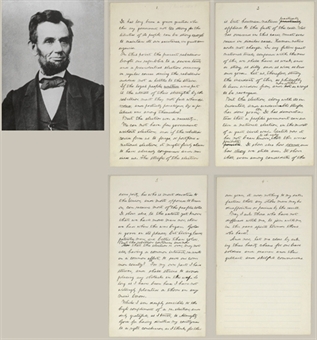
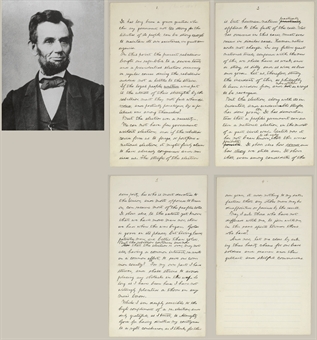
Christie's sold the Autograph manuscript of Abraham Lincoln's 1864 ELECTION VICTORY SPEECH as President, delivered in Washington D.C. from the window of the White House on the evening of 10 November 1864 for $3.42 million including buyers premium. The pre sale estimate was $3 - 4 million.

Increased Interest in Art Study Programs


The International Herald Tribune recently ran an artilce by Claudia Barbieri about increasing enrollment in art study programs. The Sotheby's Institute owned and operated by Cambridge Information Group in Bethesda, MD (Sotheby's sold the institute in 2005) has seen a 40% increase in enrollment when compared to a year ago. the Institute has even added a masters in contemporary design, again reinforcing the growing importance of this collecting category.

Barbieri states At Drouot Formation, the education arm of the Paris auction venue Hôtel Drouot, the school's director Frédéric Elkaim reported a more than threefold rise in demand for professional training. This has more than made up for a 50 percent fall in enrollment to introductory classes for would-be collectors - hit by the credit crunch - he said.

"In some cases, after being made redundant, people are changing career paths, often re-evaluating their lives and looking for more meaning," Elkaim said. "It's less about money and more about following a passion."

For the year that started in September, four diploma courses have been added to the program, aimed at providing career-change training for work as auctioneers, art and antique dealers, and gallery owners. For next year, discussions are going on to develop an exchange program at the master's level with two French universities.

The appraisal profession has many career changers within its ranks. It is rather typical that during times of economic stress, more people look toward education. Many people in the financial world who recently lost jobs, many have applied to graduate schools. When there is potential for a career change, either brought upon by desire or necessity, some tend to fall back on their passions for collecting the fine and decorative arts and look to join the profession either through appraising, dealing, auction specialist or museum curators.

To read the IHT article, click HERE.

Results: Christies Post War and Contemporary Sale

Christie's held its annual Post War and Contemporary art sale in London on February 11. The news is rather mixed. The good news is that out of a total of 31 lots offered, 25 did sell. That is over 80% sell through rate. The totals sales were $12.08 million including buyers premiums against a low estimate of near $20.85 million. That is not good and there is a major reason why.

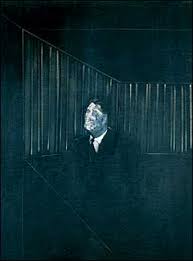
The two most expensive items and top lots were paintings by Francis Bacon, his Man in Blue (expected to sell at a low estimate of $5.7 million, see image) and a Mark Rothko with a low estimate of $3.6 million. Neither of the paintings sold, and I have heard that neither drew a single bid. Overall the mood was a bit somber compared to the more positive sales last week from the impressionist sales. If there is a silver lining it is the top ten lots selling sold near or above the high estimates. But it is interesting that the top two lots did not sell, or even garner a bid. We have been witnessing at many other sales that quality sells, but the contemporary art market is a bit different than the other categories.

This was the lowest selling February contemporary art sale since 2004. Other market areas of art appear to be stronger than the post war and contemporary categories, including old masters and impressionists. Given the extreme growth in value over the past few years in the contemporary category there comes added volatility, and it is showing in these economic times more so than in other categories.

2/11/2009

Christie's Offers Lincoln Victory Speech

On Lincolns 200th birthday, Chrisites New York will offer for sale Lincoln's hand written 1864 victory speech. The document is estimate to sell between $3 - $4 million. Given the 200th anniversary of Lincoln's birthday as well as President Obama using the same bible for his swearing ceremony that Lincoln used, despite the economic concerns, it could very well be a good time to sell.

Not to be cynical here, but I find this very interesting when comparing to the current deaccessioning issues with museums (Rose, National Gallery, Corcoran, Fiske U, Univ of Iowa, etc). The seller is the Southworth Library Association in Dryden, NY. It plans to use the proceeds from the sale to fund an expansion and pay operating costs. Sort of like deaccessioning, but without the conflicts or constraints of selling a collection which museums abide by. But, there is no uproar about this particular sale. Now if the library was a museum? Just something to think about. I understand charters are different between the different types of institutions, but there are some very interesting similarities, but one the library sale of a precious document appears to fine, while a museums sale of a portion of a collection for simialr purposes is not.

According to a Christies's press release and catalog, The four-page speech was delivered at the White House on 10 November 1864, immediately after his re-election to a second term as President. This unique document, never before offered for sale, is one of a very few Lincoln speech manuscripts not in permanent institutions like the Library of Congress. It is expected to realize in excess of $3 million.

The speech manuscript, in superb condition, is written in Lincoln’s bold, clear hand on four large sheets of paper. It is the one Lincoln held in his hands to read that night to a crowd of celebrating supporters on the White House lawn. The precious manuscript remained with Lincoln’s papers until 1916, when Robert Todd Lincoln, son of Abraham and Mary Lincoln, graciously presented it to New York Congressman, John A. Dwight, as thanks for his efforts to secure Congressional funding for the Lincoln Memorial in Washington, D.C. Dwight’s widow, in turn, presented it to the Southworth Library Association in Dryden, New York. Proceeds from the sale of the speech will fund construction of a new addition to the library, and help pay expenses of its operation, maintenance, and programming.

For more information on the document read the Christie's press release by clicking HERE, view the catalog entry by clicking HERE.

Akron Art Museum Dealing with Economy

The Akron Beacon Journal recently ran a story by Katie Byard about how the Akron Art Museum is handling the declines in the economy and financial losses to its endowment. Many museums around the country are facing the same types of situation with shrinking endowments and fewer patrons. According to Byard, the Akron museum will not close on Tuesday, lay off staff, reduce the hours of others and reduce the number of exhibitions from the usual amount of 15 to 8 or 9 per year. Now, this article and post might initially look like a gloom and doom report, but I look it it differently. I see a museum that has hit some difficult times, and is now being proactive with dealing the situation. The museum does not appear to be panicking, but it is reducing overhead, exhibitions, and hours in order to survive these difficult times in order to be around for better times.

Byard states The museum's endowment, which last year funded about one-quarter of the site's operating expenses, dropped from more than $23 million at the beginning of last year to about $17.3 million by Dec. 31. The museum — like other cultural institutions — also is taking a hit in grants.

The ''stock market crash has had an enormous effect on the foundation community that funds arts and culture,'' Kahan said. ''They all have less money to give out.''

Kahan said one foundation informed the museum it will not take applications for 2009 funding. Corporations also are scaling back their donations, he said.

The cuts come less than two years after the completion of the museum's $35 million expansion, which added a gleaming glass/metal/concrete structure alongside its 1899 brick home.

With the expansion came increased operating costs, Kahan
said.

''We tripled the size of the building and doubled the budget,'' he said. ''Now, unfortunately for us, the recession started six months after we did that.''

To read the article, click HERE.

2/10/2009

Sotheby's Credit Rating

Philip Borof of Bloombergs has an article stating the rating of Sotheby's debt is approaching junk status. The current rating of BBB- is the lowest investment grade ranking assigned by Standard and Poors. In addition, Sotheby's renogtiatied lines of credit to allow for greater exposure but at the expense of much higher interest rates. Much of the issues surround an estimated $50 million in losses from lot guaratnees and of course the slowing of the art market int he 4th quarter of 2008. Complicating debt issues was the requirement to purchase back it HQ building in NY, which it sold in 2003. Sotheby's stock has fallen 84% since its high in October of 2007. The stock is currently trading around $9.00 per share. Sotheby's releases its 4th quarter financial at the end of February.

Borof states Sotheby’s credit rating may be cut to junk as the 265-year-old auction house’s revenue falls and its leverage increases amid what it calls “significant” losses from guarantees.

“We believe that revenues will decline substantially over the near term due to the decline in the worldwide art auction market,” Standard & Poor’s said in a statement yesterday, when it disclosed the possible downgrade.

To read the Bloombert article, click HERE.