12/31/2009

Hirst and Koons Art Show Large Auction Price Declines


Scott Reyburn of Bloomberg writes about the significant loss of value of two of the more popluar and pricey contemporary artists, Damien Hirst and Jeff Koons.  Bloomberg reports that auction values for the two artists works have seen recent declines of near 50%.  Reyburn reports many dealers claim it will take close to a decade before Hirst and Koons values return to their pre 2008/2009 level.

In the past on the AW Blog I have posted about the significant declines in the contemporary art sector, so the drop in value is not really that shocking, and is actually expected.  Yet, the large decrease in value becomes all the more meaningful when looking at actual drops in values and price changes for specific artists as reported by the various tracking groups.

Reyburn reports
Contemporary-art auction sales dropped 75 percent this year as sellers were no longer guaranteed minimum prices.

“Right now, people are nursing significant losses on Hirst,” Philip Hoffman, chief executive of the London-based Fine Art Fund, said in an interview. “They’re reluctant to sell until prices start to rise again.”

Worldwide auction sales of contemporary art grew more than 10-fold between 2003 and 2008, according to the France-based research company Artprice. Its price index, based on total annual auction sales for Hirst, was up 996 percent over the 10- year period that culminated in his “Beautiful Inside My Head Forever” event in September 2008. The two-day auction, which coincided with the collapse of Lehman Brothers Holdings Inc., is seen by dealers as the end of the boom.

“That auction was such a freak,” Robert Sandelson, a London dealer, said in an interview. “It skewed the statistics. Damien is down, like most other artists are down. The market now feels like 2000 or 2001. It’s not going to be anything like it was for many, many years.” Sandelson held a Hirst show in his Mayfair gallery during the Sotheby’s sale.

Kitsch Skull

Koons, 54, known for his super-sized kitsch sculptures, was the top-selling artist at auction with 81.3 million euros ($117.2 million) of sales in the year to June 2008, said Artprice. Hirst, 44, famed for his pickled animals and diamond skull, overtook Koons with his 111.5 million-pound ($178.5 million) Sotheby’s sale.

Auction sales of high-value works by Koons dropped 50 percent in 2009, when nine pieces fetched more than $1 million, according to the U.S.-based database ArtNet.

Koons’s chromium steel “Baroque Egg With Bow (Turquoise/ Magenta)” from his “Celebration” series, owned by hedge fund manager Daniel Loeb, sold for $5.5 million, less than its estimate at Sotheby’s New York in March 2009. The $47 million total at that auction was 87 percent down on that achieved the previous year.
To read the full Bloomberg article, click HERE.

12/30/2009

Sotheby's Americana Sale


The Winter Antiques Show and Americana week in New York City is quickly approaching.  Sotheby's recently posted a press release on the sale.  In addition to the usual property which includes a sale of antique silver, prints, and furniture there will also be a sale of the late Elinor Gordon's personal collection of Chinese export porcelain.

The furniture sale includes The Important Ranlett-Rust Family Chippendale Figured Mahogany Bombé Slant-Front Desk, Probably by Francis Cook, Marblehead, Massachusetts, circa 1770 with an estimate of $400,000/1 million (see image). 

From the Sotheby's press release.
On 22 and 23 January, Sotheby’s will begin the sale season with Important Americana, including furniture, folk art, silver, prints, decorative arts and carpets and will be led by The Important Ranlett-Rust Family Chippendale Figured Mahogany Bombé Slant-Front Desk, Probably by Francis Cook, Marblehead, Massachusetts, circa 1770, An Important American Silver Punch Bowl, Cornelius Kierstede, New York, 1700-1710, and a Fine and Rare Molded Copper Figure of an Indian with Bow and Arrow, Probably Harris & Co., Boston, circa 1880. The two-day sale will begin on Friday 22 January with a 2pm session offering silver, and prints, and conclude on Saturday 23 January with a 10am session of furniture, folk art and carpets. Chinese Export Porcelain from the Private Collection of Elinor Gordon will be offered at 2pm on Saturday 23 January. Works from the sale will be on exhibition at Sotheby’s New York galleries alongside the Private Collection of Elinor Gordon beginning 16 January.

Leading the Saturday morning session of Important Americana comprising Furniture, Folk Art and Carpets is The Important Ranlett-Rust Family Chippendale Figured Mahogany Bombé Slant-Front Desk, Probably by Francis Cook, Marblehead, Massachusetts, circa 1770 (est. $400,000/1 million). The desk is one of the rarest surviving examples of the esteemed bombé form; only twelve additional examples are known. The present example has never before been offered on the market, and is among the most original of all known examples. Extensive research suggests the desk was made north of Boston, in Marblehead, Massachusetts and through careful comparison with extant signed pieces, the desk has been attributed to Francis Cook.

Another highlight is the Captain Samuel Morris Pair of Queen Anne Carved and Figured Walnut Rounded-Stile Compass-Seat Side Chairs, Philadelphia, Pennsylvania, circa 1745 (est. $200/500,000). Standing as superior examples of the Philadelphia Queen Anne style, these side chairs display a unified sculptural design, extremely fine construction and high-quality carving rarely matched on other seating furniture in the era. The delicate legs are punctuated by carved claw-and-ball feet, a rare feature among Queen Anne seating furniture.

An Important Chippendale Carved Mahogany Bedstead, Attributed to
John Townsend, Newport, Rhode Island, circa 1770 (est. $40/100,000) is one of only six known bedsteads with claw-and-ball feet to have been produced in Rhode Island.
To read the full Sotheby's press release, click HERE.

12/29/2009

Knoedler Building for Sale


The Knoedler and Company building is being listed for Sale by Sotheby's International Realty.  The building, built in 1909 and located at 19 East 70th Street.  The asking price for the building is $59 million, with annual real estate taxes of $180,000.00.  According to the Knoedler website, the gallery has been in operation for over 160 years.  Knoedler and Company is owned by Michael Hammer, grandson of American industrialist and collector Armand Hammer.

The Sotheby's International Realty site states:

Presently being used as KNOEDLER GALLERY. This Italian Renaissance home was built in 1909 by the architect Thornton Chard. Some of the original details are still intact. There are many small terraces that have copper flashing on the details. Ceilings are high throughout. In addition, there is a 7th floor with additional square footage which was used as a gym when the house was used as a private home. That space is now a library. The building has maintained the original staircase and coffered ceilings. The entire house is flooded with sunlight. This could be the most spectacular important private residence once again or used as a gallery, plus other options. There is a usable basement and a sub basement which has mechanicals. The building also maintain an additional stairway for staff in the back of the building.
 Click HERE to visit the Sotheby's Realty site and listing for interior images of the gallery.

New RICS Guidelines


The Antique Trade Gazette is reporting new guidelines for personal property appraisers for 2010. The Royal Institute of Chartered Surveyors new edition of the Red Book updates rules and clarifies terms and definitions for personal property appraisers. One of the bigger changes is for RICS appraisers to start using the term "personal property" instead of chattels.  Other changes include more required details in engagement letters and fee calculations. I cut and pasted all of ATG article on RICS, which of course lacks many specifics.  The RICS website is at www.rics.org, or click HERE for Redbook information (mostly for RICS members only).

The Antique Trade Gazette reports
JANUARY sees the tightening of rules for RICS valuers in their assessment of personal property. Set out as part of the terms of the Red Book – the guide to Royal Institute of Chartered Surveyors standards in valuing – the new compliance regulations apply to written valuations and will be mandatory for RICS members.

Non-members are expected to take note of them too, as they aim to raise standards across the whole industry.

Valuers are now adopting the term ‘Personal Property’ in place of chattels to describe assets, such as art and antiques that are not permanently attached to land or buildings. The new term ties in better with international practice and accounting standards.

The upgraded regulations aim chiefly to clarify the terms and conditions under which valuations are undertaken and to set out specific exclusions.

For instance, they are designed mainly to apply to valuations for the purpose of insurance and taxation and do not apply where advice is tendered in respect of buying and selling at auction.

Valuers are being advised that letters of engagement should include details of both the purpose and subject of the valuation, as well as the interest to be valued (where others hold an interest in the property being valued).

Around a dozen other requirements cover everything from setting out the type of property to be valued and how it is used by the client as the basis on which the valuer’s fee is calculated.

The RICS have set out a full list of requirements under the new regulations at www.rics.org/redbook.

As well as ensuring best practice, the new regulations aim to offer upgraded protection against claims for negligence on the part of valuers.

12/28/2009

2010 and Estate Taxes


On December 5th I posted about the US House of Representatives passing legislation to extend the estate tax rate of 45% with an exemption on the first $3.5 million. (To read that post, click HERE).  As I mentioned in the AW post, the House bill was only half the equation, and the US Senate still needed to pass legislation, and then the two bill would need reconciliation.

With the US Senate deeply involved in the health care debate, and the the holiday recess, it did not seem likely a bill would be passed prior to the New Year. And, that did turn out to be the case. Expectation are the Senate will pass a bill in 2010 and make the tax rate retroactive to Jan 1, 2010.  Right now, unless a bill is passed with a retroactive date, there is no estate tax for 2010, and in 2011 the rates revert back to a $1 million exemption.

The NY Times article also points out an interesting situation in which many appraisers, and tax payers may not be aware of.  If there happens to be no estate tax in 2010, there will no longer be a step-up basis calculation.  The step up basis calculation means property is valued as of the date of death.  The loss of the step up in basis means there would be capital gains on the estate property. There is a $1.3 million exemption for individuals and $3 million exemption for couples for an artificial basis if there is no estate tax in 2010.  Anything beyond those numbers, capital gains will need to be calculated.

The NY Times article is a good, short reference piece about the estate tax situation. It also covers Roth Conversions/  The Estate Tax information is mentioned in the introduction area, and then in more detail about half way through.

AS previously mentioned, expectations are that a bill will be passed in the Senate and made retroactive to January 1, 2010, but until that happens the estate tax rate for 2010 is uncertain.

The NY Times article reports:
Jere Doyle, wealth strategist at Bank of New York Mellon, said the wealthy should not get their hopes up for an end to the estate tax. He pointed out that an estate did not have to submit its first tax bill until nine months after a person’s death. The Senate could wait, then, until the summer to decide on the estate tax and make it retroactive to the beginning of the year. This would wreak havoc on estate planning. Even if the Senate acted early in the coming year, it could still lead to a flurry of legal challenges on the constitutionality of reinstating a tax that had disappeared.

But there is a broader issue for moderately wealthy people. When a person dies now, the value of his or her assets gets a “step-up in basis,” which means for tax purposes the assets are valued on the day of death. Without an estate tax, this provision disappears, and the appreciated value is subject to capital gains tax.

The Internal Revenue Service will grant a $1.3 million “artificial basis” on assets of a single person and $3 million for couples if the estate tax disappears. But on the rest of the assets, the heirs will have to determine what the original cost was and pay the capital gains on the appreciated amount. For long-held stock that has split many times, this could be extremely difficult.

“If there is no estate tax in 2010, we have an income tax problem for a larger group of the population,” Mr. Kesten said. He estimated that the number of people affected would go from 6,000 to 60,000.

Still, most advisers and accountants expect that an estate tax will be reinstated, and this has pushed the wealthiest to find new ways to reduce its impact.
Click HERE to read the full NY Times article.

12/27/2009

Ethical Dealings

The Sunday edition of the Washington Post had a short but interesting Q&A from Kiplinger's Personal Finance. It is about a dealer who is purchasing property from a private party and who subsequently sells at auction for a much inflated price. We have touched upon this topic in the past. The post states the dealer probably did not act ethically, but it was not illegal. At the end, it also states if a amateur antique collector finds an under valued items, is there an ethical obligation to inform the seller.

In appraising, or being a professional in any other field , there is usually a higher standard connected to your dealings and practice. Taking it a step further, as a dealer or appraiser should you notify a dealer selling the undervalued item? I would say there is no obligation to do so, as both are professionals in the business. As a dealer, pricing can be based upon cost, value, need for cash flow, and inventory management to name just a few factors. It of course can also be because of miss-identification as well.

The Q&A is well worth reading and thinking about.
Q: I asked a local antiques dealer to come to my house and make me an offer on some old furniture and china. He bought several things, and I later heard that he sold one of them at auction for a fabulous sum -- many times what he paid me. When I complained to him about it and asked for a share of his profit, he refused, saying that I seemed pleased with the price he offered me at the time. Was this right?

A: Legally? Probably. You didn't invite him to your home to do a written appraisal of your goods, which would have legally obligated him to research your antiques and tell you their fair market value. You accepted his offer without duress and were free to get an appraisal or solicit offers from other dealers.

But did he act ethically? No, regardless of whether he knew at the time just how valuable your item was. If he discovered its true worth later (but before putting it up for auction), an ethical dealer would have contacted you to discuss what he had learned -- not offering to return your merchandise, but to share with you some portion of the future profit.

If the dealer recognized the high value of your antique the moment he saw it in your home, then he was taking advantage of you to buy it for so little. (Note, however, that reputable dealers typically pay 30 to 50 percent less than retail value, to provide enough markup to cover their costs of doing business and leave them a profit.)

An ethical dealer thrives on positive feedback and referrals from satisfied customers, developing a reputation for fairness in both buying and selling. But this dealer is a sharpshooter who apparently doesn't care.

A corollary issue: Does an amateur antiques hunter who spots a rare, severely underpriced item at a private garage sale or estate sale have an ethical obligation to inform the seller of its true worth? No.

-- Kiplinger's Personal Finance

12/26/2009

Book Editions and Signatures

Tom Post writes an interesting article for Forbes on early edition books and author signatures.  Pretty much like anything of value, there is a market for fakes and fraudulent activity with books a signatures.  Post states how collectible books, typically first edition can, as expected, have a significant increase in value if the copy is signed by the author.  Post recounts how he purchased a first edition on eBay, and was surprised to find the signature was not a represented.  The book was not signed, but included a separate "flat" item with the authors signature.

As appraisers, we need to cognizant of where there is fake and fraudulent activity.  Unfortunately in the fine and decorative arts, as well as collectible markets, it is almost everywhere. Most of us know to approach certain prints with caution,  to perform due diligence on artist signatures, as well as to inspect  furniture for enhancements.  Books with signatures are no different.  Ler the appraiser beware.

Post states on how to avoid being taken advantage of
Advice to buyers:

--Ask questions about the signature. Is it inscribed on a page? Was it signed about the time the book was first issued? Is the volume dedicated to a person of note or record--someone you can research?

--Learn about the author's book-signing habits (Harper Lee, for example, autographed copies of To Kill A Mockingbird for years after it was first published in 1960; Thomas Pynchon almost never signs anything--or surfaces in public).

--Inquire about provenance (pedigree can add important credibility and significant value).

--Traffic with reputable dealers who are members of organizations like the Antiquarian Booksellers' Association of America or the Professional Autograph Dealers Association. "The real expert will bore you with answers," says Ken Rendell. "The person who brushes you off deserves the same in return."

Most dependable dealers and auction houses will stand by their wares--forever. That, plus credible provenance, is pretty good insurance if you're laying down $50,000 for a book. Genuine examples of many signatures abound; Hemingway, for example, signed lots of letters, bar coasters and bullfight programs. For less expensive items, compare your example with bona fide versions on the Web.

There are two idiot-proof ways to acquire genuine autographed books. One is to collect so-called signed limited editions--small print runs that precede or follow first trade editions, often numbered and signed by the author under the auspices of the publisher. Faulkner and Conrad, among others, resorted to such means to help stanch chronic financial problems. Companies like Easton Press offer contemporary works, usually of up to 1,500 numbered and signed copies. Recent lots on its site (www.veryfinebooks.com): George W. Bush's A Charge to Keep ($1,900); Winning by Jack and Suzy Welch ($125)--along with an eyebrow-arching claim of offering "rare, leather-bound works that will instantly increase the value of your fine literary compilation."
To read the full Forbes article, click HERE.

12/25/2009

Update: Art Hedge Funds

Felix Salmon of Reuters has a very short but interesting, article, or perhaps statement on investing in art funds. He believes that given the nature of the art market as a financial asset class, investing in art funds is not a wise idea.

Salmon states
Art is simply not an asset class which lends itself to hedge-fund strategies. If you’re ever approached by a former financial-markets professional who has bright plans for some kind of an art fund, run, don’t walk, in the opposite direction. The art market will happily take full advantage of cocky newcomers like that: it chews such people up and spits them out for breakfast.

To read the full post, click HERE.

12/24/2009

Merry Christmas from the Appraiser Workshops


Last Christmas I sent out a Thomas Kinkade image to celebrate the Holiday Season.  I thought it best to keep the tradition going.

As I said in lasts years Christmas post, Ho, Ho, Ho!  I spent a lot of time picking out just the right Christmas image to send from the AW Blog. I again spent much time reviewing Kinkade images to select the most appropriate work. Here is Evening Glow, from 1999.

After a very mixed year for the fine and decorative arts community, just a little bit of holiday appraisal humor.

Merry Christmas and Happy Holidays from Todd and Jane at the Appraiser Workshops.

12/23/2009

Top Art Prices for 2009

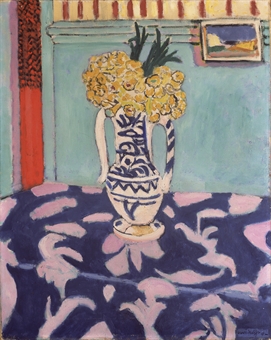
It is time to start seeing year in review articles. Scott Reyburn and Katya Kazakina of Bloomberg have an interesting article reviewing the top prices of art at auction during the past year.  The top lot was the recent sale of a Raphael chalk drawing for $47.5 million.  This was followed by a Matisse for $46.5 million (see image, from the Yves St Laurent sale), and an Andy Warhol for $43.8 million.

It is interesting to see the top sales represent three different sectors in the art market. Also very nice to see is the decorative arts getting mention for the sale of the Art Deco Dragon Chair for approximately $28 million from the Yves St Laurent sale.  The article also chronicles auction sales highlights as well as other interesting art related news and sales from various months of 2009. 

The Bloomberg article states
Collectors responded to the financial crisis by selecting the best 20th-century classics, Old Masters, wine and jewelry at international auctions. They shunned investment in some contemporary art as prices dropped by half and sales fell 75 percent. Private transactions increased as sellers at public auctions were no longer guaranteed minimum prices in 2009.

Here are some of the key moments of the year:

Feb. 5: Sotheby’s London sale tallied 17.9 million pounds (then $26.15 million), the lowest at its Part I contemporary auctions in the city since 2005. On Feb. 11, Christie’s International failed to sell Francis Bacon and Mark Rothko works that it expected would fetch as much as 5 million pounds and 3.5 million pounds.

Feb. 23-25: Christie’s raised 342.5 million euros (then $435.8 million) from the collection of the late fashion designer Saint Laurent and his partner Pierre Berge. The total was the highest at auction of a private art collection, and defied economic gloom, said dealers. It would have been higher had Cai Mingchao, the Chinese winning bidder on two Qing dynasty bronzes, not refused to pay his bill of 31.4 million euros.

The Matisse 1911 cowslips still life “Les coucous, tapis bleu et rose” made 35.9 million euros, paid in the room by the New York-based dealer Franck Giraud. Records were set for other modern artists Brancusi (29.2 million euros) and Mondrian (21.6 million euros), while the Eileen Gray airchair made 21.9 million euros, a record for any piece of 20th-century design and more than 10 times its low estimate.

April 30: An aluminum “Lockheed Lounge” chair by Marc Newson sold at Phillips de Pury & Co. in London for 1.1 million pounds, an auction record for contemporary design. Pieces by Zaha Hadid and Ron Arad failed to sell.
To read the full artilce, click HERE.

Royal Bank of Scotland Under Pressure to Sell Art Collection

The Wall Street Journal is reporting the Royal Bank of Scotland is under pressure to sell portions of its art collection. The collection is estimated to be worth between $16 million and $24 million. The bank is currently owned by the UK government, and there is pressure to capitalize the collection as art is not considered a core asset by the bank or regulators.The bank is taking a slow and methodical approach in selling the collection.

The bank is closing about 400 branches and an insurance division and will have less space to display art. It will also send some art to galleries and museums. The liquidation plan seems to incorporate waiting a period of time in order for the market to both stabilize and perhaps advance before final decisions are made to sell.

The WSJ reports
A spokeswoman said: "We will not sell any pieces of art that are of heritage or historical importance. Nor will we sell pieces which national galleries or charities may wish to exhibit. Once we have worked through this process, if there are works of art that do not fall into either of these categories we may consider selling some works."

She added: "Any decision on sales will be taken with an eye to market conditions to obtain the best value for our shareholders."

Art prices have contracted by a total of 37% since January 1, 2008, according to information provider artprice.com. After promising signs of a nascent recovery in the first half of 2009, the third quarter witnessed further price drops, although there are now signs of a recovery.

There have been calls for government-backed banks to dispose of their collections. Ben Lewis, an art commentator, said: "All the banks who received state aid should have firesales of their art collections ??? in fact, governments should enforce these sales ??? that would take some of the heat out of the inflated art market, and put a bit more money back into government balance sheets."

Some banks have already started this process. Annabel Fell-Clark, chief executive of insurance provider Axa Art, said: "In recent years some banks have divested themselves of any large art collections as it has not been considered as adding value by shareholders. Back in the 90s it was the Japanese banks that had to sell a load of art because of their own economic crisis."

Since the credit crunch hit, other corporates have sold art to plug gaping balance sheets. Zurich-based UBS (UBS) in April shut down its 11-year-old "art banking" unit, which enables wealthy customers to purchase works and build collections.

As far as corporate collections go, RBS' collection is relatively modest.
To read the WSJ article, click HERE.

12/22/2009

Michelangelo in Dispute


The Telegraph Co UK is reporting a wooden carving represented as a Michelangelo and purchased by the Italian government may be a fake. According to the article, the carving of Christ was purchased by the Italian government for approximately $4.64 million, negotiating the price down from $20 million.  The sculpture was then presented to Pope Benedict XVI, the Italian parliament, and then a national exhibition which drew thousands.

The article does not state what testing or authentication review preceded the purchase.  I hope more information is forthcoming and I will try to keep AW Blog readers updated as more information becomes available.

The Telegraph reports
several prominent art experts have said they believe the Christ figure was made by an artist other than Michelangelo.

Francesco Caglioti, an expert on medieval sculptures, told La Repubblica newspaper: "The quality of this work bears no resemblance to those of Michelangelo and every resemblance to the many crucifixes of this kind which were made by artisans in Florence in this period."

Tomaso Montanari, an art history professor at Naples University, said it was "clearly not" a Michelangelo.

A German art historian, Margrit Lisner, said it was probably the work of another Renaissance sculptor, Jacopo Sansovino.

It was first attributed to Michelangelo, after years of scrutiny, by experts from the universities of Florence, Siena and Perugia in 2004.

The director of the Vatican Museums, Antonio Paolucci, said that while there was no cast-iron guarantee that Michelangelo carved the statue, the attribution to the Renaissance genius was based on "very reasonable grounds".
To read the full Telegraph article, click HERE.

12/21/2009

Results: Victorian & Edwardian Sales

Last week both Christie's and Sotheby's held Victorian and Edwardian sales. Sotheby's sold $7.1 million worth of art, although they did not post specific results for lots offered/sold etc. Christie's did post results, selling $5.57 million, offering 89 lots and selling 56, for a 63% buy through rate.

As witnessed in the recent Old Master sales and noted here on the AW Blog, higher quality art is typically selling at or above the catalog estimates, while the lower quality (at least by auction estimates and $$$) is not doing nearly as well.

The Economist recently published a review of the Victorian sales, and confirms the point of view that the upper end of the market is driving the sales results, while the middle market languishes.

The Economist states
Mr Mason, who has seen recessions come and go in the 53 year he has been in the business, said afterwards: “Prices today reflect what is happening out there. People are discounting the coming inflation and buying quality. They know that inflation has always been the art dealer’s friend.”

Buyers in every sector of the art market, from Chinese porcelain to Old Masters, now seem to follow a pattern. They are happy to pay over the odds for top-ranking pictures, but leave the rest untouched. Nearly 40% of the lots in Sotheby’s sale were bought in. Its success lay in the high prices achieved for those that sold, half of which were bid up beyond their high estimate. Some pieces went for as much as four times what the auction house had predicted.
 To read the Economist article, click HERE.

12/20/2009

Works on Paper Show Postponed

The NY Times recently reported the Works on Paper Show scheduled for NYC in February has been postponed.  The long time promoter, Sanford Smith reported having trouble getting dealers with the proper quality level and in sufficient numbers to sustain the show.  Smith hopes by postponing the show for a year, the art market will have sufficiently recovered to help the fair again in 2011.

This is not good news, and it seems the for every positive story found, there is also a negative one that either precedes or follows. The reports also states the May International Fine Art Fair may be canceled or postponed as well.

The article also indicates many dealers are having cash flow problems, and have difficulties replenishing inventories.  For brick and mortar dealers and galleries, I know the overhead is a drain, and the lack of buyers makes planning all the more difficult.  A good show can certainly help many dealers, but also, having a bad show can also make things much worse.  It is a difficult choice for dealers to make during these complicated economic times.

For instance, Mr. Smith said, dealers are short of cash these days and unable to replenish their inventories. Another issue at the armory is the cost of space. The Park Avenue Conservancy formally took over management of the building, a crenelated red brick landmark between 66th and 67th Streets, from New York State in December 2007, and it has increased the rent. The cost is now $30,000 a day, three times what it once was.

Another armory show, the high-end International Fine Art Fair, which is timed to coincide with the May Impressionist and Modern art auctions in New York, may also be canceled. “We are currently in consultation with the exhibitors,” said Magda Grigorian, a spokeswoman for that event’s organizer, Haughton International Art and Antique Fairs, “and no final decision has yet been made.”

Still on the schedule, however, is the Art Dealers Association of America’s annual Art Show of postwar and contemporary art. But rather than taking place in February, the show will be held March 3 through 7, timed to the Armory Show (March 4-7), which despite its name is held at Piers 92 and 94, at 12th Avenue and 55th Street, in Clinton.
 To read the full NY Times article, click HERE.

Rembrandt Purchased by Stephen Wynn?


Carol Vogel reports in the NY Times that many beleive the recent record sale of a Rembrandt painting at Christies was purchased by Las Vegas Casino owner Stephen Wynn. Wynn or his representative have yet to confrim the puchase of the $33.2 million painting (including buyers premium).

It is reported Wynn's bid was the only bid on the painting, but there was other interest.  The article states another group was interested in the painting and were willing to bid up to $40 million.  The interested bidders had supposedly agreed to terms with Christie's for payment within 6 months of the sale.  Chrisitie's is said to have changed terms, at was going to keep the painting until it was paid in full. The interested party then decided not to bid on the painting, leaving it to Wynn.

Vogel reports
On Dec. 8, the day of the auction, though, Mr. Wynn called several old-master dealers and Rembrandt scholars to ask their opinion of the work, “Portrait of a Man, Half-Length, With His Arms Akimbo” (1658), experts said.

The auction attracted only one bidder. (The final price of $33.2 million includes fees to Christie’s.) But others were interested in it, too. Otto Naumann, a Manhattan dealer, and Alfred Bader, an art investor from Milwaukee, were prepared to buy it together and were willing to go as high as $40.3 million. Christie’s had given them extended terms: at least six months to pay for the painting.

“The day of the sale, Christie’s withdrew the terms,” Mr. Naumann said. “They told us we would not be allowed to collect the painting until it had been paid in full.” So the men decided not to bid.

Mr. Naumann said that while he was ready to buy the painting, he knew it was risky. “There was no clear modulation in the face,” he said, referring to the painting’s brushstrokes, an indication of its condition. “It might be there after cleaning, but it might not. It was definitely a gamble.”

To read the full NY Times article, click HERE.

12/19/2009

Elinor Gordon Collection of Chinese Export to Sotheby's


On January 23rd, 2010 Sotheby's will offer 280 lots from the private collection of the Chinese Export dealer Elinor Gordon. Gordeon considered one of the best Chinese Export porcelain dealers, and a fixture for many years at the Winter Antique Show in NY recently passed away. The sale takes place during NY's American week.

Sotehby's stated about Gordon and the sale:
Gordon is largely credited with elevating Chinese Export Porcelain to an independent
collecting category. Indeed she herself began as an avid collector before entering the trade in 1953. Over several decades, Gordon and her husband Horace quietly amassed a comprehensive collection of works made for both the European and American markets – a collection many knew through her book, Collecting Chinese Export Porcelain, published in
1977, but which few knew had survived more or less intact. After thirty years packed away in boxes throughout Gordon’s home, the collection will be exhibited in full at Sotheby’s New York galleries beginning 16 January2010

Christina Prescott-Walker, Head of European Ceramics and Chinese Export porcelain, commented, “We are delighted to be offering the private collection of Elinor Gordon, who was truly a pioneer of the field, and to be able to celebrate her love of collecting. Representing a broad range of interests and prices, this collection offers something for every collector at every level. From European market wares to American market pieces to armorial porcelain, it has been a great joy for us to discover Elinor’s gems, and to imagine how much fun she must have
had acquiring them.”

12/18/2009

Artfact Raises $13 Million an Merges with Auctionzip

Artfact (now known as Invaluable) recently released news  that is was merging with Auction zip, the large director of live auction houses and also closed on a $13 million capital financing venture.  The loan is to assist with the merger as well as expand product development, marketing and sales.

The press release states that each company will maintain its own brand for now.

Since the closing of the eBay live auction platform, Artfact (Invaluable) has become very aggressive in promoting and adding to its product line.

The press release states:
(Boston, MA) – Artfact, the world’s leading online live auction marketplace announced today its merger with Auctionzip, the world’s largest directory of live auction listings. Simultaneously, Artfact closed a $13 million growth capital financing provided by Boston-based Commonwealth Capital Ventures and Ascent Venture Partners. In addition to facilitating the merger, the funding will be used to expand product development, marketing, and sales efforts.

Combined, Artfact and Auctionzip provide over 16,000 estate auctioneers of all sizes worldwide with a complete range of technology and marketing services including online live bidding, and integrated auction management software. Through their websites Auctionzip.com, Artfact.com, and Invaluable.com, the companies allow 2 million art, antiques, and collectible dealers and collectors unprecedented access to search over 160,000 estate auctions each year with a combined value of over $25 billion.

Adam Kirsch, Chairman and CEO of Artfact, said, “Auctionzip’s founders, Joe Koval and Steve Johnson, have built the only comprehensive auction listing service for the fragmented U. S. estate auctions industry. Together, Auctionzip and Artfact provide estate auctioneers and their dealer/collector bidders with the largest online marketplace dedicated entirely to the unique requirements of live auctions.”

Steve Johnson will continue as Auctionzip’s President, and provided his remarks; “Merging with Artfact is a logical step for Auctionzip now. Auctioneers listing on Auctionzip.com received over 200,000 absentee bids during the last year from the Auctionzip.com bidding community of over 1 million monthly unique users. In March, 2010 Auctionzip will launch Auctionzip Live using Artfact’s leading live bidding technology and auction management solutions to become a true live bidding marketplace just like Artfact Live.”

Moving forward, each company will maintain its distinct brand, website, and office location in Allston Massachusetts (Artfact), Bedford, Pennsylvania (Auctionzip), and the Isle of Wight, U.K. (Invaluable).

12/17/2009

Stolen Painting Sold at Sotheby's by Thief


The New York Observer has an interesting article by Stephen Kurkjian on a stolen painting sold at Sotheby's by the thief.  Charles Hoffman claims he was moving property for an estate and was told to take what he might want for himself, taking the painting, and soon thereafter hiring an appraiser, and then taking it to Sotheby's in NY.  The painting eventually sold for $47,000.00 at Sotheby's London offices in an important British painting sale. The owner of the property was unaware the painting was missing until after the sale. The FBI is now investigating, and is attempting to determine the true owner of the painting.  Sotheby's is being criticized for not investing the background of the painting in more depth. In any event it is an interesting and entertaining story and well worth reading.


AFTER STORING THE painting for a couple of months in a shed outside his home, Mr. Hoffman decided to try to sell it. His first order of business was to determine its value, so he secured an appointment with an appraiser in New York, whom he had seen on a TV show about antiques. The appraiser, whose name Mr. Hoffman does not remember, told him the painting, made in 1769, was an original by Ramsay, who specialized in painting portraits of the British upper class. The appraiser also said the painting was in good condition.

Mr. Hoffman's next step was to set up an appointment at Sotheby's; in March or April 2007, he brought the painting to the auction house's New York headquarters. There, according to Sotheby's officials, the painting was inspected by the lead specialist in older British paintings.

Of course, Sotheby's had to take steps to ensure that the painting was, in fact, Mr. Hoffman's. According to Sotheby's spokeswoman Diana Phillips, Mr. Hoffman would have been asked the circum-stances of his ownership of the painting and to provide any documentation to prove it. A Sotheby's official, who asked not to be identified because of the ongoing criminal investigation, said Mr. Hoffman told the auction house's inspector that the painting had been in his family's possession "for some time," but that he had no documentation to attest to the ownership.

In an interview, Mr. Hoffman insisted he said no such thing to Sotheby's. He said that he told the Sotheby's inspector how Mr. Rieff had given him permission to take the painting a few months before. He added that he was asked to sign an agreement with Sotheby's that attested to his being the proper owner of the painting and agreeing to compensate the auction house if it were later proven that he had defrauded it.
To read the full NY Observer article, click HERE.

Art Trading Fund to Close

The Financial Times Adviser is reporting that art hedge fund, Art Trading Fund owned by Artistic Investment Advisers (AIA) will liquidate and close this month.  I reported on the AW Blog about the fund and a delay in launhing a new fund, click HERE to read that post. The fund, started in 2007 and was originally marketed as arts first hedge fund.  The plan for the Art Trading Fund was to invest in middle market art typically valued below 1 million GBP.  It is reported ATF has over 10 million GPB  under its investment control.  As we know, the middle market in art has not been strong, and in most market segments has seen substantial declines.

Fine Art Wealth Management, a consultancy, estimates that the number of global art funds has collapsed by 40% since the Lehman Brothers bankruptcy.

"Pre Lehman we estimated there were over 50 art funds globally at various stages of development. It is unknown exactly how many art funds exist globally today. However we believe the number is probably closer to 20," Randall James Willette, managing director, said.

The Art Trading Fund aimed to buy artwork in the lower to middle market range, paying up to £1m, while shorting 10 to 15 different economic indicators and securities that the directors believed exhibited a 96% correlation with the art market.

When the fund was launched in 2007, AIA was is the investment adviser to Art Investment PCC, a Guernsey regulated investment company. Minimum investment in the fund was £100,000 and was aimed at high net worth investors. At the time, it was said to be the first and only art hedge fund to "aggregate the primary and secondary art markets." It intended to provide a liquid high return investment over a three year closed end period with a targeted annualised return of 30%. Despite our enquiries, we were unable to establish what growth had actually been achieved, if any.
 To read the full FT Adviser column, click HERE.

12/16/2009

Sotheby's, Christie's and Contemporary Art Market Totals

As appraisers, we are aware what has happened over the past year to year and a half in fine and decorative art sales.  We also understand that it will take some time before the markets completely return to early 2008 and 2007 levels, especially in the contemporary art segment.  Many believe the worst is now behind us, but the contemporary art market still struggles, and the struggles has impacted collectors, dealers and the major auction houses.

Scott Reyburn of Bloomberg looks at the total sales figures for Sotheby's and Christie's contemporary art sales held during 2009, and reports the totals are down 75% from the previous year.  Keep in mind the first half of 2008 was strong, it was the late in the year sales which saw the major declines.

Reyburn blames the lack of guarantees for much of the loss, preventing consignors of high quality and desirable contemporary art from being offered at auction, yet I am sure the economy, and the buying habits of collectors has also changed. Reyburn reports that in 2009 Christie's and Sotheby's contemporary art sales totaled $428.3 million.  On the surface it sounds like a lot of money.  But in 2008 the two auction houses combined for sales of $1.97 billion, and in 2007, $2.4 billion.  The 2008 and 2007 figures are rather staggering, especially looking at the market today.

Reburn states
Worldwide auction sales of contemporary art grew more than eightfold between 2003 and 2007, according to France-based database Artprice. Demand contracted in the fourth quarter of 2008, after the September collapse of Lehman Brothers Holdings Inc., with Sotheby’s and Christie’s losing at least $50 million and $40 million respectively as artworks failed to achieve prices guaranteed to sellers. Phillips de Pury & Co. also stopped providing guarantees before its fall series of sales.

“As soon as guarantees were taken off the table, sellers became uncertain,” said Philip Hoffman, chief executive of the London-based Fine Art Fund. “Clients don’t want to see big- ticket works go to public auction and fail. A lot of people turned to discreet private sales at the auction houses.”

Private sales of contemporary art raised more than auctions at Christie’s in the first half of 2009, said the London-based auction house. Sotheby’s would not comment on private sales.

Demand Declines

Demand declined at smaller evening auctions in London and New York during the first half of the year. Christie’s February sale in London raised only 8.4 million pounds ($13.6 million), the lowest total at an evening event in the U.K. capital since 2004.

To read the full article, click HERE.

12/15/2009

Palm Beach Appraisal Association


The other day I posted about the free 6 month membership to the appraisal and related services referral site, Palm Beach Appraisal Association.  Many AW Blog readers have taken advantage of the free 6 month membership offer, others did not because the sign up page requested new or renewal memberships at $395.00.  Click HERE for a link to a new special page recently put online for the free 6 month membership promotion.

If you will note from the PBAA home page, the site has many sponsors, including Christie's (Click HERE to see the reciprocal link on the Christie' Partners Page, which is difficult to do), Artfact, Artnet, United Van Lines, Legal Zoom, and several antique shows to name only a few. They offer discount tickets to antique shows promoted by DMG and the site lists not only appraisers but dealers, auctioneers, realtors, fine autos and restoration experts. The site was established to connect high value collectors with appraisers, movers, legal and other related professionals.

I encourage AW blog readers to take advantage of the free 6 month link.  The PBAA site is growing and professional appraisers, dealers, auctioneers, and estate liquidators should take advantage of the growing traffic and visibility of the site and the generous offer of a free 6 month membership. Click HERE for the free registration page.

Old Masters


As I mentioned in my post after the Christie's "successful" Old Master sale a week ago or so, a very large portion of the record breaking sale were concentrated in the top few lots.  Click HERE to read that AW post.  Colin Gleadell of the London Telegraph writes a similar article.  Gleadell's London Telegraph, like my post states on the surface the results look impressive.  But when looking deeper, and at the average quality art in the sales, the results were not strong.  In fact, Gleadell reports that nearly 42% of some sales during the Old Master auctions were bought in. He also rationalizes that the quality of middle market are was not strong, as owners wait for the market to rebound and gain momentum.  In any event the article and commentary is interesting, and I am especially pleased as it matches what I reported right after the sales.


Gleadell reports
But a closer reading of the sales shows that this was a top-heavy week, with just four lots (the three records above and another, less widely reported £9.2 million record for Domenichino's St John the Evangelist from Glyndebourne), out of the 1,000-plus works on offer, accounting for two thirds of the proceeds. Among the run-of-the-mill Old Masters, there was much less to celebrate, with unsold rates reaching an unseasonably high 42 per cent in some sales.

This was partly because the supply of good, middle-market pictures was thinner than usual, with owners waiting to see evidence of market recovery, and partly because the trade, which usually mops up a lot of these sales, has less cash to spend. On top of that, credit terms for buyers have become stricter. Christie's will not release goods to even its best clients, unless they have been paid for.

London dealer Johnny Van Haeften is usually one of the biggest buyers of 17th-century Dutch and Flemish paintings, but he felt that there weren't many good pictures on offer, and was less active than usual. His gallery had a good week, selling a Jan Lievens portrait for £3.6 million, as well as flower paintings by Jan Davidsz de Heem and Jan Brueghel for £2 million and £2.5 million respectively. But at Christie's, he bought only two works, and at Sotheby's, just one, having watched a rare and appealing portrait of a working girl holding a Brazilian basket of plums by the Dutch classical artist Caesar Boëtius van Everdingen soar above its £50,000 estimate, and above his £450,000 bid, before selling for a record £1.2 million.
To read the full Telegraph article, click HERE.

12/14/2009

Christie's Introduces Wine Tasting


The selling of wine has become very profitable for the major auction houses.  Both Christie's and Sotheby's are selling wine cellars in London, NY and Hong Kong with some impressive results.  Christie's has been changing the way auction houses do business, as their business model appears to not only include auctions, but private sales, moving and storage, appraising, insurance, galleries and direct to market sale by artists. Now, wine tasting events before a wine sale is being tried to assist and create interest in the soon to be auctioned wine.

The wine tasting event was held on December 1st, followed by the sale December 10th.  The sale totaled 453 lots sold of wine, spirits and cigars for around $1.75  million.  No full results have been posted on the success of the wine tasting event or full details on the sale. Given the amount of interest in wine sales as these sales expand, we as appraisers should become better educated on spotting potential value and desirable vintages.

Christie's recently stated
London –Christie’s is proud to offer wine enthusiasts and collectors a very special Wine Masterclass on 1 December hosted by Château Pichon-Lalande’s Technical Director, Thomas Dô Chi Nam pictured above left. A limited number of sixty places are available for this one-off event where wine aficionados can taste and compare no fewer than eight vintages from the Pichon-Lalande estate dating from 1991-2005. Guests will also be able to gain valuable insight from the wine-maker himself, and ask questions about the estate, the growing conditions and the various vintages. In June 2009 Christie’s sold 24 bottles from Château Pichon-Lalande’s 2001 Vintage for £1,087, and 24 bottles from the 2003 Vintage for £1,489. Tickets for this rare chance to taste and enjoy some of the finest examples and vintages of recent years in the expert company of the man who created them are available for only £70.00 each.

Should any individual vintage particularly tantalize your taste-buds, Christie’s Fine & Rare Wines Including Historic Vintages from the Cellars of Château Pichon-Lalande auction on 10 December will include a selection of 36 lots directly from the reserve cellars of Château Pichon-Lalande. Highlights include rare Marie-Jeanne’s (2.25 litres) of the 1953 and 1962 vintage, Jeroboams of 1970, 1976, 1989, 1990, 1995 and 2000 vintages, Impérials of 1985, 1988, 1990, 2000 and 2005 and bottles of the stellar 1982 vintage. With impeccable provenance, all wines offered in their original wooden cases. This is an absolute must for any serious Claret enthusiast.

Auction Scams

Many appraisers have seen the advertisements for auctions held in large empty homes. The auctioneers trucks in a mixture of items, mostly new decorative property and then mentions in the advertisements certain items are out of famous estates or famous clients.

Now, for some good news. The Connecticut Post is reporting that Northeast Galleries, a Leonia, N.J.-based auction house advertising that property and jewelry from Bernie and Ruth Madoff would be auctioned at sales in Fairfield and Westbrook Connecticut sales has been canceled. Connecticut Attorney General Richard Blumenthal was alerted to the sale and decided to investigate. According to the report Northeast Galleries was not able to identify or substantiate the Madoff property, in addition to the authenticity of other items in the sale (artworks by Chagall and Picasso). The planned auctions were canceled, but Blumenthal continues to investigate past sales in Connecticut by Northeast Galleries, and stated state law prohibits deceptive sales tactics. I say good for the Connecticut Attorney General. We need more policing of these so called auctions and how they represent and advertise property.

The Connecticut Post reports
Blumenthal said that during a similar auction held by Northeast Galleries on Dec. 5, the auctioneer could not say which goods were actually the former property of the Madoffs and told buyers to contact the company after the auction.

"It's a scam within a scam," said Philip Eliasoph, professor of art history at Fairfield University, who complained to Blumenthal's office Thursday about the scheduled auctions. Eliasoph, who teaches about museums, auctions and the art market, said it's a classic bait-and-switch tactic.

"The whole pretense is, it's coming out of Uncle Bernie's Montauk mansion," said Eliasoph, a member of the state Commission on Culture and Tourism.

"People are so stupid," he said. "This one in particular is egregious because they're playing on the whole pretense of the Madoff fraud. It's a fraud encrypted in a fraud. Most of what is being auctioned, if you showed up with it at the door of Christie's or one of the other major auction houses, you wouldn't even get in to see one of the specialists in modern or contemporary art."

Anyone who would buy something from the auction would become a victim, he said.

"This is not a real auction," he said. "This is not the way people who want to buy high-quality works of art for their beauty and long-term value. I would never recommend someone to begin or fill in an art collection in this manner."
To read the Connecticut Post article, click HERE.

12/13/2009

Thomas Hoving Dies at age 78


Thomas Hoving, art critic, author and past Director of the Metropolitan Museum of art recently past away.  The NY Times ran a tribute and retrospective article on Hoving's tenure at the Met and beyond.

The NY Times states
Mr. Hoving stepped down in 1977, after a decade in the job, with the intention of becoming the head of a new branch of the Annenberg School of Communications, to have been established within the Met for the purpose of making fine art more accessible through television and films. But the plan, backed by a $40 million pledge from the publisher Walter H. Annenberg, fell apart amid criticism by some city officials, who questioned Annenberg’s motivations and complained the center would occupy space in the museum that rightfully should have been used for exhibiting art.

From 1978 to 1984 Mr. Hoving was an arts correspondent for ABC’s “20/20,” and from 1981 to 1991 he edited Connoisseur magazine. But his post-museum career was mostly filled with writing books, several of which sold well, though sometimes for the wrong reasons. “King of the Confessors,” his 1981 account of his pursuit of the ivory cross and the Met’s acquisition of other treasures, was rejected by the Met’s bookshop because museum officials felt that it mischaracterized the museum’s collecting policies.

His memoir of his years leading the Met was written with all the flair of a potboiler, helped along by passages that bordered on the fictional, at least heavily embellished. Mr. Hoving seemed to anticipate criticism of the book and the pivotal years it described by saving some of the harshest assessments for himself, calling himself cold, driven, hypocritical and impulsive.

One thing he never claimed to be was modest. Under his leadership, he wrote, “the most sweeping revolution in the history of art museums had taken place.”
 To read the full article on Thomas Hoving, click HERE.

New Getty Exhibition - Spotting Rembrandt


Given all of the news on Rembrandt with the recent auction sale and record price, I found this Wall Street Journal article by Candace Jackson both interesting and timely.  Jackson reports the Getty has a new exhibit opening on January 9th, 2010 on how to spot a Rembrandt. The new exhibit features dozens of real and fake Rembrandts, and reveals information on how to examine and what to look for in determining the real article or a fake. The article is interesting, but I would think the exhibit at the Getty will be of real interest to many collectors and appraisers.

Jackson states
The "fake" Rembrandts in the Getty's show are all drawings attributed to the Dutch master painter for hundreds of years, until as recently as a few years ago. Over the past 30 years, new scholarship and cataloguing techniques have helped scholars determine that at least half of the more than 1,000 "Rembrandt" drawings were by others.

One reason for all the confusion: Rembrandt had one of the largest teaching practices in his day, with at least 50 pupils studying closely alongside him in his sprawling Amsterdam studio. The curriculum included close imitations of his style and subject matter, says Lee Hendrix, the Getty curator for the show.

In the 17th century, some students eventually became more famous than Rembrandt, though of course that's not true today. (In the latter years of his life, Rembrandt's naturalistic style fell out of favor with wealthy patrons, who came to prefer a more flattering, less realistic painting, says Ms. Hendrix.) The Getty show features early training drawings by several of his best-known pupils, including Ferdinand Bol.

Another problem for scholars has been that although Rembrandt drew prolifically, very few of his drawings are signed. Scholars have used the signed drawings, and drawings connected to signed paintings, to find themes and symbols common to the unsigned work. These characteristics—like his use of storytelling, expressive faces and directional light— form the basis for determining modern historians which unsigned works are actually Rembrandts.
 Click HERE to read the full WSJ article.

12/12/2009

Membership Offer from Palm Beach Appraisers Association


The following is an offer of 6 month free membership with our friends at PBAA. The free membership and listing offer expires on December 31, 2009, so make sure you get your application completed and submitted.

Palm Beach Appraisers Association is much more than an appraiser referral site. PBAA strives to bring the quality and prestige of Palm Beach to independent appraisers, consultants, estate liquidators, auctioneers, and dealers worldwide.

The mission of PBAA is to connect private collectors, appraisers, and dealers to parties that will best suit their needs. We understand that convenience, along with high standards, is of great importance. PBAA has members throughout the world, specializing in fine antiques, jewelry, currency, fine automotive industries, luxury estates, luxury accommodations and more.

Follow the links at the end of the PBAA press release.

The PBAA states.
Palm Beach Appraisers Association announcement to all that fit the categories. Quality Auctions, Automotive Industries, Galleries, Jewelers, Dealer Appraisers, Independent Appraisers, Luxury Accommodations, Restoration Experts, Direct link to you, holiday gift, from PBAA "FREE NO COST LISTING" worldwide language translation 6 months, fill in our join page and submit. Quality website necessary and must qualify and be approved. Expires 12/31/09
under no contract to renew.

PBAA provides a service with links to many fine companies around the world, partner pages, supporters, affiliates, members, the companies PBAA will list must be known in the industries providing the consumers as well as the trade.

Palm Beach Appraisers Association must provide website links that will have high standards in providing the services offered.
As you can see on their home page sponsor links as well as affiliates also hold the PBAA link as well as some of the members. knowing all posted can be trusted and will handle clients with the highest degree of care, this is all they ask from their members.

The extensive background of PBAA members offer myriad opportunities for the public to receive precise and accurate appraisals of their most valuable possessions. PBAA members will work with you with the highest level of confidence and capabilities.

PBAA offers you committed professionals in the industry with superior knowledge of high-end property claims. They have full-time specialists, staff experts and a comprehensive network of consultants with extensive credentials and years of experience in fine arts, antiques, coins/currency, jewelry and precious stones, collectibles, interior decoration, oriental rugs, couture clothing, wine collections, fine automobiles and high end real estate.

The extensive background of PBAA members offer myriad opportunities for the public to receive precise and accurate appraisals of their most valuable possessions. PBAA members will work with you with the highest level of confidence and capabilities.

PBAA is proud to provide stature in the appraisal community. PBAA contributes significantly to the growth of our sponsors and quality members by directing consumers to members with exact specifications. Consumers also have the confidence of working with a Palm Beach Appraisers Association certified member. The potential for Palm Beach Appraisers Association is outstanding.

Chris Hayes Pbaa CEO says, they are honored to have such a fine group of friends with us at Palm Beach Appraisers Association, our entire staff would like to thank you for all of your support and the thousands of hits to our website each day, please have the greatest enjoyment ever in this holiday season. Galleries, auctions, appraisers join us now, post PBAA in your favorites for future information. New sister website coming soon posted on our affiliate page..
--
Palm Beach Appraisers Association
http://www.palmbeachappraisersassociation.org/
http://www.palmbeachappraisersassociation.org/join.html

12/11/2009

More On Old Master Sales


I have reported on the success of the Christie's Old Master sale, or at least the success of the top end of that sale.  Sotheby's also had an Old Master sale and set a record for a Van Dyck.  Carol Vogel of the NY Times reports in the Arts Beat section that the self portrait of Van Dyck, painted a year before his death in 1641 broke the past auction record.  The painting sold for  $13.5 million including buyers premium. Vogel reports the bidding was intense, as evidenced by the final hammer price and the pre sale high estimate of $4.9 million. I believe I can get away with a blanket statement that quality Old Master prices are strong in this current market.  Yet the appraiser must be cautious and wary of values for Old Master art under the very top end.

Vogel states
Ferociously fought over by nine bidders, the painting was sold to two dealers, Philip Mould, a London specialist in British portraiture, and Alfred Bader, a Milwaukee-based art investor.

The portrait shows the artist wearing a black and white silk doublet, posed looking over his shoulder with a haunting stare. The painting had been in the collection of the Earls of Jersey since the 18th century. Officials at Sotheby’s said the painting was one of only three self-portraits the artist produced in England. Another is in the collection of the Duke of Westminster and the third in the Prado Museum in Madrid.

12/10/2009

Update: Drouot Arrests

The NY Times is reporting preliminary charges have been filed against 9 people connecting with the Drouot Hotel auction establishment. The initial charges stem from a stolen work by Courbet, valued at $1.3 million and found at the home of one of the auctions commission agents.  I first posted about the Drouot situation on December 6th, click HERE to read that post.  Three of the original 12 arrested have been released according tot he NY Times article.

The NY Times states
Police initially identified the recovered Courbet work as ''La Vague'' (The Wave), worth euro900,000 ($1.3 million), but officials said Monday it was actually ''Paysage marin sous un ciel d'orage'' (Marine Landscape Under a Stormy Sky), worth about euro100,000.

The stolen Courbet -- one of several paintings by the convention-smashing realist master with a stormy ocean theme -- was found at the home of one of the commission agents being investigated. Other pieces recovered in the sweep included artworks, frames and furniture.

Under French law, preliminary charges give the judge more time to investigate and determine whether to send the case to trial. Three commission agents were jailed in the case, with the prosecutor's office accusing them of deep involvement in thefts dating back to 2001.

The auctioneer was released pending the investigation with the stipulation that he stop hosting sales.
Click HERE to read the full NY Times article.

Museums See an Increase In Attendance


Andrew Goldstein writing for the Art Newspaper has an interesting article on museum attendance. The article states that interest in the arts is strong based upon the increased numbers of visitors to museums as documented by an Art Newspaper survey. As we are aware, many museums are suffering financially due to fewer large benefactors and a loss of donations, yet visitation appears strong.

The increase in visitation as noted in the survey of 20 US museums was across the board, with increases at both free admission sites as well as pay venues. This is evidenced by the Met in NY, which charges admission of $20.00. It saw its highest rate of visitors during 2008-2009 than it has seen in its 80 year history.

If I may "read between the lines", the news I find positive from the survey results is it appears more than ever, people are interested in our material culture, and that has to be a good sign for dealers, collectors, auctioneers and of course appraisers.

Goldtien states
The Art Newspaper of 20 museums across the country found that two-thirds have experienced a clear increase in visitor numbers over the past three years.

The trend holds for institutions with free and paid admissions alike, and institutions that show contemporary art have seen the most clear-cut increase. New York’s Museum of Modern Art (MoMA), one of the nation’s most expensive museums at $20 per ticket, had the best year in its 80-year history, bringing in 2.8 million visitors between 2008 and 2009. The size of its membership rose to a record 120,000. The Solomon R. Guggenheim Museum’s Frank Lloyd Wright retrospective was its best-attended show yet, attracting 372,000 people. The New York museum has also broken its 2008 attendance record of just over one million.

The Museum of Contemporary Art Chicago saw a record 164,946 visitors attend this year’s Olafur Eliasson retrospective. Director Madeleine Grynsztejn cites a number of factors: the relatively low cost of a museum ticket, an increase in “staycations”, and a brighter spotlight on the city due to President Obama. The draw of the Art Institute of Chicago’s new Modern Wing, which opened in May, also helped.

A destination museum, such as Dia:Beacon in upstate New York is doing well, attracting 69,475 visitors so far this year. And the Massachusetts Museum of Contemporary Art (Mass MoCA) said this was its best year yet. Last year it attracted 142,000 people.

To read the full Art Newspaper article on musuem attendance, click HERE.

12/09/2009

NY American Folk Art Museum Bond Troubles

Jeremy Cooke of Bloomberg reports the American Folk Art Museum has not been making required payments into a fund to pay off bond holders.  In order to make bond payment schedules, the museum must use reserve funds, instead of funds promised by benefactor Ralph Esmerian. The museum states it does not have the necessary funds to make either principal or interest payments, and has not made its monthly contractual payment since July.

Cooke reports
New York City’s Trust for Cultural Resources issued $31.9 million in bonds due through 2030 and loaned the proceeds to help construct what became the first new museum building in Manhattan in 35 years. Since July 1, the institution hasn’t made required monthly payments into the fund to meet interest due to bondholders January 2010 and principal due July 2010, according to a disclosure notice signed by Chief Financial Officer Robin Schlinger, dated Nov. 24 and released late last week.

“The institution anticipates that it will not be able to resume these or any other payments with respect to the bonds for the foreseeable future,” the disclosure notice reads.

The 48-year-old museum, whose collection focuses on traditional folk art from the U.S. and works by self-taught artists, reported a deficit of $3.79 million for the year ended June 30, 2008, the latest tax filing available shows. Reserve funds totaled $15.5 million, and remaining tax-exempt bond liabilities $30.5 million, according to the document.

Ralph O. Esmerian, a benefactor of the museum for more than three decades and now chairman emeritus, donated or promised works from his collection of folk art to the museum in 2000. His jewelry business filed for bankruptcy protection in April 2008. Fred Leighton Holding then liquidated inventory and had its Chapter 11 reorganization plan confirmed in November by U.S. Bankruptcy Judge Robert Drain in New York.

To read the full Boomberg article, click HERE.

Results: Christie's London Old Master Sale


Tuesday evening Christie's held its London Old Master Sale. As you may recall, the Old Master market segment has been relatively strong in these difficult economic times. The Old Master market has not been impacted nearly as much as the contemporary art market has over the past year or so. Looking at the sales figures from this auction, there were certainly some impressive lots, but the quality and high value does not appear to have run throughout the sale. As a matter of fact it was very much top end loaded.

The sale totaled $112.42 million, with 43 lots being offered. Of the 43 lots offered, only 28 sold, for a 65% sell through rate. The high end of the sale, in particular the top three lots accounted for $96.32 million, or 86% of the sale total. The top two lots set new auctions records for a Raphael drawing at $47.94 million and $33.21 million for a Rembrandt painting. The Rembrandt, which did set an auction record, sold at just above the low estimate, so bidding was rather mild.

The sale total of $112.42 also set a record for an Old Master auction. On the surface the sale looks very strong, but ones enthusiasm is curbed when looking with more depth.

Christies Richard Knight stated
This auction was an historic event for the art market. Not only was it the highest total for an auction of Old Masters, but we realised 2 of the top 5 prices ever paid for an old master painting or drawing at auction and set
artist records for three giants of European art history; Raphael, Rembrandt and Domenichino.

Throughout the year we have seen a strong demand for works of art of the highest quality; we have now sold the two most expensive lots of the year with Henri Matisse’s ‘Les coucous, tapis bleu et rose’ which led the record-breaking sale of the Collection of Yves Saint Laurent and Pierre Bergé in Paris in February (€35.9 million), and this evening’s exquisite drawing by Raphael. Art continues to stand the test of time and the results seen at this evening’s auction highlight that collectors will continue to act and seize opportunities to acquire works of art which appeal to them whenever the opportunity arises.

12/08/2009

New London Antique and Art Fairs Planned for June

Masterpiece, one of the proposed antique and art fairs replacing the historic Grosvenor House Art and Antique Fair is now starting to contractually sign up and release the names of top line dealers planning on displaying at the new fair.  The show to be held in June at the Chelsea Barracks June 24-29 is starting to shape as a premier event based upon the early dealers now considering and contracting to display at the show.  The Antiques Trade Gazette is reporting contracts have gone out, so the list is by no means finalized, but early indicators are the Fair should become a destination show for collectors. The show is expected to have a mix of dealers specializing in the decorative arts, fine arts and luxury goods. This along with some additional news reported in the Financial Times on the June London art and antique fairs is very positive. The closing of the Grosvenor Fair was disappointing, but I believe that was based more on the size and expense of the venue.

The ATG reports
Those confirmed as participating in the launch event are acknowledged international names and set the fair on a firm footing to be a destination event – planning permission allowing – next June 24-29.

Among them are A La Vieille Russie from New York; Marchant, S.J. Phillips and Peter Finer from London; and sculpture specialists the Tomasso Brothers from Leeds.

These join the already declared four established London firms who together founded the new fair, Mallett, Ronald Phillips, Apter-Fredericks and Asprey.

Contracts have only recently been issued so the Masterpiece organisers are in the very early stages of naming names, although more will be announced in the coming weeks.

However, those named as having signed up already are a strong line-up in diverse disciplines and give welcome credibility to the upmarket fair billed as ‘the best of the best’, mixing art, antiques and luxury goods.

While contracts have been signed, no money has changed hands since the fair is still awaiting planning permission to use the Chelsea Barracks site. However, the fair’s board insist the procedure could not be progressing any more encouragingly and there should be a result by January.
 To read the ATG article, click HERE.

Earlier, the Financial Times reported on the June Art and Antiques Fairs to be held in London. The article states that both dealers and collectors are looking forward to the show, but some are still concerned about the poor economic conditions and the changing buying patterns of collectors (code words for a slower decision making process). The number of shows scheduled for June in London reveals a strong demand.

The FT reports
The month will kick off with the four-day West London Art and Antiques Fair beginning on June 3, quickly followed by the London International Fine Art Fair at Olympia (June 4-13), then Art Antiques London (June 9-16) and, finally, the ambitious Masterpiece event due to be held at the Chelsea Barracks (June 24-29). This has a projected 150-strong list of exhibitors selling everything from diamonds to contemporary furniture, wine and classic cars.

But, in straitened financial times, will the buyers be around to make so many events viable? Competition for galleries and collectors will be intense.

According to the silver dealer and experienced fair organiser Caroline Penman, whose Penman Fairs company is behind the West London Art and Antiques Fair, both dealers and buyers are crying out for such an event.
To read the FT article, click HERE (you may need to be registered to read).

12/07/2009

Update: Ritchies Auctioneers

The Antique Trade Gazette has a short update on the bankruptcy of Canada's Ritchies Auctioneers.  The auction house was associated with Sotheby's until this past July, followed by ownership issues and finally a bankruptcy filing.  The ATG is reporting that bankruptcy trustees are finding poor record keeping, with no financial reports having been prepared sine the middle of 2008.  A rather startling lack of internal controls for what once was considered one of the better Canadian houses. It appears that consignors may be out nearly $8 million.

Artinfo just released the news that Sotheby's was very pleased with its Canadian Art sale held last week. This was the first Sotheby's auction since the Rictchies/Sotheby's partnership failed.  The sale estimate was between $3.5 and $5 million, with the total being $5.3 million.  Click HERE to read the Artinfo update on the sale.

The ATG  report is short, so I will post in its entirety.

The trustee appointed to oversee the collapse of Toronto-based Ritchies Auctioneers has presented a damning portrait of the company’s operations.

A preliminary report presented by the trustee in bankruptcy at the Toronto Office of the Superintendent of Bankruptcy Canada on November 17 criticises – in particular – Ritchies’ record keeping.

No financial statements were prepared by the company after June 2008 and its electronic database was not maintained, with the result that the company’s records do not include an accurate listing of the inventory or its owners.

According to the report, the money Ritchies collected from auction sales was not put in a separate trust account for consignors. “Instead all funds were commingled in the general accounts.” By late October, the company’s bank accounts were “either overdrawn or had minimal balances”.

The report states that the company has assets of just under $1.8m but liabilities of $8.53m. Of these, close to $8m is owed to “general consignors”.

Warhol Authentication Board Under Fire - Again


David Leigh of the Guardian UK is reporting on Warhol authentication issues.  The disputed piece is a silk screen self portrait of Warhol with a red background. The silk screen was  recently offered to the Tate Museum by a London gallery.  According to Leigh, the Tate believes the Warhol is authentic, but has declined to accept the silk screen because of the controversy surrounding it. There are 10 known Warhol self portraits with a red background, and according to the article, all have had authentication problems. If authentic, the silkscreen could be worth $2 million.

The article details some of the dealings owners of these specific Warhol portraits have had with the Warhol Authentication Board.  There are claims of conflict of interest with the Authentication Board being linked to the Warhol Foundation which sells Warhol art and tries to maintain high prices and manage the market.  The thought process is that in denying true art as Warhol art, the oeuvre becomes smaller, and therefore more valuable.  The Authentication Board and Foundation have been accused of having conflicts of interest in the past so the recent allegations are not really that sensational.. The article is interesting and well worth reading for appraisers.
Nor is D'Offay the only British-based connoisseur to be stuck with an unsaleable Warhol. The famous set of 10 identical so-called Red Portraits have all had their authenticity questioned.

Invective is being hurled back and forth across the Atlantic as a result. David Mearns, a Sussex businessman and underwater explorer, accuses the New York body that pronounces on Warhol authentications of "conspiring to remove" all the red portraits from the market.

Mearns, whose firm Blue Water Recoveries discovered the sunken remains of the second world war British battleship HMS Hood, says his antique dealer father bought one of the same Warhols 30 years ago and his family has no immediate interest in selling.

But the authentication board contacted him "out of the blue", inviting him to submit it for an opinion.

It transpires, he claims, that its real intention was to destroy the picture's value by stamping "Denied" on the back, in a "premeditated and underhanded ploy".

A third victim is American film producer Joe Simon, who lives in London. Simon launched a lawsuit in 2007 after his hopes were dashed of selling his Warhol portrait for $2m. The board also stamped it "Denied".

To read the full Guardian article, click HERE.

12/06/2009

12 Arrested at Paris Auction House


The Associated Press is reporting 12 people connected with Paris auction house, Hotel Drouot were arrested in connection with stolen art.  The AP report is rather short, so I will take the liberty to post the full article. The Hotel Drouot is a large, centralized location for auction houses in Paris to operate from.  The venue sells fine art, antiques and antiquities, and the Drouot consists of 16 halls hosting 70 independent auction firms, operating under the umbrella grouping of Drouot.

The Associated Press report by Jean-Pierre Verges states
PARIS — French police detained 12 people in a sweep of a respected Paris auction house Wednesday after finding a stolen Courbet painting worth euro900,000 ($1.3 million) at an employee's house.

Police raids on the Hotel Drouot, its warehouses and homes of employees uncovered other small artworks believed to have been stolen, a police official said.

Twelve people — an auctioneer, eight commission agents and three of their family members — were detained and questioned Wednesday by investigators from the agency for fighting art trafficking. Two were later released, the official said. The official was not authorized to be publicly named because the investigation is ongoing.

The 2004 theft of the Courbet painting, "The Wave," prompted a formal judicial inquiry.

Police found it in the house of one of the commission agents, the official said. No other details, including about how and where the painting was stolen, were immediately available.

The stolen Courbet was one of several paintings by the convention-smashing, 19th-century realist master with a stormy ocean theme.

The Hotel Drouot is a large auction house in a sprawling 19th-century building in central Paris. It auctions fine art and antiquities, as well as such objects as pieces of the Eiffel Tower and mime Marcel Marceau's top hat.