11/30/2009

Preview of Old Masters


Susan Moore of the Financial Times has a good article previewing next weeks Old Master sales. Sotheby's London will hold its Old Master and British Paintings sale on Dec 9th and 10th while Christies Holds its Old Master and 19th Century sale on the 8th and 9th.  Moore reminds us that over the past year we have seen slimmed down catalogs, and perhaps less then top level works of art being offered.  Moore claims that is not the case with the upcoming Old Master sales at both Christie's and Sotheby's.

Moore makes the case that Old Master sales have not been as negatively impacted by sales declines as in other market segments.  The Old Master market segment has continued to see quality items up for sale, and these upcoming sales are no different with the potential for some record prices.  The Raphael drawing (see image) is expected to sell for between $19.6 million and $26 million and possibly set a new record for an old master drawing.

Perhaps the only downside of the sales are the limited number of lots in the evening sales, with Sotheby's at 51 and Christies at 43.  But the names are very impressive, including Rapael, Rembrandt, Rubens,and Van Dyck. It will be interesting to see if the stability in this sale, with the quality offered continues with the trend of strong sales in the Old Master market segment.

Moore states
What is striking about the London Old Master sales this December is that they offer not only the most desirable but also the absolutely exceptional. Christie’s evening sale of Old Masters and 19th-century Art on December 8 flourishes one of the most celebrated Raphael drawings remaining in private hands, and a new auction record for an Old Master drawing is expected. A bravura, little-known portrait by Rembrandt of his most admired late period also takes a bow, accompanied by the highest auction estimate ever given to an Old Master painting.

Rather better known – to patrons of Glyndebourne at least – is another museum-quality work of art, the monumental Domenichino that has long hung tantalisingly high on the balcony of the manor’s music room.

Sotheby’s, on December 9, offers other outstanding portraits: an arresting and hitherto unrecorded early Rubens, and Van Dyck’s last self-portrait. But in terms of lots these sales are not big offerings. Christie’s evening sale fields just 43 works, Sothebys has 51 lots on offer.

It is tempting to argue that the unusual consistency and solid strength of the Old Master market has encouraged owners to consign their masterpieces. Even as the chill fog of economic gloom began to shroud the art market last autumn, the December sales not only saw record prices paid for the outstanding, but surprisingly high sums for the less remarkable. Were buyers inclining to more traditional tastes and values, or seeing Old Masters as a safe haven for their money? The subsequent round of sales in July again saw estimates and prices no lower than they might have been a few years before, more auction records and sales rates of over 90 per cent in value. Perhaps only sales of jewellery have fared better.

To read the Financial Times preview click HERE. Note: At times the FT articles are avaialbel, and other times registration is required.

Results: Sotheby's Romanov Heirloom Sale


Sotheby's London just concluded its Russian Romanov Heirloom sale with some striking results. As many experts have been stating quality with provenance will bring out the best in collectors, this sale certainly supports these viewpoints.  The Romanov Heirloom sale of Duchess Maria Pavlovna totaled $11.66 million.  110 lots were offered and all of the lots in the auction sold. A Faberge cigarette case (see image) was offered with estimates of $82,000.00 to $115,000.00, selling for $1.01 million including buyers premium.  The final price paid was a record for a Faberge cigarette case. It was also the top lot of the sale.

Pre sale catalog estimates for the sale ranged from $984,000.00 to $1.5 million. The total of $11.66 million is rather impressive along with the 100% sell through rate for the items. According to Sotheby's only one lot did not top the catalog high estimate.

I cant emphasis more strongly the impact of quality and provenance in today's market place, and all appraisers should be aware of this.  While lower quality and or middle market items may be suffering, the very top of the market in many segments remains vital and strong.

11/29/2009

Art Market Showing Signs of Stregnth Down Under

Gabriella Coslovich of the Australian paper The Age is reporting a very good fine art auction season in Australia.  Deutscher and Hackett sold about US $2.85 million, while the Sotheby's Australian unit saw sales of US $6.67 million for art and US $1.8 million for its Aboriginal art sale. The recent sales saw only the second painting in Australia sell for over $1 million Australian this year.  That was a painting by Fred Williams' entitled Evening Sky, Upwey, and sold for $1.38 million Australian (about US $1.25 million. 

Perhaps the most interesting statement made is from the Sotheby's Australian executive who predicted a stronger market next year due to added confidence and perhaps better paintings, as many consignors were relucant to sell during the slower market and poor economy. Now I am now saying the world art market follows what is happening in Australia, but put that information together with the added confidence and expectations from recent European and US art fairs and sales, and the perhaps 2010 will be a good year. I think we can safely assume the markets have hit bottom, and there are some signs of a rebound.  Perhaps not to the 2007 levels yet, but a slow positive and sustained growth would be good for both sellers, auctions, dealers and collectors.


The Age article states

The Deutscher and Hackett sale turned over $3.15 million (including commissions), and 76 per cent of works sold.

"Gosh, this sale was a struggle to put together, as have most sales this year, so to get $2.5 million would have been pleasing, and $3 million was just fabulous," he said.

The winning bid on the Williams was placed by Melbourne dealer Jon Dwyer, on behalf of a private collector. Mr Dwyer's clients include retail giants Marc and Eva Besen, owners of the TarraWarra museum and winery, but last night Mr Dwyer was not revealing who had bought it other than to say that it had gone to a deserved home.

The underbidder, Sydney dealer Denis Savill, declared the Williams the best work in this week's sales.

Sotheby's posted the week's best auction result - bringing in a total of $7.36 million (including commissions) on Monday night, and another $2 million on Tuesday at its Aboriginal art sale.

As the week drew to an end, Tim Goodman, the new chairman of Sotheby's, was predicting a livelier art market next year. The big challenge this year was the lack of stock as collectors became reluctant to sell quality works in a depressed market, he said, but this was about to change.
To read the Age article, click HERE.

USPAP - November Q&A's


The Appraisal Foundation has posted the November USPAP Questions and Answers. This month the topics have several good discussion which are applicable to the personal property appraiser. The topics include the following and I have included the full Q and A for the new Restricted Use report, effective Jan 1, 2010.

  • Can an appraisal management company be the client?
  • Question: What is the change effective January 1, 2010 regarding the Restricted Use Appraisal Report?

    Response: In the 2008-09 edition of USPAP the ETHICS RULE included a requirement that when utilizing the Restricted Use Appraisal Report option, “the workfile must be available for inspection by the client.” However, STANDARDS 2, 8 and 10 also included a requirement that all appraisal reports must “contain sufficient information to enable the intended users of the appraisal to understand the report.”
    The second requirement above made the initial requirement for the workfile to be available to the client when using a Restricted Use Appraisal Report unnecessary. Therefore, it was removed for the 2010-11 edition of USPAP.
  • Disposal of Workfiles
  • Due Process of Law
Click HERE to read the full November USPAP Q and A's.

11/28/2009

Catch Up - New York's Impressionist, Modern and Contemporary Sales

I dont wish to dwell too much on items that were missed during my brief Google Blogger imposed exile, but I do wish to follow up on the important NY impressionist, modern and contemporary sales held mid November.  Carol Vogel of the NY Times has a good article stating the sales went well, buyers were willing to spend so long as the price and quality were right for the current times. Part of the renewed spending is based upon more reasonable estimates placed upon the consigned items in the sales.  Many believe confidence is slowly returning to the impressionist, modern and especially contemporary art segments.  This has been shown with the art fairs in London and Paris and now as well at auctions.

Vogel notes total auction sales were close to $600 million, which on its own sounds good, but it is surprisingly less than the poor sales of a year ago bringing which brought close to $730 million and no so surprisingly well below the $1.6 billion from sales in 2007. Vogel believes that Sotheby's had the better sales than Christies during this important month.

Since the sales were a couple of weeks ago, I will not go into the sale details, and instead rely on the general mood of the market as noted by Carol Vogel in her recap article on the sales.

Vogel states
But the relief that prices are crawling back up was palpable.

“A year ago people were distracted and primarily assessing their own net worth,” said Marc Porter, president of Christie’s in the Americas. “Now that the worst of the financial crisis seems to be over, people are once again focusing on collecting.”

Last fall there was a sense of panic because nobody knew if prices had hit bottom, not just for art but for any asset, and even the richest collectors froze. This season was all about the estimates. “Ultimately that’s what provided buyers with the confidence to bid,” said Tobias Meyer, worldwide head of Sotheby’s contemporary art department, who added that for some artists, prices have dropped more than 40 percent from their high two years ago.

The deliberately low estimates became catnip for bidders. Or so it seemed when Warhol’s 1962 silkscreen painting “200 One Dollar Bills” incited a bidding war among five collectors and ultimately sold for a staggering $43.7 million (including Sotheby’s fees), more than three times its $12 million high estimate.

To read the full NY Times article, click HERE.

11/27/2009

French Museum Workers Threaten Expanded Strike

Gregory Viscusi of Bloomberg is reporting French Museum workers, now on strike at the Pompidou Center, the second most visited museum in Paris at 5.5 million per year behind the Louvre's 8.6 million, plan on expanding the strike to other museums if job reductions are not ended. The strike, if expanded would impact both the Louvre and Versailles should the French government continue with planned staff cuts at museums. The French governments plan is to replace one of every two retiring museum workers, therefore reducing the total number of staff. Like other museums around the world including some of the largest and most famous institutions have fallen upon hard times as economic conditions continue to impact the museum industry.

Viscusi states
The move could hurt hundreds of businesses, stores and restaurants that depend on tourists in French cities including Paris, the world’s most-visited city. The non-replacement of one out of every two retirees, designed to shrink the state and cut the budget deficit, was a campaign pledge of President Nicolas Sarkozy in his 2007 election.

“The Pompidou Center, like numerous other public establishments, is on the edge of financial paralysis,” a release by the unions said Nov. 24. Workers voted today to continue their strike for at least another 24 hours, Hesni said.

A spokeswoman for Culture Minister Frederic Mitterrand said the ministry had no immediate comment.

‘Total Shutdown’

“If we don’t get some response from the ministry, we risk heading toward a total shutdown of French museums,” Roger Martinez, a union representative at Force Ouvriere, said in a telephone interview.

To read the full article by Viscusi, click HERE.

11/26/2009

Chubb Collectors Newsletter


The Chubb Collectors Newsletter came out earlier in November and I wanted to post on the interesting items included in it, so I will continue with a bit of catch up articles (such as the recent contemporary art sales which I missed posting on) mixed with some current items as I get back into the flow of regular posts.  Even though it has only been about two weeks, it seems a lot of news is out there.

The Chubb Newsletter had three new articles, including one on incesting in oriental rugs by Peter Papp, building a long term collecting strategy by Laurence Zale, and an article on the diamond market by David Wolf.

The Chubb newsletter announcement stated (links to the article are included).
Investing in Antique Oriental Rugs

Once you’ve made the investment, antique oriental rugs are “the gifts that keep on giving.” This article discusses the steps you can take to ensure that you buy the right rug, at the right price, at the right time (the three keys to successful long-term investing in any commodity).

http://www.chubbcollectors.com/Vacnews/index.jsp?form=2&ArticleId=256

Collecting For Passion Or Investment: Building A Long Term Collecting Strategy

“The urge to collect has revealed itself throughout history as a fundamentally human phenomenon,” said Douglas Cooper, editor of Great Private Collections. This article will assist new and experienced collectors alike in building and managing a collection with confidence. It covers the prerequisites—what to look for in an object, how to document objects, how to care for a collection and how to initiate an estate planning program—and includes three case studies illustrating how to devise a successful long term collecting strategy.
http://www.chubbcollectors.com/Vacnews/index.jsp?form=2&ArticleId=257

All That Glitters … The Diamond Market Today

As an appraiser who has spent thirty years in the diamond industry I have a few opinions, so let’s establish those at the outset. I believe that diamonds are a great inflationary hedge, that the US dollar will soften further and that collectors who collect at the high end of the market¯ the finest and the rarest¯will weather the storm relatively well. This article explores the prices, sources and bargains of the current market for diamonds.
http://www.chubbcollectors.com/Vacnews/index.jsp?form=2&ArticleId=258

YSL Sale at Christie's

Although sale for the remaining items from the YSL estate happened last week, I thought it important to post on the event.  The sale produced results well above the estimates (as did the original sale), and continues to show that quality and provenance are of paramount importantce when it comes to value and price. As appraisers we should always be aware on what impacts value, be it provenance, quality, fads or market trends.  Yet the way high quality items of fine and decorative arts with strong provenance have performed when compared to the levels only slightly below is significant, especially with the struggling economy. It shows collectors in the upper market with money are more than willing to spend for exceptional items.

The YSL sale totaled $13.4 million with premiums, against pre sale estimates of $5.73 million.  The sale offered 1180 lots with 1156 selling for an excellent 98% sell through rate. The sale saw 85% of the buyers from Europe, 9% from the US, 5% from Asia, and 1.5 % from the Middle East.

Christies Head of Valuations Depsartment and Specialist in charge of the sale stated
Nine months after the sale at the Grand Palais, the magic of Saint Laurent was felt everywhere, from the kitchen lots to the objects in the attic. The sale of the contents of château Gabriel was an astounding success, but the works from rue de Babylone truly triumphed. This success was undoubtedly due to the great number of buyers who were unable to win lots in the first sale and were determined to not leave Marigny without a souvenir of the mythical designer.”

Scott Reyburn of Bloomberg reported on the sale
An even more spectacular performance against estimate was achieved by a 20th-century green enameled earthenware umbrella stand. Also offered on the final day of the sale, this climbed to 109,000 euros after being valued at 300 euros to 500 euros. The umbrella pot had been filled with walking sticks in the hall of Saint Laurent’s Paris home.

The most expensive of the small group of works of modern art on offer was Fernand Leger’s 1950 gouache-and-black-ink drawing, “Les travailleurs au repos” (“Workers at rest”), which sold for 181,000 euros against a high estimate of 70,000 euros.

A total of 1,200 clients registered to bid at the auction, said Christie’s. Many were attracted by some of the more personal items, such as Saint Laurent’s enamel-and-gilded-metal Cartier alarm clock. This sold for 3,500 euros, more than double the high estimate.

To read the Bloomberg article, click HERE.

11/24/2009

The Appraiser Workshops Blog is BACK!!!

After a rather frustrating 12 days or so, I am pleased to announce the AW Blog is back up and ready for new posts.  It took some time as I continued to post on the Google Blogger Help Forum. One of the main Blogger Forum moderators was able to get a Google review and the eventual release of the flagged site.

I will resume posting after Thanksgiving.

Thank you to all who sent words of encouragement and offers of assistance, it was greatly appreciated. It was also very nice to see so many appraisers and dealers respond to my post about the temporary shut down of the site.  Lets hope it does not happen again.

Best regards & Happy Thanksgiving,

Todd

11/10/2009

Marshal Service to Auction Madoff Property


Juliet Chung of the Wall Street Journal is reporting that this Saturday the U.S. Marshal Service will auction personal property previously owned by jailed investment banker Bernard Madoff. The sale will be held at the New York Sheraton Hotel & Towers in New York City and will include watches, designer handbags, furs and clothing and even stationary once owned by Madoff.

The auctions low estimate for the near 200 items of Madoff property is $500,000.00. This is a rather small amount compared to the $65 billion estimate to be involved in the Ponzi scheme managed by Madoff.

It will be interesting to see if the values exceed expectations and there is a bump in prices due to the connection and ownership by Madoff.  Sale like these are always good to track for comparison and parallel items for valuation adjustments based on items of historical or owner significance.

Chung reports
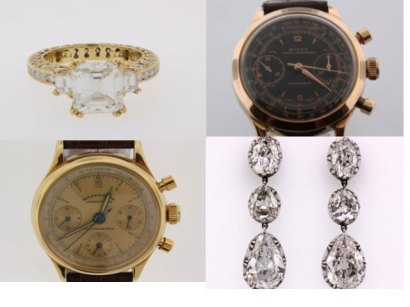
A collection of more than 40 watches, including some women's watches, 17 Rolexes and several Audemars Piguets, Franck Mullers and Jaeger-LeCoultres, will be auctioned off. Big-ticket items include an 18-karat yellow gold, black-faced vintage men's Rolex, the Monoblocco, valued between $75,000 and $87,500 and a pair of Victorian-era diamond earrings estimated to fetch between $14,000 and $21,400. "It's a pretty rare watch and it's pretty desirable," says Julien Schaerer of Antiquorum Auctioneers SA. If the piece is entirely original, he adds, he sees it selling for $75,000 to $100,000.

Also on the auction block: five fur coats by designers including J. Mendel and Bill Blass, Christofle flatware, Tiffany placecard holders and three polo-style shirts monogrammed with the name of one of Mr. Madoff's yachts, "Bull." More-understated souvenirs include three wooden duck decoys, visible in photos of the couple's Montauk home, valued between $53 and $80.

The items became government property in early July when the U.S. Marshals Service took custody of Mr. Madoff's homes. The government has been trying to sell Mr. Madoff's homes and now will auction some personal effects.

To read the full WSJ article, click HERE.

Tech Tip: Free Photo Editor

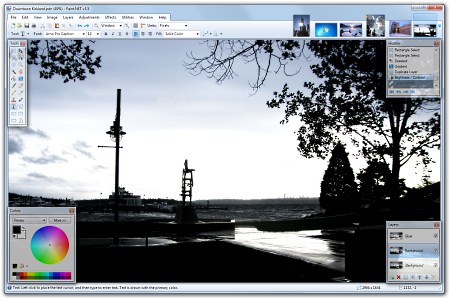
Although not new, but recently updated the free photo editing software Paint.net is now available and it has bee gathering some very good reviews.  It is considered an excellent free alternative to Adobe Photo Shop, Corel Paint Shop Pro and the free but complicated program called the The Gimp.

Some reviews of Paint.net state it is an excellent program without the bloat and system killing code of the larger photo editing tools programs.  I have yet to try it, but the price is certainly right. As appraisers and dealers we regularly use digital images, and having a number of tools and alternatives to the more expensive and robust editing software is always good thing.  I plan on trying Paint.net, and will post about my experience and an evaluation period.

From the Paint.net website.  For more information and additional screen shots, click HERE.
About
Paint.NET is free image and photo editing software for computers that run Windows. Itfeatures an intuitive and innovative user interface with support for layers, unlimited undo, special effects, and a wide variety of useful and powerful tools. An active and growing online community provides friendly help, tutorials, and plugins.
It started development as an undergraduate college senior design project mentored by Microsoft, and is currently being maintained by some of the alumni that originally worked on it. Originally intended as a free replacement for the Microsoft Paint software that comes with Windows, it has grown into a powerful yet simple image and photo editor tool. It has been compared to other digital photo editing software packages such as Adobe® Photoshop®, Corel® Paint Shop Pro®,Microsoft Photo Editor, andThe GIMP.

Features
Simple, intuitive, and innovative user interface
Every feature and user interface element was designed to be immediately intuitive and quickly learnable without assistance. In order to handle multiple images easily, Paint.NET uses a tabbed document interface. The tabs display a live thumbnail of the image instead of a text description. This makes navigation very simple and fast.

The interface is also enhanced for Aero Glass if you are using Windows 7 or Vista.

Performance
Extensive work has gone into making Paint.NET the fastest image editor available. Whether you have a netbook with a power-conscious Atom CPU, or a Dual Intel Xeon workstation with 8 blazingly fast processing cores, you can expect Paint.NET to start up quickly and be responsive to every mouse click.

Layers
Usually only found on expensive or complicated professional software, layers form the basis for a rich image composition experience. You may think of them as a stack of transparency slides that, when viewed together at the same time, form one image.

Active Online Community
Paint.NET has an online forum with a friendly, passionate, and ever-expanding community. Be sure to check out the constantly growing list of tutorials and plugins!

Automatically Updated
Updates are free, and contain new features, performance improvements, and bug fixes. Upgrading to the latest version is very simple, requiring only two clicks of the mouse.

Special Effects
Many special effects are included for enhancing and perfecting your images. Everything from blurring, sharpening, red-eye removal, distortion, noise, and embossing are included. Also included is our unique 3D Rotate/Zoom effect that makes it very easy to add perspective and tilting.

Adjustments are also included which help you tweak an image's brightness, contrast, hue, saturation, curves, and levels. You can also convert an image to black and white, or sepia-toned.


Powerful Tools
Paint.NET includes simple tools for drawing shapes, including an easy-to-use curve tool for drawing splines or Bezier curves. The Gradient tool, new for 3.0, has been cited as an innovative improvement over similar tools provided by other software. The facilities for creating and working with selections is powerful, yet still simple enough to be picked up quickly. Other powerful tools include the Magic Wand for selecting regions of similar color, and the Clone Stamp for copying or erasing portions of an image. There is also a simple text editor, a tool for zooming, and a Recolor tool.

Unlimited History
Everybody makes mistakes, and everybody changes their mind. To accommodate this, every action you perform on an image is recorded in the History window and may be undone. Once you've undone an action, you can also redo it. The length of the history is only limited by available disk space.

Free!
Paint.NET doesn't cost a dime.

11/09/2009

Update: Mold Hazzard

On September 23rd I posted a request for help from a fellow appraiser who was seeking advice on an assignment where an uninhabited house full of valuable property, from antiques to books, required valuation and mold remediation (click HERE to read the original post).  The advice and comments sent in return were excellent, and the appraiser was most appreciative of the responses.  He send me the following update and asked if I would pass it along.  His name and location remain confidential in order to protect the various parties involved.
I did make contact with the executor a few weeks ago just inquire as to the situation of the estate settlement and the mold issues. The mold was a powdery Gray-greenish mold and could be cleaned with some effort though it was thick. I was told that the gentleman, who was the previous owner, through a power of attorney maintained a high standard of insurance. The insurance company's adjuster, the executor, the lawyers and the local health department all met together for some time. It was discovered that the elderly gentleman maintained a very good inventory with all the invoices for what he paid for items and other important papers intact. The latest additions were dated to the years 2003 - 2004 periods (so it was still kind of current). The insurance adjuster then scheduled for a hazardous materials clean up company to clean the house. Three large tents were put up to house the cleaning of the personal property. There was a crew of about 40 people who undertook this task. Which was then inspected by the health department and other officials. Drywall had to be replaced in this case and the studs and flooring were bleached,washed and/or painted. I have no idea how well things cleaned up. It sounds like it was a simple wipe, sweep and wash kind of job.

The executor and the lawyers contacted various benefactors and alerted them to the situation that in lieu of their share of actual property they would receive a monetary compensation instead. They were offered a waiver to sign that if they wanted to attempt to purchase items for sentimental reasons that they could do so and would after wards receive them free of charge up to the value listed in the old inventories. (I think that this is kind of strange.) Those items like rugs, household linens, upholstered furnishings or other porous items that could not be cleaned were "bought" by the insurance adjustor's company (based again on the old inventories) and the executor settled, with increases for inflation and other variables, for an undisclosed amount. The library was on the far end of the house and was not affected to the degree that the rest of the house was. All art work and books were successfully cleaned. There is an auction scheduled for sometime this early December for general household and antique items. The art work and very high end pieces have since been sent out of state to a regional auction house. All in all this was very complicated and I'm glad that I was kept out of the loop.

A Review of London's Asian Week

Last week I posted on some of the results and commentary of Asia Week in London, which just came to a conclusion on November 7th. The Economist has a good review of the week in sales. It notes, as has normally been the case that quality sells, and typically sells for excellent prices, mediocre quality is not selling, or are items that are too aggressively priced and catalog, as evidenced by the Chrisite's sale. The Christies sale saw nearly third of the lots bought in. The article notes that Bonhams had a very good sale, even though one of the main pieces on consignment and featured on the catalog's cover was withdrawn.

The Chines art segment remains strong, and the past week of activity in London bears this out.  Now if some of the other market segments can show some of the same signs of consistent interest and sales, the art market should then start to settle and show signs of fresh growth.

The Economist reported
“The market continues to be strong,” said Roger Keverne, the chairman of this year’s Asian Art in London week. “There is demand where there is any level of quality”. Richard Littleton, a New York dealer, secured the jade seal in the face of steady bidding from five other people until nearly the final rounds. Mr Littleton often acts for Edward Johnson, the founder of Fidelity Insurance and one of the most devoted collectors of Chinese fine art in America. Mr Johnson is known to own a scroll with the mark of this seal, and is widely believed to be the buyer.
The week’s most successful sales, both of Chinese and Japanese objects, were probably at Bonhams, even though Bonhams too had to withdraw a square cloisonné vase that featured on the cover of its Chinese catalogue.

The article contiues

London is still the centre of connoisseurship of fine Chinese objects, with about 30 specialist dealers, more than there are in the whole of Europe and America combined. So it is not surprising that the biggest treat for anyone interested in Chinese fine art this week lay within the discreet dealer showrooms a few hundred yards north and south of Piccadilly and around Kensington Church Street.

Richard Marchant and Littleton & Hennessy both had opulent shows designed to appeal to mainland Chinese taste; Priestley & Ferraro and Ben Janssens chose to focus instead on works that Westerners were more likely to find attractive. David Priestley’s Song ceramics, some of them dating back to the eighth or ninth centuries, had a quiet elegance that contrasted sharply with the hustle and bustle outside. Mr Janssens, the chairman of the Maastricht art fair, had an exquisite show of lacquerware, most of it layered tixi lacquer in black and red. By the end of the week, three-quarters of Mr Janssens’s exhibition had sold to just five buyers. Most were British or continental Europeans. Four of the five collectors bought straight from the catalogue without even bothering to view the sale, which is what you can do when you trust your dealer.

To read the full Economist article, click HERE.

11/08/2009

Auction Apps for the iPhone


Forbes Life has an interesting article on the new functionality of portable phones. The Apple iPhone now has an application for tracking sales, live streaming of prices through Liveauctioneers, and soon actual bidding for the middle level houses. Christie has an application available now and soon Sotehby's will follow, yet neither has stated they plan to allow live bidding through a smart phone application. ArtFact also plans a application, so the bidder can review past auction prices before bidding. I can see the potential for uses during an appraisal inspection or walk thru for quick reference information and values. All on a iPhone or smart phone with an internet connection.

I like technology, but I have never really embraced the use of the mobile phone over and above the original intended use, making phone calls. I have occasionally used texting to track down my son, but besides that, not much else. Perhaps technology is growing faster than I can or care to keep up with, and I love tech.

Forbes Life reports
Short of live bidding, the idea behind these iPhone apps--options for BlackBerrys have also been rolling out--is to make auctions more convenient and accessible. Gone is the need to navigate through Safari to reach an auction site: Touch the app and you're there. Once in, the best apps function a bit like portable versions of actual sites, with catalog and database access. Sale results are posted in real time. On LiveAuctioneers.com, a site providing services to 840 auction houses, the app accommodates absentee bidding.

With iPhones, pictures are paramount. The Christie's app optimizes the iPhone's pinch function so that when you enlarge, zoom in, or rotate an image, the quality is so clear it's the next best thing to inspecting it in person. And eBay's images are remarkably good. "Photo quality can make the difference between bidding or not bidding," says Christopher Knight, gallery director of Maison Gerard, an Art Deco dealer in New York. Ready access to databases is another attraction. If you're poised to bid on a case of 1990 Château Margaux, you can use an app (WinePrices.com, for one) to type in an object's name and get a list of previous prices realized. Such ease will be significant when ArtFact, the world's largest art-and-antiques database (53 million records), introduces its app this fall. "Sharing" functions may be the apps' biggest draw. "You can share images via e-mail or on your phone without [using] your laptop," says Michael Bruno, founder and president of 1stdibs.com, an online marketplace trafficking more than half a billion dollars in inventory including antique furniture, estate and new jewelry, and vintage couture and designer fashion annually. Its app is due next year.

To read the full Forbes Life article, click HERE.

Judith Miller's New Book on Chairs


Jeannie Matteucci writing for the San Francisco Gate reviews Judith Miller's new book on chairs.  The book focuses on Miller's 100 favorite chairs.  The book is appropriately titled, "Chairs", and the editorial review from Amazon states.

Judith Miller celebrates and scrutinizes nearly 400 years of great seating in this sumptuous volume, an ode to the ingenuity of design, craftsmanship and sheer wow factor of the chair.

Ranging from early antiques such as the 1680 Wainscot Chair and the 1740 Louis XV Chaise Lounge, to modern day collectibles such as Marc Newson's 1988  Embryo and Tom Dixon's 2007 Wingback, here are over 100 breathtaking chairs, all photographed on location.

This lavish celebration of Chairs offers design aficionados and furniture lovers both authoritative text and 400 stunning photographs .

In this beautifully designed volume, the chair really is the hero.
Jeannie Matteucci states in her review
Miller's new book, "Chairs" (Conran/Octopus Books USA, $65), gives her a chance to share her passion and celebrate 100 of her favorite chairs - from early antiques like the 1680 Windsor chair to a modern-day collectible like Tom Dixon's 2007 "Wingback" - arranged in easy-to-follow chronological order and beautifully photographed to highlight the unique details of each design. Miller shares historical facts, looks at the overall style of each chair and reflects on the iconic status of designers like Charles-Edouard Jeanneret-Gris (who adopted the pseudonym Le Corbusier in 1920) and Philippe Starck.

"I could only include 100 chairs, but when I originally went over my list I had 450," she admits with a laugh, "but my editor said no." Miller, currently traveling to promote her book and planning a shopping stop in San Francisco ("It's such a beautiful city where you find such an eclectic mix and fusion of antiques," she notes), says you can save money when shopping for antique chairs by buying them singly, instead of searching for a set of six or eight.

"I have eight different chairs around my own dining room table," she says. "If you choose a standard shape of chair - like Queen Anne style - you could build up to a set of eight very easily."

Miller hopes readers come away with a new appreciation for this functional and often stylish piece of furniture.
 To read the full review, click HERE. To order from Amazon, click HERE.

11/07/2009

Asia Week in London


Scott Reyburn of  Bloomberg has a very good article on  the high expectations of Asia week in London. The sales are now on going with some record prices. According to Reyburn, London is expecting a large influx of mainland Chinese find and decorative art dealers. The auction houses expect about $26 million in sales. The oriental art continues to be a strong market segment, and is not showing the uncertainty of many other markets.  But quality still is important and may be driving the market, as you will note with the Chirstie's sale.  It offered over 300 items, and nearly a third did not sell, but the sale with buyers premium still topped the high estimate for the full catalog.

Reyburn states
Apart from auctions, also taking place at Bonhams (which has invited 30 new mainland Chinese buyers), 40 of London’s commercial galleries are offering antiques and artworks ranging from the Middle East to Japan. Many of the week’s most expensively valued pieces are Chinese in origin.

Christie’s Nov. 3 sale of Chinese ceramics and works of art totaled 5.7 million pounds with fees, against a high estimate of 5.2 million pounds, based on hammer prices.

A third of the 319 lots were rejected. Among these was an 18th-century Imperial jade brushpot, estimated at 300,000 pounds to 400,000 pounds, which failed because of criticism of the stone’s color, said dealers.

The top lot was an 18th-century enamel model of a Buddhist stupa, or shrine, which sold for 229,250 pounds against an estimate of 60,000 pounds to 80,000 pounds.

Asian Buyers

Nine out of the 10 most expensive items in the sale fell to Asian buyers, said Christie’s.

“Now English isn’t much heard at the views of these London auctions,” said Marco Almeida, Christie’s London-based specialist in Chinese ceramics and works of art. “It’s just Mandarin and Cantonese.”

Sotheby’s raised 8.3 million pounds in its sale, exceeding its estimate of between 3.4 million pounds and 5 million pounds; 41 percent of the lots failed to sell.

Bonhams will today be offering a white jade seal used by the Emperor Guangxu, who reigned from 1874 to 1908, with an estimate of 100,000 pounds to 150,000 pounds. The seal has been in the same private European collection since the 1960s, said Bonhams, which said its auction of more than 300 lots of Chinese art is estimated to fetch 2 million pounds.

To read the full article, click HERE.

11/06/2009

Sothebys Releases 3rd Quarter and YTD Results

The difference a day can make showed up earlier this week when comparing the poor results of the Christie's Impressionist and Modern Sale to the Sotheby's sale held a day later.  The difference a year can make can be staggering as well.  Third quarter results for 2009 at Sotheby's are rather poor. But when compared with the first 9 months of 2008, the differences are significant to say the least.  Hopefully the 4th quarter sales will minimize the red ink and start the process of a turnaround. Sotheby's has come a long way in reducing expenses and should be commended for those efforts. That being noted, the revenue hits have been substantial and have far outpaced any gains from the reduction of expenses. The press release explains some of the differences and rationale for the drastic sales decline, but the bottom line remains with an operating loss of over $80 million for the first 3 quarters of 2009. The Sotheby's press release covers much of the 3rd quarter activity, and there are positive signs when compared to the 3rd quarter of 2008, but when you compare the YTD figures through September of 2008 and 2009 the difference puts into perspective how poor the year has been for the auction house.

Some comparisons of the first 9 months of 2009 and 2008.

Total Revenues first 9 months 2008:  $525.39 million
Total Revenues first 9 months 2009:  $266.67 million

Total Expenses first 9 months 2008: $450.28 million
Total Expenses first 9 months 2009: $312.46 million

Net Income/Loss first 9 months 2008: $35.76 million
Net Income/Loss first 9 months 2009: ($80.11) million


From the Sotheby's Press Release (interesting that it opens with the positive results of the November Impressionist and Modern sale which is in the 4th quarter)
SOTHEBY’S ANNOUNCES 2009 THIRD QUARTER AND FIRST NINE MONTHS RESULTS
  • November Impressionist and Modern Art Evening Sale Brings $181.8 million, Exceeding the Pre-Sale High Estimate of $163.6 million
  • Third Quarter and First Nine Months Expenses Reduced Dramatically
  • 49% Improvement in Third Quarter Auction Commission Margin
November 5, 2009, New York -- Sotheby’s (NYSE: BID) today announced results for the third quarter and nine months ended September 30, 2009.

For the quarter ended September 30, 2009, Sotheby’s reported revenues of $44.9 million, a $31.0 million, or 41%, decrease from the prior period. This decrease is primarily due to an 80% decline in net auction sales attributable to the movement of the summer London Contemporary Art sales from the third quarter of 2008 to the second quarter of 2009 (net sales of $208 million in the third quarter of 2008), the absence of the prior year’s Damien Hirst single-owner sale in London (net sales of $176 million in the third quarter of 2008) as well as the impact of the downturn in the global economy which continued to negatively impact sales across most collecting categories. The lower level of third quarter revenues is partially offset by a 750 basis point, or 49%, improvement in auction commission margin, from 15.2% in the third quarter of 2008 to 22.7% in the current period, as a result of management’s revenue enhancement strategies and a change in sales mix. Also positively impacting revenues is a $45.5 million reduction in principal activities losses over the period due to the significant level of auction guarantee losses in 2008 that did not recur in the current quarter. The Company continues to significantly limit its use of auction guarantees.

Operating loss for the third quarter of 2009 is ($38.3) million, a $19.1 million, or 33%, improvement when compared to the prior year, primarily due to a $50.1 million, or 38%, reduction in expenses, driven by the Company’s cost reduction initiatives and a lower level of net auction sales during the period. Also contributing to the operating loss improvement is the previously mentioned reduction in principal activities losses.

Net loss for the third quarter of 2009 is ($57.8) million, or ($0.89) per share, compared to ($47.0) million, or ($0.73) per share, for the prior period. This decrease is largely due to the aforementioned decrease in operating revenues, as well as a higher income tax provision in the current period resulting in expense of $10.8 million in the third quarter of 2009 compared to a benefit of $21.2 million in the prior year.
To read the full Sotheby's press release, click HERE.

11/05/2009

2009 Third Quarter Mei Moses Tracking Report

I guess we have to balance the good news from the Sotehby's impressionist and modern sale of last evening with the just released Mei Moses 3rd quarter tracking report values.  The tracking report is showing all categories are down for the first 3 quarters of the year.  I guess the index results are not too surprising to many who closely follow the fine and decorative arts. Hopefully by the end of the year these figures will show signs of a turn around from the 4th quarter sales and the full year will not look nearly as poor.  Only time will tell. Comparing the 3rd quarter and 6 month figures shows the markets appear to have at least stabilized to some extent, perhaps that is a good sign the bleeding has stopped.  Now we wait for the turn-around.

2009 Third Quarter Mei Moses® Tracking Report Index Values:
  • All Art Index down 32.4% 
  • American Before 1950: Down 19.1% 
  • Impressionist and Modern: Down 18.1% 
  • Old Master and 19th Century: Down 30.1% 
  • Post War and Comtemporary down 36.2%
The 6 moth figurs were:
  • All Art Index down 31%
  • American Before 1950: Down 16.3%
  • Impressionist and Modern: Down 13.4%
  • Old Master and 19th Century: Down 34.5%
  • Post War and Comtemporary: Down 36.5%

From a press release on the Beautiful Asset Advisors -Mei Moses Fine Art Index site.
Through the first ten months of the year the strongest collecting category continued to be Impressionist & Modern although with a widening loss now of almost 18%. It was followed closely by the American before 1950 collecting category with a loss of 19% from year end 2008. The only collecting category to show positive growth this quarter was the old master and 19th century area with a loss contracting from 34.5% to 30%.
The weakest collecting category remains Post War and Contemporary with a cumulative loss now approaching 36%. This is on a par with its loss at the end of the second quarter from year end 2008 and still worse than its drop of 32% in the first quarter.

We should also mention that the average of the compound annual return for each work that entered our database for the Post War and Contemporary collecting category during the second quarter, based on New York and London sales, was a negative 0.1% and this quarter it was a negative 1.7%. This negative average return for the works sold in this collecting category for two quarters in a row is a very rare occurrence in our experience and illustrates the extremely weak performance of this category in the current market.

The Post War and Contemporary category was the hottest category in the art market over the last 25 years, and had an average annual gain of 20% per year over the ten years prior to 2008. It showed the largest decline of any of the collecting categories in the first three quarters of 2009. If the market does not improve from the end of October until the end of this year, it will be on a path to almost match the worst annual performance for this index since the record decline of 41% in 1991. The index for this category is in jeopardy of losing 50% of its value in the period since the end of 2007.

When all the collecting category data are combined into our All Art database, the All Art market index showed a slight decline from a mid year loss of 31 % to a current loss of 32.5 an improvement however from the crushing 35% loss of the first quarter. Thus the possibility of a “W” shaped recovery. This still puts the market on target for the second largest annual decrease since 1925. The record decrease of 39% for the All Art Index was recorded in 1991 and the index did not regain its 1990 highpoint until 2003.
Click HERE to read the full report and view charts.

Results: Sotheby's Impressionist and Modern Sale

What a difference one day can make, as we move from the Christie's sale, which was not well received to the Sotheby's Impressionist and Modern Sale which was. I thought the Christie's sale may have broken the momentum from the Frieze and Paris art sales, but the expectations and pace just pick up a day later at the Sotheby's evening sale. As reported yesterday, the Christie's sale was rather small, and with the exception of a few lots many of the pieces in the sale were not considered to be of the best quality.

Last evening Sotehby's had its turn at selling impressionist and modern art in New York. Pre sale estimates ranged from a low of $115 million to a high of $163.6 million for the 66 lots. The sale totaled easily rose above the high estimate to $181.76 million including buyers premiums. Of the 66 lots offered, 56 sold for nearly an 85% sell through rate. The top lot was Alberto Giacometti's, L'homme qui Chavire, conceived in 1950 and cast in 1951 selling for $19,35 million against an estimate of $8-$12 million (see image).

Sotheby's stated
"Tonight’s results were clear vote of confidence for the art market,” said Simon Shaw, Head of Sotheby’s Impressionist and Modern Art Department in New York. “We wanted to put together a sale with works that were not just of great quality but were also presented with attractive estimates. I think the great depth of bidding we saw this evening is a testament to that strategy. Tonight was the first time since May 2006 in New York that we exceeded our top estimate, proving what we have seen consistently this year, that there is an enormous appetite for works of art of great quality.

“Collectors are guided by quality and pricing,” said Emmanuel Di-Donna, Vice Chairman of Sotheby’s Impressionist & Modern Art Department Worldwide. “When you have the right property, such as the iconic work by Giacometti which made $19.3 against a high estimate of $12 million, you get fireworks. 64% of the sold lots tonight exceeded their high estimates – a remarkable result. Demand continues for classic Impressionist works, as evidenced by the fantastic results achieved for seven paintings from the Durand-Ruel Family which brought $18.9 million, well above the high estimate.”

“This is market is very alive,” noted the evening’s auctioneer Tobias Meyer, Worldwide Head of Contemporary Art. “We saw an extraordinary depth of bidding at all levels tonight, from $350,000 all the way up to $12 million.
Sometimes I couldn’t keep up with all of the people who were consecutively and simultaneously bidding. There was participation from America, Europe and across Asia – it was an incredible thing to experience.”

Carol Vogel reporting for the NY Times stated
In an Impressionist and modern art sale that had all the right ingredients — quality, value and variety — Sotheby’s salesroom was teeming on Wednesday night with a United Nations of enthusiastic bidders from Latin America, China, the United States, Russia and elsewhere in Europe.

The results surprised even the auction house. In a little over two hours it sold $181.7 million worth of art, well above its high $163 million estimate. Of the 66 works offered, only 10 failed to sell.

The sale stood in stark contrast to the tepid one at Christie’s the night before that brought just $65.6 million. And where bidding was thin at Christie’s, the opposite was true on Wednesday night: often many collectors vied for a work, pushing prices far beyond their estimates in several cases.

To read Carol Vogel' NY Times article, click HERE.

11/04/2009

Houston Museum of Fine Art Battles Family Over Will

The Museum of Fine Art, Houston is now in court proceedings defending the will against heirs of oilman Alfred C. Glassell Jr., founder of Transcontinental Gas Pipe Line Co. The family is disputing the large bequest to the museum, claiming Glassell was not in the proper state of mind when he left a large portion of his wealth to the museum.

Bloomberg reports the jurors of the trial will have to decide which of the 12 Glassell wills to accept. The museum of course is fighting to keep the large donation from the long time benefactor.

Bloomberg reports
Glassell decided “to give most of his money to charity,” Gerger said. “Nobody tricked him to do that or bamboozled him to do that or pulled the wool over his eyes.” Curry Glassell also will be receiving money from a trust fund, he said.

A lawyer for Curry Glassell said she was set to receive a much larger bequest until her father signed new wills in 2000 and 2003. The earlier wills left Curry Glassell about one- quarter of his estate, a share worth between $100 million and $150 million, attorney Jack Lawter said at the trial today.

‘Changes Radically’

“There’s a long history of how he wanted to treat his family and his property,” Lawter told jurors. “It changes radically right at the very end.”

By this time, Glassell was “a very sick man,” Lawter said. “We’re not saying he was in a coma or couldn’t talk. The evidence will show Mr. Glassell couldn’t form a reasonable judgment on these issues.”

Curry’s lawyers described her as a single mother of two teenage sons who is part-owner of Good Vibes for You, an Australian organic bottled-water company. “She doesn’t run in the same circles as a lot of people in this case,” Lawter said before trial, referring to Alfred III’s prominence on Houston’s charity ball and country-club circuit.

Doubled Size

It will be difficult to persuade jurors that the museum didn’t have a special place in Alfred C. Glassell Jr.’s heart, museum lawyer Joe Jamail said in an interview. As chairman of the museum’s board of trustees in the 1990s, Glassell led a capital campaign that raised $112 million to build an exhibition wing that doubled the museum’s size in 2000, making it the nation’s fifth-largest.

The most visible sign of the oilman’s support was his 1979 donation of the Glassell School of Art, which serves as the MFAH’s teaching wing.
To read the full article, click HERE.

Results: Christie's Impressionist and Modern Sale


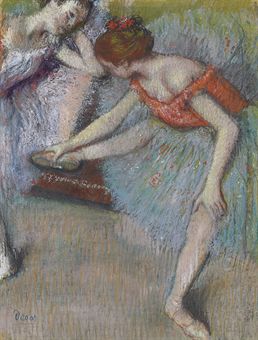
Christie's held its impressionist and modern evening sale on Tuesday evening.  The sale offered only 40 lots (the smallest Christie's evening sale since 2004) of which 28 sold for a sell through rate of 70%.  The sale totaled $65.67 million including buyers premiums.  The the top lot being an Edgar Degas pastel on paper laid on board, which sold for $10.72 million including buyers premium (see image).

Carol Vogel of the NY Times reports the sale was thin, but mentions there were some clear winners, but also a fair number of failures as well.  The 28 of 40 lots sold fell just below the total low estimate for the sale $68.6 million.  Given only 28 lots sold, the dollar amount for those sold does not appear overly negative, yet the 12 of 40 that did not sell is a statement that all is still not well with the market. Vogel also mentions a large contingent of overseas bidders due to the weak US dollar, with only 29% of the buyers from the US. She also mentions mediocre work failed to attract much interest or bids. One item of note, the top lot of the Christie's evening sale, a Picasso, estimated to sell between $7 - $10 million failed to sell.

Vogel states
But not all such appealing images sold. One surprising failure was Pissarro’s “Pont du chemin de fer, Pontoise,” an 1873 landscape. Christie’s had estimated that it would bring at least $3.5 million. But there was only one bidder, who was not prepared to spend more than $3.2 million, so the painting went unsold. “I was surprised,” said Lionel Pissarro, a Paris dealer who is a great-grandson of the artist. “It is a beautiful painting and it wasn’t overpriced.”

Mediocre examples of work by artists like Matisse and Sisley, Mondrian and Modigliani failed to elicit so much as a bid. But no one seemed surprised because buyers in this economy are being careful and are only willing to write big checks when something is considered rare or an especially prime example.

Such was the case with one of Rodin’s bronze kisses, conceived in 1880-81 and cast between 1887 and 1901. It was an early cast, so the details were particularly fresh. Six bidders instantly went for the sculpture, which was sold to Christopher Eykyn, a Manhattan dealer, for $5.6 million ($6.3 million with Christie’s fees) nearly three times its high $2 million estimate. Mr. Eykyn was bidding for a client but he would not identify him.

Provenance mattered too. A sun-dappled Monet landscape depicting a village on the Seine was being sold by an heir of Paul Durand-Ruel, the Paris dealer who championed Impressionist painters long before they were fashionable. Two telephone bidders vied for the painting, which was estimated at $5 million and brought $4.8 million ($5.4 million with fees).

The spin Christie's placed on the sale by Marc Potter, President of Christies America was
This evening’s results demonstrated that classic Impressionist paintings and sculptures across a range of prices continue to achieve strong results, including Degas’s glorious pastel that enjoyed active bidding from around the world. There was also vigorous bidding in the saleroom for some of the finest and freshest works to come to market this season, including Rodin’s The Kiss, Monet’s Vétheuil, effet de soleil, and Lempicka’s Portrait du Marquis Sommi.
Very different from the review in the NY Times by Carol Vogel.  Christie's of course is probably half correct, and mentions the success, with no word of the failures.

To read the NY Times article, click HERE.

11/03/2009

Technology Battles Forgeries

Barbara Wall of the NY Times contributes a very good  interview with Eric Postma, a professor of artificial intelligence at Tilburg University in the Netherlands. Postma is an expert on digital analysis, specifically  in the digitization and mapping of works by Vincent Van Gogh.

Postma discusses the technology and states how the new digital technology has not been completely accepted by many art experts, historians and connoisseurs. It is an interesting interview, and examines how advances in technology add additional tools against the fight of fakes and forgeries in the markeplace. Postam states there is still a long way to go, and additional artists need to be analyzed, and the algorithms need to be refined before further acceptance within the art community can be considered.

Q. The new techniques are based on computer technology. How can they help distinguish between a fake and the genuine article?

A. An important clue in identifying the artist’s style is the configuration of the brush strokes. Our software is able to break down these brush strokes to find a complex pattern unique to every artist. That is just one of many algorithms we use. We also look at pigment and canvas weave.

Working in cooperation with the Van Gogh Museum and the Kröller-Müller Museum, both located in the Netherlands, we have been able to demonstrate the accuracy of digital analysis. A painting depicting the sea at Saintes-Maries, a Van Gogh fake sold by the German art dealer Otto Wacker, fooled experts for years, but our software easily identified the work as suspect. It had too many prominent brush strokes.

Our methodology was also tested on a U.S. television show, “Nova Science,” where we were easily able to distinguish one fake Van Gogh painting from five genuine works by the artist.

Q. Will digital analysis work on all paintings?

A. We are currently analyzing the works of Rubens, Monet and Gauguin. Provided we have a large enough database of paintings to work from, I see no reason why we could not apply our methods to Old Masters and modern works of art alike.

I was recently asked if we could tell whether a “drip” painting by Jackson Pollock was authentic. Clearly there are no brush strokes to work from here, but Richard Taylor at the University of Oregon performed a fractal analysis of Pollock’s paintings using computer algorithms and succeeded in demonstrating how these algorithms could distinguish a true Pollock from a forgery.

A few artists present challenges. When we started our analysis in 2000, we had trouble authenticating the works of Rembrandt because his paintings are dark and the brush strokes difficult to identify. Technology has improved since then and the digital images that we work from are of a much higher quality.

Ultimately, we would like to come up with an algorithm that goes beyond brush strokes and captures the visual structure of a painting. One art historian refers to the “visual rhythm” of Van Gogh. If we could capture the visual rhythm and other artist-specific features in a software package, it would make the work of art historians much easier.
 To read the full interview, click HERE.

Forgery in Baton Rouge

Michael Kunzelman of the Associated Press is reporting on an elderly couple in Baton Rouge, LA who may have been involved in selling forgeries to collectors and dealers since the 1970's. The main forgeries appear to be works by Clementine Hunter. The couple,William Toye and Beryl Ann Toye deny selling forgeries, and claim the FBI has confiscated documents that prove their innocence.  William Toye was suspected of art forgery in the 1970's but never prosecuted. Hunter, who died in 1988 at the age of 101 is known to have created thousands of paintings. Her works once selling for hundreds can now command tens of thousands.

The FBI's probe has expanded beyond Louisiana. In January, an FBI agent took photographs of Hunter paintings at the Weisman Art Museum at the University of Minnesota. The paintings were a gift from a donor who had lived in the area. Lyndel King, the Weisman's director, said FBI Special Agent Randolph Deaton IV informed the museum in March that five of its 38 Hunter paintings may be forgeries.

During an interview at their home this week, the Toyes denied creating or selling any forgeries.

"Once they leave our hands, we have no control over what happens to them," Beryl Ann Toye said. "We had the real ones, and everyone else was faking them."

The Toyes said FBI agents seized records that can prove their innocence.

"I didn't confess anything because I didn't do anything," William Toye said.

The couple also is suspected of using an intermediary, Robert Edwin Lucky Jr., to sell forged paintings, Deaton wrote in court documents. Lucky told the FBI he met the Toyes about 10 years ago and has sold up to 100 paintings he obtained from them.

The FBI said Lucky learned from experts in Hunter's works that the Toyes' paintings were forgeries but continued to sell them, an allegation Lucky denies.

To read the full article, click HERE.

11/02/2009

Lehman Art Does Well in Philadelphia


Lindsay Pollock writing for Bloomberg reports the Lehman Brothers bankruptcy art sale at Freemans auction of Philadelphia was a success.   The sale totaled $1.35 million, nearly double expectations for the 283 lots, although as Pollock points out, it does very little to satisfy the $250 billion debt of the bankrupt investment house. The top lot was Roy Lichtenstein’s Statue of Liberty print which sold for $49,000.00 against a high estimate of $25,000 (see image).

From an appraisal perspective, and I mentioned this in an earlier post post about Lehman Brothers art where I was assuming the sale would do better than expected to track the lots for provenance adjustments.  Given there were so many prints,the sale results are excellent for tracking the impact and degree of notoriety and provenance on works of art.  Excellent results for use as parallel examples for that comes out of a known collection.

Pollack states
Other pricey lots included a 1975 primary-colored set of seven Robert Indiana prints called “Polygons.” Expected to fetch no more than $6,000, the set went for $23,750. Arturo Herrera’s “Mine,” a looping blue-and-white collage, sold for $16,250 to a Venezuelan collector attending his first auction. All of the 283 lots sold, and the majority were offered without a minimum price.

“I think there was a certain amount of trophy hunting,” said Alasdair Nichol, Freeman’s vice chairman and auctioneer, after the sale, noting the presence of former Lehman employees and staffers from other financial companies. “What’s not to like? It’s nice boardroom art, presented nicely, ready to go up on the walls. People lapped it up.”

‘Piece of History’

“This gives you a piece of financial history -- good, bad or indifferent,” said art adviser Scott Drucks, of the New Jersey-based Forrest Scott Group, who works with corporate and bank clients including Barclays Plc, Hewlett-Packard Co. and AT&T Inc. “Prices were fair and the estimates were low.” Barclays, which purchased part of Lehman, declined to exercise an option to buy some of the art collection.
 To read the full article, click HERE.

Financial Times Previews Modern and Impressionist Sales

Georgina Ada's of the Financial Times has an interesting preview column on the upcoming impressionist and modern sales at Christies and Sotheby's in New York.As has become standard practice, all is measured against early sales in 2008 followed by the melt down in the fall of 2008 after Lehman Brothers bankruptcy.  You do get a little tired of hearing about last years sales and I assume it is necessary to set the stage for the current sales, of  a year later.

Ada states confidence is up, but the total prices the sales are expected to realize are still far below those of past years.  Sothebys is offering 60 items in their premiere event and Christies is offering 41 lots. The interesting news is in the Sotehby's sale were there is an irrevocable bid left on a Picasso. The article also covers some other art topics, so it is an interesting read.

Ada reports
But confidence has been returning to the market on the back of a bouncy Art Basel fair, and consignments have followed, boosted by the first major sale of “distress” art in the case of Sotheby’s. All the same, the total expected this week is still well down and stands between $218.5m and $324.5m for both houses.

First up is impressionist and modern art, and Christie’s opens the ball on Tuesday evening with 41 works estimated between $68m and $97m. There are few highlights but the cover lot is a very pretty Degas pastel of “Danseuses” ($7m-$9m). This is being sold as part of a restitution agreement with the heirs of Jewish collectors Ludwig and Margret Kainer, who were forced by the Nazis to sell the painting in 1935.

Sotheby’s 60-lot evening sale on Wednesday is estimated at up to $160m and includes 27 works that come from a Dutch investor, Louis Reijtenbagh. During a three-year spending spree he made massive investments in private equity; he has now settled claims brought by a number of banks and some of his art collection has been impounded. In a statement, Reijtenbagh confirmed that “these works ... were previously pledged either to ABN Amro Bank Luxembourg SA or JPMorgan Chase as collateral for loans ... these loans have been fully satisfied.”

To read the full FT article, click HERE.

11/01/2009

Sotheby's Video and Impressionist and Modern Evening Sale


Sotehby's has a video introduction and preview of the November 4th Impressionist & Modern Art Evening Sale, with Emmanuel Di Donna, Simon Shaw and David Norman being held in NY. The sale includes workds by Giacometti, Picasso, and Miro.  The Giacometti, Homme qui chavire or falling man sculpture is estimated to bring between $8 - $12 million (see image). There are a fair number of lots by Picasso in this weeks sale, including BUSTE  D'HOMME, and like the Giacometti also estimated to sell between $8 - $12 million (see image).  I will post results after the sale.

According to Sotheby's the sale includes:
Sotheby’s fall Evening Sale of Impressionist and Modern Art in New York presents a balanced offering ranging from an exquisite group of classic Impressionist pictures by Renoir, Pissarro and Sisley from the family of legendary dealer Paul Durand-Ruel, to masterpieces by modern Masters like Picasso, Giacometti and Miró. The sale is overwhelmingly drawn from esteemed private collections and estates offering collectors works that are extremely fresh to the market.

Among the individual highlights are a powerful masterwork by Kees van Dongen which exemplifies his reputation as the greatest figural painter of the Fauves; the greatest Bauhaus-period Kandinsky to have appeared at auction in years and which was last sold in Sotheby's historic 1964 sale of Fifty Paintings by Wassily Kandinsky from the Solomon R. Guggenheim Foundation; one of the Picasso’s finest monumental late works; and the only painted cast of Alberto Giacometti’s iconic Falling Man.

Click HERE to view the video preview of the auction.

Titanic Debate


Fellow appraiser Kathi Jablonski forwarded me this interesting article on the fate and ownership rights of the Titanic from the Luxist website. The company which discovered the vessel, RMS Titanic is looking to be more profitable, over and above tours and to sell some of the 5,900 items that have so far been removed from the site in order to recover salvage costs.  According to the Luxist article, the property from the sunken luxury ocean liner could be worth over $100 million.  RMS Titanic is going to court to try to obtain at least partial ownership of the salvaged property. Te U.S. and England have protected the Titanic site and property as an international memorial.

Deidre Woolard of the Luxist reports:
The company RMS Titanic (RMST) has emerged as the owner of the salvage rights. RMST is considering a seventh dive next year, its first since 2004 although other dives, including one financed by "Titanic" director James Cameron, have taken place. RMST has already recovered 5,900 artifacts from the ship during the first six dives. Legally the company does not own the ship nor the recovered items and it has gone to court in pursuit of limited ownership as a way to make up for the huge salvage costs. RMST shareholders would like the company to be more profitable. An agreement between Britain and the U.S. protects the Titanic as an international memorial and protects the site from unauthorized treasure hunters.

RMST would like to be declared the legal owner of the existing Titanic collection in order to recover some of the costs of salvage which have not been covered by revenues from the touring exhibition which has been shown at various museums. If RMST were declared the owner it could also sell the collection to a museum. If it cannot get the rights, RMST has asked a salvage reward of $225 million.
To read the full article, click HERE.