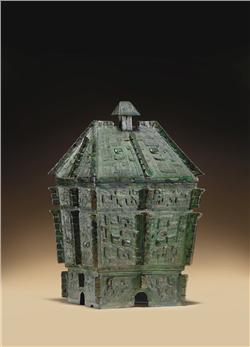
The article states most fake art after confiscation is dealt with on a case by case basis, and many times it is returned to the owner. In other cases before a return the artwork may be marked or may have a requirement for a accompanying certificate stating it is a counterfeit piece.
A very good article for both appraisers and dealers to be aware of.
Grant reports
Click HERE to read the full article.What to do with counterfeit art is determined on a case-by-case basis, often dependent upon whether or not the owner knew that it was a fake. Proving fraud, intentional deception, is often quite difficult, according to Lawrence Katz, counsel for the inspection division of the U.S. Postal Service, because "in the very subjective world of the arts, people can simply make an honest mistake." There is little hope of obtaining a court order to destroy counterfeit property or pressuring an owner to forfeit it to law enforcement agents when there is only a question of an attribution in dispute.
When the FBI recovers a stolen -- albeit fake -- artwork, "in most cases, all we can do is return it," Chaffinch said. At times, agents will advise the owner that the work is a counterfeit, which implicitly puts that person on notice that the piece should not be represented as authentic in the event that it is sold, but works of questionable ownership and authenticity "tend to pass through various hands" before law enforcement is alerted that a crime has taken place, she added.
"The best way to insure that a counterfeit artwork doesn't resurface in the art world is to destroy or deface it," said Catherine Begley, a former special agent in the New York office of the FBI. "Shred it, incinerate it, stamp it so that no one will be fooled again."
In fact, both the U.S. Postal Service and the FBI try to do exactly that, permanently marking the work (branding a sculpture or applying an ink stamp to a painting or work on paper) as a fake, requiring that the work be accompanied by a certificate describing it as counterfeit, applying (through the U.S. attorney in charge of trying the case) to a judge for permission to destroy the work or pressuring the suspect to forfeit or abandon the work to the government as part of a plea agreement.