8/28/2019

AAA Conference - Early Bird Registration Closes Aug 30

Earlier this month I posted on Art Law Day, Nov 8th at the Benjamin N. Cardozo School of Law, 55 5th Ave, New York, NY (click HERE for additional information on Art Law Day). As many appraisers and allied professional know, that is only half of the appraisal education in NYC hosted by the Appraisers Association of America (AAA).

On Nov 9 & 10 AAA hosts its 2019 Of Value: National Conference at the New York Athletic Club. I have attended many of AAA conferences and they always host a great conference with top industry speakers, with timely topics. Some of the best panel discussion on appraisal topics I have seen have been at the AAA annual conference. I highly recommend all appraisers, both new to the profession and seasoned professionals attend this important annual appraisal conference. It is a great conference to network and meet new professionals, the exhibition hall is always full of interesting affiliated partners and you cant beat being in NYC.

The early bird registration closes on August 30th. Registration is as follows:

REGISTRATION

Includes full access to all conference sessions, three-course plated award luncheon,
snack breaks, evening reception, and exhibitor hall.

Two-Day Registration
    Members                                                    General Admission
    $550 - Early Registration (ends 8/30)    $625 - Early Registration (ends 8/30)
    $600 - Registration (8/31-11/1)                    $675 - Registration (8/31-11/1)
    $625 - On-site                                            $725 - On-site

Early Bird Registration Open!

Early registration closes August 30, 2019

2019 Of Value: National Conference

Saturday, November 9

Sunday, November 10

New York Athletic Club
180 Central Park South
New York, NY

About the Conference

This year's Conference will present experts from across the country to address various important topics to an audience of 325 of art world participants. Our conference brings together professionals from across the art world spectrum, including appraisers of the fine and decorative arts, art dealers, advisors, consultants, attorneys, archivists, gallerists and many others
The Program
Saturday, November 9

 • • • • • 9:00 - 9:30am Keynote • • • • • •
The State of the Art
and Luxury Auction Market

Brook Hazelton
Chairman, WineCredit
Chairman, Advisory Board, LiveAuctioneers
• • • • • 9:30 - 10:30am Panel • • • • • •

Evolution of Auction House Models
Laura Doyle CEO Doyle
Kathleen Guzman Managing Director Heritage Auctions
Phil Michaelson CEO LiveAuctioneers
Brook Hazelton, Moderator

• • • • • 10:30 - 11:30am Coffee Break • • • • • •
 • • • • • 11:00am - 12:00pm Panel • • • • • •
Public Art
Kiersten Johnsen Account Manager DeWitt Stern/Risk Strategies
Susan McDonough, AAA McDonough Fine Art Appraisals, LLC
Nancy Rosen Nancy Rosen Incorporated
Nancy Harrison, AAA, Moderator Emigrant Bank Fine Art Finance
• • • • • 12:00 - 1:00pm Panel • • • • • •
Southern Paintings of the 18th and 19th Centuries: Connoisseurship and Market
Robert M. Hicklin, Jr. Founder The Charleston Renaissance Gallery
Martha R. Severens Curator Greenville County Museum of Art
Amy Parenti, Moderator Freeman's Auction
Mary Rabbitt, Moderator Mary Rabbitt Appraisals & Consulting

• • • • • 1:00 - 2:30pm Networking Luncheon • • • • • •
(included in registration fee)
• • • • • 2:30 - 3:45pm Connoisseurship Sessions • • • • • •
1. Understanding the Market for Ultra-Contemporary Art
    Julia Halperin Executive Editor artnet News
2. Current Market in Civil War Memorabilia
    John Sexton Independent Appraiser Civil War Appraiser
3. An Exercise in the Authentication of a Painting
    Jehane Ragai, Ph.D. Emeritus Professor of Chemistry The American University in Cairo
4. Beyond USPAP:   A Practical Approach to Operating  a General Appraisal Practice
    Robert Levy, AAA  President/CEO ARTXPRT, Beverly Hills Appraisal Co.
• • • • • 3:45 - 4:15pm Coffee Break • • • • • •
• • • • • 4:20 - 5:30pm Panel • • • • • •
Archives
Janine St. Germain Archivist
Kathleen Mangan Executive Director Lenore G. Tawney Foundation
Francine Snyder Director of Archives Robert Rauschenberg Foundation
Helaine Fendelman, AAA, Moderator CEO Helaine Fendelman & Associates


Sunday, November 10

 • • • • • 9:00 - 9:30am Keynote • • • • • •

Strategies of Financially and Technologically Savvy Collectors
 Doug Woodham Managing Partner Art Fiduciary Advisors

• • • • • 9:30 - 10:30am Panel • • • • • •
The Convergence of Artificial Intelligence on Art
Nanne Dekking Founder Artory, Inc.
Steven Frank Co-Founder and Manager Art Eye-D Associates
Doug Woodham Managing Partner Art Fiduciary Advisors
Cynthia Gayton, Moderator Attorney Gayton Law
• • • • • 10:30 - 11:30am Coffee Break • • • • • •
 • • • • • 11:00am - 12:00pm Panel • • • • • •
Celebrating Bauhaus
Margret Kentgens-Craig Author, "The Bauhaus and America: First Contacts, 1919-1936"
Michael Jefferson Christie's
David Leiber David Zwirner
Sabine Wilson, Ph.D., AAA, Moderator Sabine Wilson Fine Art LLC
• • • • • 12:00 - 1:00pm Panel • • • • • •
Women Artists/Feminist Artists: Does a Rising Tide Raise All Boats?
Jill Weinberg Adams Lennon Weinberg
Kat Griefin Co-Owner and Co-Director Accola Griefin Gallery
Jay Grimm, AAA, Moderator Independent Appraiser Jay Grimm Art Advisory
• • • • • 1:00 - 2:30pm Networking Luncheon • • • • • •
(included in registration fee)
• • • • • 2:30 - 3:45pm Connoisseurship Sessions • • • • • •
1. Jewelry at Auction: Beyond the Vault
     Robin Wright Senior Vice President, Senior Specialist Sotheby's
2. Samplers: Schoolgirl Art and Education
     Cynthia Shank Steinhoff Co-author, "Delaware Discoveries: Girlhood Embroidery, 1750-1850"
 3. Searching Databases for Valid Comparables for the Decorative Arts
     Susan Hunter, AAA Director of Appraisals
     Winston Art Group  Molly Seiler, AAA
     President, Molly Seiler Art Advisory & Appraisal Services
4. 50th Anniversary of Woodstock
     Helen Hall, AAA
      DIG Appraisals

• • • • • 3:45 - 4:15pm Coffee Break • • • • • •
• • • • • 4:20 - 5:30pm Panel • • • • • •
Ask the IRS
Robin Bonner Art Appraiser Art Appraisal Services, IRS
Maricarmen Cuello Director Art Appraisal Services, IRS
Karin Gross Special Counsel, IRS Office of Chief Counsel, IRS
Source: AAA 


8/26/2019

More on Kollsman


Fellow appraiser Cindy Charleston Rosenberg, ISA CAPP who has been tracking trade and professional publications on the Kollsman decision sent me an interesting post from John Russell, J.D., ASA's Senior Director of Government Relations and Business Development. I am please to serve on TAFAC's Personal Property Issues Committee with John, and he has a great grasp of what is happening within the appraisal community, government entities and with allied professionals through his gov relations and bus development position.

I am really pleased to see that each of the major appraisal organizations (ISA, AAA and ASA), as well as the Appraisal Foundation have all come out and acknowledged the importance of the original Kollsman decision and it being upheld and strengthened by the appeals court.

John Russell writes in the ASA Newsroom
Is Kollsman a Major Shift? Three Takeaways from the Upheld Tax Court Decision, and One Thought

By John Russell, J.D., ASA’s Senior Director of Government Relations and Business Development

Much has been discussed in the wake of the 9th Circuit’s decision upholding the Tax Court opinion in Kollsman v. Commissioner, and how the decision impacts estate and gift valuations moving forward. While the practices of executors, attorneys, and accountants won’t change overnight because of Kollsman, the case does provide three good talking points for appraisers when explaining why an objective appraisal is the best choice in estate or gift situations.

The Tax Court clearly held Wachter’s interest in consigning the paintings against him.
The simultaneous acts of providing an opinion of fair market value and offering to consign the works at auction worked to irreparably damage Wachter’s ability to posit an objective opinion of value. In fact, the court felt that Wachter had “a direct financial incentive to curry favor with Mr. Hyland by providing…’lowball’ estimates that would lessen the Federal estate tax burden…”[1] No matter what followed, it would be difficult if not impossible for Wachter to be perceived as neutral, disinterested, and objective – the most essential traits of a professional appraiser.

In talking about Kollsman, the need for objectivity in the valuation is the biggest takeaway. The other issues identified by the Tax Court with Wachter’s opinion could have been rectified at any point between the original valuation date and the subsequent litigation, but once compromised it is virtually impossible to reestablish objectivity. That’s not to say you can’t provide other related services to a client for whom you’ve completed an appraisal for IRS-related purposes; you can, but it’s best not to solicit those other services and instead rely on the client asking for those services only after you’ve completed your appraisal assignment. The murkier the timing or the more direct the solicitation, the closer you get to an objectivity problem.

Diligence in obtaining “reasonable knowledge of relevant facts” matters.
The condition of the paintings in Kollsman was a significant factor identified by Wachter that, in his opinion, affected the value of the works. If true, then, why did Wachter not take the logical step of determining the costs and risks associated with restoring the paintings? That question clearly bothered the Tax Court, who not only pointed to the Estate Tax regulations in their opinion, but underscored the need to discover and investigate “those facts that a reasonable buyer or seller would uncover during the course of negotiations.”[2] To that end, the Tax Court found that “given the dirty condition of the paintings on the valuation date, a reasonable investigation into their values would involve at the very least seeking an opinion from a conservator about the risks and likely outcome of having them cleaned.”[3]

Appraisers who regularly perform tax related valuations not only understand relevant regulations, but legal precedents that can also affect their assignments. By explaining these relevant legal and regulatory requirements to potential clients, an appraiser not only establishes their own credibility, but makes clear that anything less than a competent professional appraiser performing the valuation injects the risk of overlooked or unknown elements that, if absent, can seriously undermine the legitimacy of an opinion of value.

The days of “because I said so” are long gone.
On the issue of comparable sales and their use, the Tax Court was most pointed: “Mr. Wachter…has provided no comparables to support his valuations. This omission is remarkable. We have repeatedly found sale prices for comparable works quite important to determining the value of art.”[4]

The absence of such basic valuation tenets from a proffered valuation is a fatal flaw in the eyes of the Tax Court. It is essential for appraisers to substantiate their opinions, and be further prepared in the event the Service challenges their findings. Being able to explain to a potential client not only what the report will provide, but how the workfile requirements of USPAP afford further documentation with each assignment, provides one last key differentiator appraisers can lean on when explaining why their services are the right choice in estate and gift assignments.

 So Where does IRS Valuation Go From Here?

Clearly, the Tax Court was quick to point out the ways in which Wachter’s valuation fell short of their expectations. In many ways, the deficiencies in Wachter’s opinion are ones that, if we were dealing with a charitable contribution issue, would be covered by Section 170’s requirement for a “qualified appraisal.” His lack of impartiality from the outset, however, would fall short of meeting the “qualified appraiser” threshold. So – if the deficiencies identified by the Tax Court are, in large part, dealt with for charitable contributions – why not simply extend the requirements in charitable contribution to estate and gift? Not only would it provide more concrete expectations on both the professional and the product they deliver to both clients and the Service, it would eliminate the current two-tiered approach to valuation that currently exists.  
Source: ASA Newsroom


8/21/2019

Foundation for Appraisal Education Seminar - Oct 4 & 5


The 7th annual Foundation for Appraisal Education Seminar is scheduled for October 4 & 5 at New Auction Company in New Orleans.

CLICK HERE for more information, speaker bios and registration.

The Foundation always hosts great seminars with interesting speakers and great venues.

The mission of the foundation is "to raise funds and award scholarships to those seeking to improve their knowledge in the field of personal property appraising. As a nonprofit organization independent of any professional appraisal societies, FAE welcomes all appraisers to become members and/or apply for scholarships. Whether you are new to the field or a seasoned professional, we believe that the pursuit of appraisal education is a worthy endeavor to support."

The FAE and their scholarships are "to advance the education, capabilities and skills of personal property appraisers through scholarships. By attending classes through ISA, AAA, ASA, Winterthur or The Museum of Early Southern Decorative Arts, etc. and attending the FAE annual seminar, recipients gain access to presentations by leading experts in their fields benefiting from a diverse network of industry participants."

For more information on scholarships, the FAE mission and the seminar, CLICK HERE.

The Foundation for Appraisal Education reports on the seminar
ABOUT THE SEMINAR
The 2019 Foundation for Appraisal Education Annual Educational Seminar will take place at Neal Auction Company at their Magazine Street auction gallery location in the beautiful historic Garden District of New Orleans. The theme of 300 Years of Southern Style will cover topics from French wallpaper trends in early Southern American homes, to the trends in Southern Art from Clementine Hunter to Blue Dog to the Contemporary Art Scene. Seminar will also feature a talk on best practices to strengthen your business and the importance of your engagement agreements.

Educational Seminar
As part of its dedication to the advancement of appraisal education, the FAE produces an annual 2-day educational seminar. Every year, we select a destination city and a diverse group of presenters on topics that provide both antiques, furnishings & decorative arts and fine art appraisers with learning opportunities and professional development credits. These seminars are open to ISA, AAA and ASA appraisers, as well as individuals interested in the field of topics presented.

We hope to see you in New Orleans, October 4-5, 2019!

Three Centuries of Southern Style

Our educational weekend will be hosted at Neal Auction Company and will be packed with seminars on southern fine and decorative arts.

​Registration
Register for the seminar here
$395 for the entire seminar or $200 for one day

Schedule
Thursday 10/3

9:00am-6:00pm: The International Society of Appraisers (ISA) will be offering one of their most in demand courses, Advanced Appraisal Methodology, at Neal Auction on 10/3. Please visit their sit for more information and take advantage of this great opportunity to take the course before the seminar begins! https://www.isa-appraisers.org/courses/course/323

7:00pm: Ogden Museum Cocktail Party with live music at the fine art museum in New Orleans’ whose emphasis is on historic to contemporary Southern Art. (Included in Seminar Fee)

Friday 10/4

8:30am: Coffee & continental breakfast

9:00am: Welcome/opening remarks

9:15am: The Art of George Rodrigue-Cajun, Blue Dogs and Beyond by Marney Robinson

10:15am: Coffee break

10:30am: Goods of Every Description by Lydia Blackmore

11:30am: Southern Silver by Carey Mackie

12:30pm: Lunch

1:30pm: 100 Years of Antiques by MS Rau Antiques

2:30pm: Break

2:45pm: Chasing the “Butterfly Man”: Understanding Historic New Orleans Furniture from Armoires to Campeche Chairs by Cybele Gontar

3:45pm: Art Theft & Fraud by Randy Deaton

5:00pm: Neal Auction Co. will host a New Orleans themed Cocktail Party at the Seminar location for only FAE Seminar attendees. This special event will feature highlights from Neal’s Annual Louisiana Purchase auction, with items exclusively on preview to FAE Seminar Attendees.  (Included in Seminar Fee)

​Saturday 10/5

8:30am: Coffee & continental breakfast

9:00am: French Wallpapers by Christine Speare

10:00am: Contemporary Art Gallery Panel Discussion

11:00am: Coffee break

11:15am: Clementine Hunter Fakes by Tommy Whitehead

12:15pm: Lunch

1:15pm: Research Resources at THNOC by Pruitt & Woynowski

2:15pm: Storyville by Pamela Arcenaux

3:15pm: Break

3:30pm: Personal Property Appraisal Engagement Letters by Kathy Kelly

4:30pm: Mardi Gras Collectibles by Wayne Phillips

Saturday Evening:  New Orleans Art For Art Sake, Magazine Street: Each Fall New Orleans kicks off the art season with music, wine, gallery openings and shopping. the Seminar will take place in the heart of the event, so attendees can take part in the night of gallery hopping and shopping: https://www.magazinestreet.com/event/art-for-arts-sake/
Source: The Foundation for Appraisal Education 


8/20/2019

Artist Archives


Over the past few years artist archives and appraising artist archives became an important topic and professional opportunity within the personal property appraisal community. Fellow appraiser Soodie Beasley, AAA, ASA shared an article from the NY Times Style Magazine on artist archives. It was too long to post the full article, the block quote has a portion of the article on why artists keep archives and are archives worth keeping.

If you appraise artist archives you may wish to read the article, and if you dont, you still may wish to gain a better understanding of them.  Follow the below source link for the full article.

The NY Times reports
There are two questions surrounding artists and their archives. Why do artists keep them? And what is worth keeping? Legacy and ego certainly play a part in answering the first question, as does an acute awareness of one’s mortality. But in the last century alone there has also developed a clear distrust of institutional integrity, an overall unhappiness with what white cube galleries and museums can offer. A creative desire has arisen — as the sculptor Isamu Noguchi experienced when he opened his own museum in 1985 — to preserve the context of an artwork alongside the work itself. In 1977, Donald Judd, who saw the paintings of a previous generation of artists scattered across collections or neglected, with little effort toward genuine conservation, wrote, “My work and that of my contemporaries that I acquired was not made to be property. It’s simply art. I want the work I have to remain that way. It is not on the market, not for sale, not subject to the ignorance of the public, not open to perversion.”

The answer to the second question is more complicated. At least in contemporary terms — as art has entered various new, confounding mediums and the market has so inflated the value of work that artists can entertain ideas of their legacy, at least financially, on far more ambitious terms than they would have even 50 years ago — archives themselves have become a kind of competitive commodity. Saving early work or rejection letters is a rare feat of foresight bolstered by a healthy ego. (Andy Warhol famously kept a 1956 letter from the Museum of Modern Art in New York declining a drawing called “Shoe” and informing him that the work “may be picked up from the Museum at your convenience.”) Do major artists simply have a premonitory confidence in their work? Or are they major artists in part because, in saving everything, they are able to compile a fuller view of themselves? Still, what we accept for the historical record has expanded over time to be more holistic than not. What we deem worth keeping now seems to include everything.
Source: The NY Times Style Magazine


8/19/2019

Collector Car News


Last week we saw some interesting auto sales, a Porsche designed Nazi car and a James Bond Aston martin DB5 promotional car, complete with Bond enhancements.

The Porsche failed to sell and there were some unusual auction bidding and bid acceptances from the auctioneer, later stating bids were misheard. The Porsche failed to sell. The Bloomberg article also reported on other sales, with results appearing the market is not strong with sales being off by 50% from the 2018 sale.

When completed, these types of sales are good parallel comparable to be used when appraising with rarity and celebrity type premiums.

James Bond Aston Martin DB5 sells for $6.4 million (from the Guardian)
James Bond Aston Martin DB5 sold at auction for £5.2m
Car was once owned by JCB billionaire and Tory party donor Lord Bamford

An Aston Martin DB5 used to promote the James Bond film Thunderball has sold for $6.4m (£5.2m) at the world’s biggest classic car auction in California.

The car, which was once owned by the British JCB billionaire and Tory party donor Lord Bamford, exceeded its auction estimate and became the world’s most expensive DB5.

Barney Ruprecht, of the auctioneer RM Sotheby’s, said: “We are beyond thrilled … and proud to have set a new record for the most valuable DB5 sold at auction. Beyond this new auction record, the enormous amount of interest in the car and excitement surrounding it ahead of the auction solidifies its status as the ‘most famous car in the world’, along with the collector car hobby’s great respect for the Aston Martin brand.”

 The car used to promote Thunderball includes 13 modifications including a Browning 30-caliber machine gun in each bumper.

 The car used to promote Thunderball includes 13 modifications including a Browning 30-caliber machine gun in each bumper. Photograph: Richard Drew/AP
The DB5 was one of the star lots at the Monterey Car Week, which is expected to generate sales in excess of $380m. More than 100 cars are expected to sell for more than $1m each.

Sean Connery, who drove a DB5 in two of the 007 films, said: “These DB5s are amazing. I remember the Furka Pass tyre shredding [in a car chase in Goldfinger], as well as the promotional events with these cars – they have become increasingly iconic since Goldfinger and Thunderball. In fact, I bought a very fine DB5 myself relatively recently.”

The car is not the one used in the filming, but it is an almost exact replica commissioned by film-maker Eon Productions and used at promotional events for Thunderball. It includes 13 modifications created for Bond, including a Browning 30-caliber machine gun in each bumper, tyre slashers mounted on its wheel hubs and a bulletproof rear screen that can be raised and lowered from behind the rear windscreen.

Later on Friday a rare road-legal silver McLaren F1 car is expected to sell for between $21m and $23m. If it sells for more than $22.5m, it will become the most expensive British car ever sold
Source: The Guardian

Bloomberg reports - Porsche Designed Type 64/Nazi Car - Fails to sell after Auction Errors
Porsche’s Type 64 Nazi Car Fails to Sell Amid Auction Blunder
After what some in the audience thought was an attempt at a joke with the starting bid, the controversial coupe doesn't find a new home.

After the biggest blunder in recent auction history, the Nazi car that Ferdinand Porsche made didn’t sell.

During Saturday night’s highly charged standing-room only auction in downtown Monterey, California, auctioneers at RM Sotheby’s premier sale dimmed the lights and showed a promotional video they had made ahead of the much-anticipated sale of the 1939 Type 64. The controversial silver coupe had been expected to sell for some $20 million before a massive mistake by the auction house upset the crowded room, leaving some collectors to believe it was an attempt at a joke.

“This is the only surviving example personally driven by Ferdinand Porsche,” the evening’s emcee said, then announced that bidding would open at “$30 million,” a figure that was written on the front media screen of the auction theater. Half of the crowd laughed; the other half cheered. After rapid bidding up to “$70 million,” with the crowd on its feet, iPhones raised, and cheering, the auctioneer announced that he said “$17 million,” rather than "$70 million." The media screen was quickly changed to reflect the $17 million sum.

Boos and shocked yelps and shouts ensued. People walked out.

“What a joke,” said Johnny Shaughnessy, a collector from Southern California, who was in the room when it happened. “They just lost so much credibility. My father could have bought that car for $5 million years ago. It has been passed around for years, and no one wants it.”

“As bidding opened on the Type 64, increments were incorrectly displayed on the screen, causing unfortunate confusion in the room,” the company said in a statement. “This was the result of a totally inadvertent and unintentional mistake.” The company said it was an “unfortunate misunderstanding amplified by excitement in the room.”

Comments from collectors in the crowd right after the episode included “What a scam,” “They just slit their own throat,” and “It worked for Banksy; it didn’t work for RM,” a reference to the 2018 Sotheby’s sale which saw a piece of artwork by Banksy shredded in a surprise stunt just after it sold.

John Bothwell, the director of Pur Sang Bugattis, called it “a massive f__k-up.” Two RM Sotheby’s representatives were not available for comment after the sale; a third walked away without a word when approached for a statement about the car. In an emailed response to a Bloomberg News request for comment, a spokeswoman said that “despite interest from discerning collectors, we were unable to reach common ground between seller and buyer on the night.”

The auction for the Type 64 was terminated in minutes, after no bids above $17 million appeared in the room.

It’s not enough money. The car is listed as “Still for Sale” on the RM Sotheby’s online auction catalog.

The Type 64 was far from the only rough sale during a weekend where gross totals through Friday were down about 25%, or about $50 million, from 2018, according to Hagerty. Across the board, while there were 16 more cars offered for the first two days of auctions in 2019, almost 30 fewer cars were sold. The average sale price was $75,000 less than last year. Insiders at RM Sotheby’s described the current market as “a bloodbath.”

The top seller on Friday, a McLaren F1 expected to sell for as much as $23 million, took just over $19 million during the RM Sotheby’s auction that night.

But the Type 64 was the most white-hot of the lot, with noted collectors and Porsche bigwigs discussing its veracity in hushed tones for weeks before the sale. Rather than its UFO looks or its astronomical asking price, it was the name of the car that caused all the hubbub.

Some observers, led by the terminology in RM Sotheby’s own auction catalog, called the silver coupe a true Porsche. After all, it was made by Ferdinand Porsche himself; he even added his name to the front of it about a decade after he made it. And with its round headlights and small rounded hood and roofline, it clearly bears signs of early design philosophies that trickled down to the car that is widely accepted to be the first Porsche, the 1948 356 GmĂ¼nd Coupe, and later Porsches like the 911 and Cayman.

Others, including the man who inspected the car for RM Sotheby’s before it went to sale, were careful to note that the Type 64 is not technically a “Porsche.” Its engine and most of its parts were supplied by Volkswagen, with components from Fiat and other niche suppliers of the time. Ferdinand Porsche was building cars for just about everyone in Germany at the time anyway, including Daimler and Auto Union. Porsche AG wasn’t even founded until 1948—10 years after this car was built—so it surely isn’t accurate to call it a true Porsche, the line of thinking goes.

Porsche AG and the Porsche Museum were careful to distance themselves from the sale, declining for weeks to comment to Bloomberg on its nomenclature and relative significance to the Porsche company story. What remains to be seen is what happens to the car next—and how RM Sotheby’s will recover from the debacle. 
Source: Bloomberg 


8/15/2019

More on the Brancusi Damage Claim


The other day I posted an artnet news article on a damage claim for a broken Fish sculpture by Constantin Brancusi.

First, some of the info in the article was incorrect, such as the value after restoration being $16.9 million and pre damage valuation of $22.5 million.

According to one appraisal referenced, the $16.9 million is the loss of value, not the post restoration value.

The other interesting aspect is the existence of a second "preliminary" appraisal referenced in the appraisal for the owner/plaintiff, where the appraiser determined the work not to be by Brancusi. This appraisal valued the damage work at $5,000 with a 50% loss of value. Both appraisers used fair market value.

For those interested in reviewing the appraisals, links are

Alex Rosenberg & Associates report ($22.5 million pre damage FMV)
CLICK HERE


Victor Wiener Associates report ($5,000 pre damage FMV)
CLICK HERE

Both reports are good reading for appraisers, as will be the legal decisions. I have gotten a lot of interesting comments and feedback on this lawsuit and appraisals. Please keep the comments coming. All very interesting to personal property appraisers, art attorneys, art advisors and insurance professionals.


8/14/2019

A Case for Public Pricing of Art Works


Fellow appraiser and ISA instructor Kirsten Rabe Smolensky, JD, ISA CAPP sent me an interesting article from Artsy on the some of the benefits of making dealer prices more publicly available. They did not list it would make life easier for appraisers, but it does have some interesting points on potentially improving sales. It does mention the need for not disclosing prices such as collectors wishing privacy at the top end of the market, and then makes the case for disclosure on lower market works. In any event, an interesting article.

Artsy reports
In the world of $10-million and $100-million paintings, there is a decent argument to be made for the safety and flexibility offered by private deals and prices being distributed only on request. Relationships are more important than a hundred-thousand dollars here or a million dollars there, and the small universe of potential buyers for the work is almost always already known to the seller. But these dynamics don’t actually apply to most of the art market, and pretending that they do is having negative effects industry-wide.

As discussed in the previous edition of this column, making prices available without forcing a buyer to ask is among the easiest things the art world can do to bring in new buyers. Publicly available pricing can also increase sales to current art buyers and help address the concentration of success among a few big, branded galleries and artists. Economic theory and Artsy data combine to show why.

The lack of publicly available pricing is a form of information asymmetry. It’s natural for sellers, as experts in what they sell, to have an upper hand in the quantity and quality of information about their wares. But large asymmetries of information between buyers and sellers have been shown to negatively affect the markets in which they exist. Economist George A. Akerlof explored this phenomenon in depth in his 1970 paper “The Market for ‘Lemons’: Quality Uncertainty and the Market Mechanism,” which looked at asymmetries in a number of markets, including that for used cars.

Asymmetries push buyers toward name brands, even if those brands are less of a perfect fit with the buyers’ taste.

At their worst, Akerlof found that asymmetries of information in markets of uneven quality can prevent certain buyers who would have been willing to transact at a given price from transacting. At best, asymmetries push buyers toward name brands, even if those brands are less of a perfect fit with the buyers’ taste.

Anyone who has observed collector behavior for a few years can attest to the latter effect’s existence in the art market. Buyers tend to start out collecting validated brand names like Warhol, Picasso, Basquiat, and KAWS, whether originals for a lucky few, or prints and merchandise for many more. Regardless of the availability of prices for these works, the vast quantity of available inventory combines with the psychological safety of buying a brand to create confidence around the artist and the price quoted for the work—even if, purely based on personal taste, the collector may actually prefer works by another artist.

Artists in this case are a bit like Applebee’s hamburgers, to borrow Akerlof’s analogy to chain restaurants. As he explained: “These restaurants, at least in the United States, most often appear on interurban highways. The customers are seldom local. The reason is that these well-known chains offer a better hamburger than the average local restaurant; at the same time, the local customer, who knows his area, can usually choose a place he prefers.”

Inquiries were between four and nine times more likely to turn into a sale on artworks with their prices publicly available.

Buyers being fully sidelined by asymmetries of information is a potentially less obvious effect, but one that can be demonstrated using Artsy inquiry and sales data. To do this, we looked at the relative conversion rate of inquiries on Artsy to sales for artworks published on the platform over the past year (during that period, just under two-thirds of artworks listed on Artsy had a publicly available price). To control for differences in overall demand for artworks, we filtered down artworks to only compare works with a similar propensity to sell, based on a proprietary algorithm. We also controlled for any artwork for which no price was logged by the gallery either publicly or privately (18 percent of all artworks).

For all sets of artworks, inquiries were between four and nine times more likely to turn into a sale on artworks with their prices publicly available. Artworks with publicly available pricing also received one-sixth the number of inquiries overall, which means galleries were able to spend time they would have otherwise used to field unsuccessful sales inquiries on nurturing relationships with collectors and curators, supporting their artists, and putting on great exhibitions.

The potential impact of this opportunity cost on smaller galleries with limited resources and time should not be underestimated. Even if you assume that the sales associate has all the relevant information on hand to answer the inquiring buyer, and that each inquiry takes an average of 10 minutes between context switching and generating a thoughtful reply, a gallery that does not post prices publicly will spend an hour of staff time for every 10 minutes spent by a gallery that defaults to posting prices publicly.

An artwork uploaded with its price publicly available was between two and six times more likely to sell than one with its price hidden.

The typical gallery that defaults to publicly available prices will also receive more sales for each similar work uploaded, on average. Controlling the sample further for the number of available works within each available population, we saw that for artworks in the top three segments of other factors that contribute to demand (such as the relative popularity of the artist and the artwork’s medium and size), an artwork uploaded with its price publicly available was between two and six times more likely to sell than one with its price hidden. Results on conversion from upload to sale for the bottom two segments were inconclusive, which we believe is due to the higher variability of artworks and demand within those two segments.

As Akerlof’s paper hypothesized, the data suggest there were willing buyers who weren’t expressing an intent to buy (asking for a price) when the work’s price wasn’t available. This means that there are works sitting in galleries’ storage, actively costing the galleries money to hold onto, which could have sold if their price had been made publicly available. There are artists who could have more money in their pockets to invest in their practices (or families, or anything else they might want in life). And there are art buyers who could be living with more art they love.

What’s more, because limiting information asymmetries spreads demand out to lesser-known brands, more publicly available pricing can help support a larger art ecosystem and bring yet more artists to the fore.

That all sounds more thrilling to me than being one of hundreds to receive a price list in my inbox. Who wants more email, anyway?
Source: Artsy


8/11/2019

Interesting Damage Claim and Lawsuit


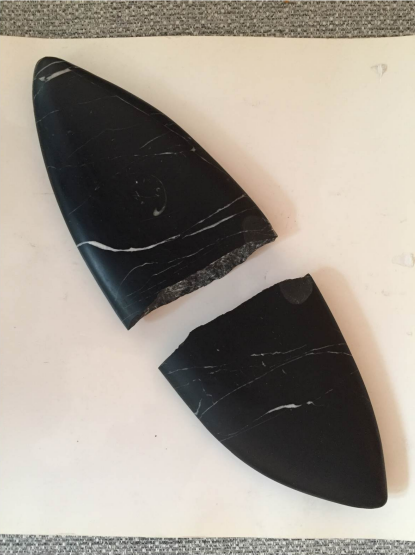
Fellow appraiser Susan Tarman, ISA AM sent me an interesting are appraiser relevant article from artnet news on a lawsuit on damage to a Brancusi sculpture, with an appraised value of $22.5 million before damage and $16.9 million after the repair.

Part of the issue is who is responsible for the damage, as the collector consigned the work to Artemus, but set up the sculpture on the pedestal.  Right now the suit is about who is responsible for the damage, and it does not list who appraised, weather the $22.5 million was a stated value on the insurance policy, or if there are other appraisals on the pre damage sculpture and the diminution of value. This will be an interesting suit to follow.

artnet news reports
A French collector is suing Asher Edelman, who runs the art-financing company Artemus, and two insurances companies for allegedly damaging a prized Constantin Brancusi sculpture.

In a complaint filed earlier this week in New York State Supreme Court, Marc Baradel alleged that after he consigned the sculpture, Brancusi’s Le Poisson (ca. 1920–22), to Artemus it fell from a pedestal and broke in half. According to an appraisal report filed in court, the work was valued at $22.5 million prior to the accident; after the fall and repair it was reappraised at $16.9 million.

Edelman, has denied the accusations, claiming that Baradel himself set the sculpture on a pedestal in the Artemus office before it fell off minutes later. “It’s preposterous,” Edelman told artnet News. “Marc Baradel mounted the Brancusi on a pedestal in my office. He went and sat down on the couch and it immediately fell. By then he had had a certificate of insurance in hand.”

A consignment agreement attached to the complaint shows that Baradel insured the work for up to $5 million through two insurance companies, the Chicago-based HUB International and Lloyd’s of London, but says that neither honored the agreement after the work was damaged.


Brancusi, Le Poisson (ca. 1920-22) after the fall.

According to the complaint, Artemus “breached the consignment agreement by not protecting the Art from damage during their stewardship.” It goes on to say that “HUB and Lloyd’s have withheld payment by engaging in conduct that may be characterized as ‘gross’ and ‘morally reprehensible,’ and of such wanton dishonesty as to imply a criminal indifference to civil obligations by not payment the claim.”

Baradel is seeking $22.5 million from Edelman and Artemus and an additional $5 million in damages from HUB and Lloyd’s.

Baradel’s attorney did not immediately respond to a request for comment, nor did representatives from Lloyd’s of London. HUB International declined to comment.
Source: artnet news 


8/08/2019

The Antiques Market


Fellow appraisers Rosalie and Marcus Wardell sent me a snapshot of the current antiques market from artnet analytics. Much is already know by appraisers and collectors, but this is a good, short synopsis of the marketplace which appraisers could use in their appraisal reports for the general content on the antiques market.

artnet analytic reports
THE ANTIQUES MARKET:  WHERE IS IT NOW?

A home filled with antiques was once considered the epitome of great taste and the signifier of an impressive collector. Yet now former antiques showrooms stand empty while fairs like the Winter Antiques Show and SOFA have shifted focus to include contemporary pieces. What happened?

This once-booming market has most definitely cooled. Although it’s a challenging time for many dealers, it’s an exceptional period of opportunity for buyers. Could the antiques market be ready for a renewal, or can we expect a downward trajectory to continue? We turned to the artnet Price Database and spoke to experts to find out.

CHANGING TASTES
“The internet revolution has made antiques seem old fashioned,” says Daniel Stein, veteran dealer and owner of Daniel Stein Antiques in San Francisco. He points to the fact that much of the new wealth generated over the last 20 years has been by young entrepreneurs, and their taste skews decidedly minimal—a far cry from the highly decorative aesthetic of previous generations. In online antique marketplaces such as 1stdibs, contemporary design is the fastest-growing category and accounts for over 15% of total sales.

There are few examples of pieces that still hold appeal in the same way they did in the 1990s, when Baby Boomers were furnishing their homes. While traditional home and office furnishings—such as desks, bookcases, and dining room furniture—used to be solid and steady winners, these days small and quirky objects are what’s in vogue. Daniel Stein shares that recently “a seasoned professional commented to me, ‘twice the size, half the price.’”

PLUMMETING PRICES
By some estimates, antique furniture has decreased by 45% in total value over the past 15 years. Once-hot commodities struggle to find buyers and, when they do manage to sell, can see up to a 70% drop in price.

Examples of this phenomenon abound: when an elegant Louis XV side table was offered at Christie’s London in 2016, it sold for the not-insignificant sum of $93,750. But this pales in comparison to the six-figure prices similar pieces achieved just 10 years prior—or the similar-sized Louis XV marquetry table that fetched $2.5 million at Christie’s New York in 2000.

That being said, if you’re looking to acquire some statement Georgian furniture, you are in luck. Strong works are now available in the range of $3,000–5,000, or even lower. What was once an $8,000 eight-piece set of George III dining chairs could be purchased for less than $500 today. Simply put: it’s the best time in decades to be a buyer.

STABLE SECTORS
Though the antiques sector has shrunk, the very top of the market remains highly active. This has been buoyed by growing international wealth and an appetite for Western antiques developed among some of the ultrarich in the Middle East and Asia.

Unique and very high-end pieces have proven to hold their value. In response to dwindling demand, major auction houses became stricter in an effort to limit their inventory to museum-quality works. In 2015, we saw that strategy take effect at a landmark Christie’s New York sale, which included a George II mahogany armchair blow past its $80,000 high estimate to sell for $437,000.

Though there are few signs of a turnaround, some experts argue that, as with all trends, it's only a matter of time until the pendulum swings back in the other direction—though no one can say when. If you’re interested in entering in the antiques market, it’s best to proceed with as much information as possible. Commission an artnet Analytics Report by emailing us to speak to an expert about your needs, and be sure to subscribe to the artnet Price Database Decorative Art.
Source: artnet analytics


8/06/2019

Gagosian Expands NYC Footprint


Larry Gagosian is adding 7,900 square feet of gallery space next to his current Chelsea district location. According to Bloomberg, Gagosian is taking over space vacated by Mary Boone and Pace Gallery. The article also notes several other galleries are expanding gallery space in Chelsea.

Bloomberg reports
Larry Gagosian’s art-gallery empire, already the world’s largest, is taking over more space in New York’s Chelsea district.

Gagosian is renting 7,900 square feet (734 square meters) adjacent to his 26,000-square-foot gallery on West 24th Street. Kyle Kirkpatrick, a spokesman for landlord Weinberg Properties, confirmed that Gagosian agreed to a long-term lease, declining to disclose further details.

For almost 20 years, the space had been divided into two galleries, one run by Mary Boone, who since May has been serving a 30-month federal prison sentence for tax evasion. The other was most recently occupied by Pace Gallery, which will consolidate its multiple New York venues into a new, eight-story building on West 25th Street.

“Both halves were free,” said Ron Warren, former partner at Mary Boone Gallery, which had to close as part of the sentencing. “Coincidentally, he was planning to renovate next door. It was a great opportunity.”

Gagosian’s operation, which has 17 sites worldwide, is freshening up its facilities in New York. It’s currently upgrading spaces on Madison Avenue. The cavernous West 24th Street gallery will be next, though not for some time because exhibitions are planned into 2020, according to people with knowledge of the matter.

A representative for Gagosian declined to comment. The dealer, whose clients include billionaires Steve Cohen and Leon Black, has another Chelsea gallery on West 21st Street.

Mary Boone Gallery paid more than $50,000 a month for its space, which has an 1,800-square-foot, column-free exhibition floor and 24-foot ceilings featuring wooden trusses, Warren said. Pace had equal square footage but a different design, according to Kirkpatrick.

Pace is slated to open its 75,000-square-foot flagship next month, with works by Alexander Calder, David Hockney and emerging artist Loie Hollowell. Weinberg Properties developed the building, which has indoor and outdoor exhibition areas, in coordination with Pace President Marc Glimcher.

Other major art dealers are also bolstering their presence in Chelsea. Hauser & Wirth is developing a five-story, 36,000-square-foot building on West 22nd Street designed by architect Annabelle Selldorf. It’s expected to open next spring, spokeswoman Andrea Schwan said.

David Zwirner will add 50,000 square feet in a Renzo Piano-designed tower on West 21st Street, with a planned opening in 2021, according to spokeswoman Julia Lukacher.
Source: Bloomberg 


8/04/2019

ART LAW DAY - NOVEMBER 8th


Early bird registration is open for AAA's Art Law Day, Nov 8th at Benjamin N. Cardozo School of Law, 55 5th Ave, New York, NY.

As usual, the program looks excellent. AAA states "This sell-out internationally attended event includes 250+ attendees such as estate attorneys and planners, tax accountants, insurance professionals, shippers, and other affiliated professionals. Art Law Day is considered the go-to conference for all of these affiliates, creating a high profile atmosphere."

INFORMATION & SPECIAL EVENTS

Art Law Day 2019 is on Friday, November 8. It is held at Benjamin N. Cardozo Law School, 55 5th Avenue. Check-in begins at 8 am. The program begins at 9:00 am, and ends at 4:30 pm. 

There will be an evening reception at The Salmagundi Club on Friday, October 26 from 5:00pm - 6:30pm. All Appraisers Association members and Art Law Day attendees are invited to attend.

For more information
Contact Teresa Caputo, Program Manager
212.889.5404x11, programs@appraisersassociation.org


REGISTRATION Information

  Members & Cardozo Alumni                                 General Admission
    $235 - Registration (ends 11/1)                                   $350 - Registration (ends 11/1)
    $255 - On-site                                                           $400 - On-site
 
Art Law Day is valid for 6 CLE Units

All pre-registration closes Friday, November 1, 2019. On-site registration will be available.

Click HERE to register.

The program
Friday, November 8
8:00am - 9:00am
  Check-In and Coffee

9:00am - 9:10am 
Welcome
Kathleen Guzman
  Managing Director, Heritage Auctions, Emcee
Lark Mason, AAA
  President, Appraisers Association of America

9:15am - 9:45am Keynote Address
Kenny Schachter
ROVE

9:45am - 11:00am
Colonial Looting
Tom Kline
  Partner & Attorney at Law,
  Cultural Heritage Partners
Shannon O’Loughlin
  Executive Director,
  Association of American Indian Affairs
Dr. Diala Touré
  Principal, Senior Art Appraiser,
  Appraisals of Value, LLC.
Dorit Straus, Moderator
  Insurance Industry Advisor

11:00am - 11:15am
  Coffee Break

11:15am - 12:30pm
New Issues and Platforms
in the Art Market Together
Nigel Glenday
  Chief Financial Officer,
  Masterworks
Marc Halsema
  Global Family Office Advisory, Chief of Staff 
  General Counsel, Pennington Partners & Co., LLC
Freya Stewart
  CEO of Art Lending,
  The Fine Art Group
Diana Wierbicki, Moderator
  Partner and Global Head of Art Law
  Withersworldwide

12:30pm - 1:45pm Lunch

1:45pm - 3:00pm
IP Caveats : When Is the IP
as Important as the Art?
Sarah Conley Odenkirk
  Founder,
  Art Converge
Abbey Green
  Global Copyright Manager,
  Christie's
Massimo Sterpi
  Partner,
  Gianni Origoni Grippo Cappelli & Partners
Virginia Rutledge, Moderator
  PIPE Arts Group

3:00pm - 3:15pm
  Coffee Break

3:15pm - 4:30pm
Financial Instruments at Auction
Andy Augenblick
  President
  Emigrant Bank Fine Art Finance
John R. Cahill
  Executive Vice President, Chief Commercial Officer
  Sotheby's
Michael Findlay
  Director, Acquavella Galleries
Katherine Wilson-Milne
  Schindler Cohen & Hochman LLP
Steven R. Schindler
  Schindler Cohen & Hochman LLP

5:00pm - 6:30pm Reception
Location: The Salmagundi Club
Source: Appraisers Association of America