6/30/2009

Grosvenor House Antiques Fair Closes Down

Scott Reyburn of Bloomberg is reporting that after 75 years, the London Grosvenor House Antiques Fair will close for good. In mid June, the final fair was held. The promoters of the show stated increased demand for the space, increase costs and declining profits as the reason for the closure. I have seen shows pushed out of hotels and other venues in the past in order to maximize profits and event rates. With the Grosvenor House grand ballroom in great demand, and the state of the market, you might have expected a change, but a show with such a full and rich histroy and prestige, it is hard to accept. The dollar rules again.

Over 90 dealers participate in the show and it is one of the best, oldest and longest running fair in England. The show is also primarily an antique furniture show, at the popularity of that decorative arts segment has suffered over the past few years. Expectations and rumors are floating that a larger replacement fair in a different venue will surface.

Reyburn states The 2009 event was also hampered by the departure of high-profile exhibitors Johnny van Haeften, Bernheimer- Colnaghi and Moretti Fine Art Ltd. for the first edition of London’s “Master Paintings Week.”

The fair organizers, in association with the Grosvenor House Hotel, issued the following statement in an e-mail: “The Great Room is much sought after as a location and it makes financial sense for the hotel to increase the availability of the Great Room as a venue in June. The structural restrictions of the Great Room necessitated closing it down for a week before the show and a week after the show, thus putting the Great Room off-market for a total of three weeks for a one week show.

‘‘The profit was declining due to lack of sponsorship and increased costs of mounting the Fair including insurance. Further increases in stand rental costs in future years would have been required to maintain the current level of profit.’’

To read the article, click HERE.

What Sells Best on eBay

Not sure how helpful, if at all, this site might be but the following is a press release on a site which tracks the daily top selling items on eBay. Just thought I would pass it along. It is from a Webwire news release about the new tracking site called WhatSellsBest.com. I know, a bit of a slow day, but I should soon have some results from the Christie's Post War and Contemporary art sale.


WEBWIRE – Tuesday, June 30, 2009

You’ve probably heard the odd news stories about unusual items selling for extraordinary amounts on eBay. Like the piece of toast with the image of the Virgin Mary, that sold for $28,000 in 2004.

But if you’ve ever wondered what the top selling eBay items are, on any given day. Now there’s a place to find out. WhatSellsBest.com is a website which tracks the Top 20 Best Selling eBay items (in eBay’s most popular categories) on an ongoing basis.

When WhatSellsBest.com founder James Massey was asked what inspired him to publish the site? He replied; “I’ve always been a huge (PBS) Antiques Road Show fan and I became an eBay member in 1999. From the (eBay) beginning I’ve had a curiosity to find out what the best selling eBay Items were on any given day.”

“At first I was tracking eBay top sellers for my own interest. The prices some items were receiving were so extraordinary, I couldn’t help but start telling my friends. While some found it interesting, I noticed others would glaze over with sheer boredom as I recounted a seemingly endless list of items I’d seen sell. So spare a few friends, I decided stop talking about it, and published the site as a way to share the information with those who found it interesting.”

To see Today’s Top 20 Best Selling eBay items visit: www.WhatSellsBest.com

6/29/2009

Reminder: Site Contributors Wanted

Just a short reminder (I always say short and then ramble on) that I am looking for additional contributors for the new Personal Property Appraisers Post. So far I have had good interest, with over 20 appraisers showing interest in potentially writing and posting for the new webzine.

Keep in mind, the time commitment will be minimal, only one post every 4-6 weeks, of course you are welcome to post more if you are so inspired and inclined. The posts can be a mixture of current news, association news, appraisal theory, methodology, opinions and commentary about the profession. I envision the site becoming a web destination for the personal property appraisal profession with current news and information that will be interesting and helpful to all appraisers. I also hope it will become a site that builds community between the various organizations and appraisers.

Each contributor will have direct access to post on the site by using approved site permissions. Posting will be quick and easy, and hopefully quality comments and discussion will be develop.

Although the site is not yet active, it is on line and has a basic webzine format with featured areas and the main posting area. There is some filler/place holding content currently on the site, along with a few bio's of some of the contributors.

Visit the site at www.appraiserspost.blogspot.com. Posting on the site as a contributor should increase your visibility and professional standing among fellow appraisers, allow increased networking opportunities, meet new appraisers and experts and perhaps generate additional business and referral activity.

So dont hesitate, if you are interested please let me know and either call at 703-836-1020 or email me by clicking HERE.

Identification and Provenance Research Makes a Million Dollar Difference

Richard Brooks of the London Times reports that BBC Antique Roadshow art appraiser saw a landscape painting at a recent Sotheby's sales noted as "English School" with an estimate of $16,500.0 to $25,000.00. The painting sold forfor $111,000 including buyers commission. Phillip Mould of the BBC Antiques Road Show and dealer inspected the painting and decided it was an early Gainsborough. He purchased the unidentified painting at Stoheby's which is now valued at close to $1.2 million.

Mould bid by phone in order to keep suspicion down on the painting. The provenance research was also pivotal in identifying the artist. As the Sotheby's experts failed to properly identify the painting as a Gainsborough the last sentence of the column is very telling, stating Now Sotheby’s could face having to compensate the painting’s vendor for drastically underestimating its worth.

Brooks states A vital clue for Mould, who runs an eponymously named gallery in central London, was the tiny depiction of a couple at the front of the canvas.

The expert spotted that they looked similar to a drawing Gainsborough had made of himself and his wife Margaret. Now held by the Louvre in Paris, it was created less than a year before the mystery Sotheby’s oil painting.

Working with his colleague Bendor Grosvenor, Mould set about trying to discover the painting’s provenance.

The building on the left of the picture, which shows Ipswich, a mere village in the 1740s, provided another clue.

Christchurch mansion, which is still standing, was owned by the Fonnereau family, who saw Gainsborough, a local teenager, as a promising artist and lent him money to develop his talent. “In return, Gainsborough put the Fonnereau house into his picture,” said Mould.

The BBC valuer and his team of art detectives finally turned to the painting’s records of ownership. In 1824, it was sold for £43 by Evans, a Pall Mall auction house. The vendor was George Nassau, whose father, Richard Savage Nassau, had been painted by Gainsborough in 1750 and was another family friend.

All these clues persuaded Mould to bid for the painting. The fact that its guide price was pushed up to £50,000 suggests other bidders may have also twigged that it could be a Gainsborough.

To read the London Times article, click HERE.

6/28/2009

US Antiques Roadshow Valuation Record Set

Just the other month we saw a Chines vase sell at Brunk's auction in Ashville, NC for $1.2 million against an estimate of $400-$800 dollars (click HERE to read the AW post). Just recently in Raleigh, NC the Antiques Roadshow evaluated four pieces of Chinese jade as high as $1.07 million. The jade was from the Chien Lung, dating between 1736 and 1795. The report is short, so I will cut and paste the full article.

The UPI reports RALEIGH, N.C., June 28 (UPI) -- "Antiques Roadshow" appraisers valued a jade set as high as $1.07 million, the highest appraisal since the show started traversing the United States.

The collection -- jade pieces from China's Chien Lung reign from 1736-1795 -- belong to an unidentified woman who arrived early at the Saturday taping in Raleigh, N.C., of the popular PBS show, The News & Observer in Raleigh reported Sunday.

The woman told the appraiser the pieces belonged to her father, a military liaison to China in the 1930s and '40s, show officials said.

Asian art appraiser James Callahan, who examined the four pieces, said the dealer steered her father to quality items. The popular PBS

series travels cross-country, helping folks assess the value of collectibles and heirlooms.

"The dealer selected very fine pieces," he said. "I've never seen anything like it."

Callahan says the value of the pieces depends on the market for them in China and that the Chinese government often wants to get such pieces back.

"Roadshow" workers said the woman's initial reaction was silence, followed by, "Damn!"

Update: More on the Holocaust Assets

Catherine Hickley of Bloomberg is reporting that chief US negotiator in Prague is favoring a US panel to help and assist families who were victims and systematically looted of art and property by the Nazi regime. The chief US negotiator is Stuart Eizenstat and he would like to see a US panel that might act in the manner of an arbitration panel over disputed ownership and equitable settlements. Eizenstat believe the current system, which is typically the US court handling the disputes takes far too long. I would also add if the litigation takes a long time, then the cost in settling the claims through the US courts would also be a factor. Eizenstat has also stated that museums have initially taken a positive outlook to a review panel, which could be a requirement before moving disputes into the US courts.

Hicley reports “No general claims resolution has been set up for dealing with Nazi art claims, and claims are mostly dealt with on an ad hoc basis that requires claimants ultimately to go through courts,” the Jewish Claims Conference said in a report. The claims body was reporting to the Prague meeting on how far countries have made good on their Washington pledges.

“Some museums have started to file suits against claimants to ‘quiet title,’ thereby invoking technical legal defenses in order to avoid restituting objects and compelling claimants to spend large sums in legal fees,” the report said.

Eizenstat, a partner at Covington & Burling LLP in Washington, said the model for a U.S. panel could be the U.K. Spoliation Advisory Panel, founded to resolve disputes about art lost in the Nazi era that is now held in British museums. He said such a panel may be a mandatory step before museums and claimants can consider lawsuits.

“This is going to take a lot of work and a lot of massaging,” Eizenstat said. “Is it advisory, it is mandatory? Will it require congressional action or can it be done administratively? Those are things we need to work out but I am absolutely convinced that it needs to be done.”

To read the full article, click HERE.

6/27/2009

Anatomy of a Gallery Closing

Katya Kazakinap of Bloomberg writes an interesting article on the closing of a mid level contemporary art gallery in New York City. The Bellwether Art Gallery is scheduled to close its doors on Sunday, June 28th. The gallery grew from a small start up to what was considered a solid mid level gallery with a solid list of both artists and customers. Owner. Becky Smith attempted to cut costs, but after a careful review of finances and financials, decided it was best to shutter the gallery.

Kazakinap states Bellwether joins a growing list of casualties in New York’s contemporary-art scene -- about 15 mid-level galleries in the past year. Smith’s decade encapsulates the scene’s rise and retreat, as she saw her gallery’s revenue surge to seven figures, her artists morph from unknowns to museum holdings, and her success attract the interest of outside investors.

“There was a period when hundreds of thousands of dollars were being poured into my artists, emerging artists, unknown artists,” she said. “That was crazy and unprecedented. And then the bottom fell out.”

A former painter who studied at Yale, Smith founded Bellwether in 1999 in Greenpoint, Brooklyn, and soon moved to the borough’s trendy Williamsburg area. In 2004, she took her growing operation to Manhattan’s Chelsea district, the city’s contemporary-art hub.

Kazakinap continues Smith tried to cut costs. She axed advertising and stopped printing invitations to exhibitions. Opening parties went next. She dropped out of art fairs and fired her four employees. She considered subletting part of her gallery to another dealer, and splitting the rent. Her part-Chihuahua mutt, Mr. President, was often her only company in the gallery.

After struggling for 12 “lonely” months, she decided to close down.

“I couldn’t stop crying about what I was about to do,” she said. “All my education, all my money, relationships went into the gallery.”

To survive the recession, “you need to have at least one artist at all times that everybody is chasing,” said Josh Baer, publisher of Baer Faxt, an art-industry newsletter.

“I don’t have someone like Kelley Walker who is prolific and highly in demand,” Smith said. “I have Ellen Altfest who is in demand but produced two paintings in the last year.”

Smith will continue working with some of her artists privately and help others find a new home, she said. “I was always their advocate.”

To read the full Bloomberg article, click HERE.

6/26/2009

Excerpt from the Journal of Advanced Appraisal Studies

I missed posting an excerpt from the Journal of Advanced Appraisal Studies last week, although we are getting close to having posted excerpts from all journal articles. Today I am posting an excerpt from The Russian Imperial Porcelain Factory by Benedict J. Hastings. Ben is a long time Washington, DC area appraiser and an expert in Russian decorative arts. He is a fine arts appraiser with the International Society of Appraisers and a Senior Appraiser with the National Association of Professional Appraisers. He was head of the Russian Department at Phillips Auction House in New York City in the 1980's and has studied at the Hermitage Museum in St. Petersburg, Russia. He is currently working in the Washington Metropolitan area.

To order the Journal of Advanced Appraisal Studies click HERE.

An Excerpt from The Russian Imperial Porcelain Factory:

In the 18th century, the quest for porcelain and the production of porcelain was greatly sought after not only in Russia but in Europe and Asia as well. In 1740, Empress Elizabeth of Russia sought to develop a Russian national fine porcelain trade to supply the many formal banquets and gala balls of her court. Several porcelain factories opened during this period, but the focus of this paper is on the Imperial Porcelain Factory.

The porcelain products that were made at the Imperial Porcelain Factory were manufactured for the exclusive use of the Imperial Family. The fine porcelain was produced for the private and exclusive use in the numerous palaces of the Czars and the Grand Dukes. The Imperial Porce-lain Factory also produced fine pieces to be used as diplomatic gifts. The fine porcelain gifts showed the cultural growth and the rising influence of Russia and the Imperial family.

During the mid 18th century, the process of making porcelain was extremely difficult and very expensive. The achievement of high quality Russian white porcelain was a byproduct of the artisans who were hired by the Nobility as alchemists to convert ordinary metals to precious metals such as gold. Artists and scientists from all over Europe were sought to work in the factory in St. Petersburg to develop and perfect this precious product. Due to the scarcity and expense only the nobility and wealthy merchant class of this early period could afford to have porcelain plates and table articles in their lush dining rooms.

One of the first known services produced at the factory was the Private Service of Her Majesty (Example 1). It was a dinner and dessert service (ca. 1759 – 1762) for Empress Elizabeth. This was a raised floral and trellis design pattern.

Two of the first scientists to work and develop porcelain processes and products for the Empress and the Imperial Porcelain Factory were Dimitry Vinogradov and Mikhail Lomanosov. They were both great men of science, who worked on the basic development of perfecting the process of making porcelain.

From the 1750s through 1917, the Russian Imperial Factory pro-duced thousands of articles and porcelain banquet services for the Kremlin, the Winter Palace/Hermitage, Peterhoff, the Summer Palaces, the royal Yachts and all the many residences throughout the Russian Empire

In the early stages of development, the mystical alchemists were the magicians and scientist who were “Spinning Yarn into Gold” and developing clay into porcelain. They were the sorcerers of the day, hired by the court to produce the BEST products for the Empires of the Czars and the Kings of Europe. Outside the Imperial family and nobility, fine porcelain items were available only to the very rich of the day with lower and peasant classes having little understanding of the process and growth in development connected with it. During this early period of enlightenment in Imperial Russia, the arts and sciences branched out into many levels of commerce. The expansion of Russian civilization and culture was the order of the day. It was the beginning of a new era in Russia and it produced a magical and mystical atmosphere. During the 17th and 18th centuries Europeans were extremely superstitious, especially those living in eastern countries. Superstitions and skepticism extended into the understanding of the porcelain factory. At this early point in development much of the Russian peasant population had difficulty accepting the new science of porcelain manufacture. They were not sure to believe if it were science or magic that turned clay into these fantastic designs.

In addition to the numerous dinner services produced in the Im-perial Porcelain Factory, Catherine the Great also had many animal figures produced at the factory. There is an extremely fine figure of her dog seated on a green pillow which is currently at the Summer Palace. During this early period of porcelain manufacture larger items were a major challenge for the artisans at the factory. The building and development of larger porcelain furnaces to fire the soft clays was the challenge for the factory engineers and scientists. As the factory grew, there was an achievement of success which revealed the enormous cultural progress and national pride being made in Russia. Russia showed much growth and progress during the 18th century which would not have been accomplished without a dedicated methodology and modernization plan. The modernization of Russia allowed the growing country to compete with other European countries in art and culture.

6/25/2009

Nazi Looted Art

Catherine Hickley of Bloomberg has an interesting story on Nazi looted art and the rather complicated process for the rightful owners. About 50 nations voluntarily signed onto the Washington Principles, a non binding effort to return property to the rightful owners stolen and looted by the Nazi's. The current track record and rightful owners feel many governments have not lived up to the agreement, be it voluntary or not. According to the article the Nazi's plundered nearly 650,000 works of art. The Art Loss Register lists only 70,000 of the items or a little over 10%. The conference is working on new and more equitable guidelines. Keep in mind as appraisers ownership rights and encumbrances have an impact on valuation.

Hickley states Under the Washington principles, 44 governments agreed to identify stolen art in museums’ collections, publicize the results and encourage pre-war owners and their heirs to make claims. They also promised to strive for “a just and fair solution” with the victims.

Heuberger said the Claims Conference has ranked countries according to how much they have done to implement the Washington principles. He plans to announce the findings in Prague.

“What we regret is that there has been no monitoring group to track progress,” Heuberger said. “We would like to have a commission or institute on an international level, outside national states, that discusses disputed cases.”

Russia, Hungary, France, Italy, Spain and some Scandinavian countries are among those which have failed to make good on commitments, Webber said.

Hickley continues Rowland said he favors the creation of a restitution panel in the U.S., where museums are mostly private and don’t feel bound by the Washington principles. Cases end up in court and museums often use laches and statutes of limitations to defeat heirs’ claims on technical grounds, he said.

“In the U.S., lawyers have been put in charge,” said Marc Masurovsky, a historian who has advised successive U.S. governments on Holocaust-era assets. “There has been a massive failure on the side of public policy.”

The Prague event is an opportunity to “refocus attention and reinforce the urgency of the situation,” Webber said.

To read the full Bloomberg report, click HERE.

New Video Posted

I have just changed the video on the AW Post. The new video is entitled The 2009 Brimfield Antiques & Collectibles Shows, J&J Promotions 50th Anniversary, and is, and the title implies about the Brimfield Shows. The video runs for about 5-6 minutes and if you have never been to the shows, you should watch the video.

Since videos dont embed in the email feed you can visit the AW Blog site. Click HERE to visit the AW Blog and watch. The video box is at the top of the right column. You can enlarge to full screen by clicking on the small rectangle in the right corner of the video box.

Results:Sotheby's London Impressionist/Modern Sale

The NY Times has a good review of the Sotheby's London Impressionist and Modern sale held Wed evening. The sale was the smallest summer Impressionist Modern auction in over 10 years with only 27 lots offered. Of the 27, only four did not sell for an 85% buy through rate. The top lot was a late Picasso, the Musketeer which sold for $11.5 million, including buyers premium.

The sale totaled $55.3 million including buyers premium, and according to the NY Times article, the sale took only 55 minutes to complete. The total sales estimate was $44 - $61 million, so the results were favorable, especially when compared to the sale offered by Christies (especially after reading the blistering review by Souren Melikian in the NY Times which I posted yesterday).

The NY Times article states Still, Sotheby’s, like all the auction houses, had trouble getting material. Ever since the fall, when these companies sharply curtailed their practice of giving sellers generous financial incentives, they have been struggling. With the price of art lower, collectors for the most part don’t want to part with a prized painting, drawing or sculpture unless they have to. By contrast, last year’s equivalent sale at Sotheby’s brought $201.2 million. Capitalizing on the current fashion for late Picassos, created in part by recent exhibitions at the Gagosian Gallery in New York, the National Gallery in London and the Grand Palais in Paris, both Christie’s and Sotheby’s sales this week featured the artist’s images of musketeers holding swords. This theme of swashbuckling men captured Picasso’s imagination during the last years of his life.

To read the NY Times article, click HERE.

6/24/2009

Criticism on the Christie's London Impressionist/Modern Sale

Souren Melikian in the NY Times comments rather harshly on Tuesday evenings Impressionist/Modern sale held at Christie's. See today's earlier post for sale information and details. Melikian states the sale had few desirable offerings, those that were of interest, sold well,the others did not fair very well at the sale. Also, there were several paintings offered that had previously been offered and not sold, or as Melikian states, "regurgitated" offerings. Many experts believe the market has hit bottom, and that is possible, as this reviewer indicates the failure of the sale to consistently produce value was because of the poor selection of the lots offered and not necessarily market conditions.

Melikian states In Christie’s traditional early summer sale of Impressionist and Modern art held on Tuesday, desirable paintings were scarce. A desperate effort to pad the catalog with a sufficiently large number of works led to the inclusion of some mediocrities that never stood much chance to pull through. Inevitably eight of the 42 works that came on the block crashed unsold. Things could have been a lot worse if bidders had not been as ready as ever to pounce on any works, even modest ones, worth fighting over.

Melikian continues So what was wrong with the auction Tuesday? First, too many works were being regurgitated after having made a recent appearance in the market. Egon Schiele’s drawing of a woman seated naked done in 1914 was seen at Christie’s New York on May 9, 2007, when it had cost the consignor the equivalent of £782,000. This time no one wanted it. Next came one of von Jawlensky’s near abstract renditions of a human face done in the early 1920s. This had been bought by the consignor for £264,000 on June 18, 2007, at Christie’s London. The Jawlensky too was left unwanted.

And, continues A bigger problem on Tuesday was the excessive number of indifferent, drab works that will no longer sell like hot cakes now that the newcomers to the art market with money burning their fingers have receded into the background. Crass mediocrities managed to pull through only when the auctioneer was willing to let them go far below the lower end of the estimate.

To read the full review, click HERE.

Results: Christie's London Impressionist and Modern Sale

On June 23 Christie's London held its summer Impressionist and Modern Art Evening Sale. The sale with 44 lots offered was not considered to be full of high quality art. Of the 44 lots offered 30 sold for a sell through rate of 68%. The 30 items that did sell totaled $60.4 million, with Claude Monet's Au Parc Monceau (1878) being the top lot, selling at $10.3 million (see image). From the various reports I have seen for this sale the results are very mixed. Which is not unusual in this market. Some items did very well, while others failed to make reserve (14) or sold below the low estimate.

Giovanna Bertazzoni, Director and Head of Impressionist and Modern Art, Christie’s London stated During the last 6 months, our auctions of Impressionist and Modern Art in London, Paris and New York have produced consistently solid results and this evening’s sale confirms that collectors, both new and established, have confidence buying works by established artists in this category. We see consistent demand throughout and overall the prices of individual works remain stable. At the top end of the market we continue to see strong interest and bidding as collectors seize opportunities to acquire rare and beautiful works of art.

Carol Vogel of the NY Times reported It was a thin sale, with a mixed bag of Impressionist and modern art, nearly half the number of works of last year’s auction and no blockbusters. The evening reflected the state of the economy: with prices for art having fallen significantly since autumn, Christie’s experts had trouble cobbling together a sale because collectors refused to part with their paintings, drawings or sculptures unless they absolutely had to. Buyers — primarily Europeans — were cautious about spending money, and bidding was thin. The combination of meager offerings and tight purse strings led Christie’s to reduce some reserve prices — a handful of works sold for less than their estimates — and made for a dull night.

I will report more on the summer sales, with more upcoming sales at Sotheby's and Christie's this week and early next week.

6/23/2009

Webzine Concept - Moving Forward

Just a short update on the status of the idea for an independent combination website/blog for the personal property profession.

So far all of the feedback has been extremely positive, so much so that I have found a useful template to use for the format of the site. See the image, many of the data/information blocks are not complete, or there are holding items in them, but it does give you a good idea of what the site will look like. As of now I am going to call the site The Appraisers Post. The site is also on line if you wish to take a closer look at www.appraiserspost.blogspot.com.

The site has a large image/feature area, room for banners and an assortment of images, gadgets and elements, a four section news area and the regular posting section. There is also a section for scrolling text and images across the screen. I have added a section for spotlight on a contributor and of course contact and a very short bio can be placed at the end of the post. I should also be able to set up a list of contributes in the sidebar as well.

As I have mentioned before, I would like to associate a large representation of appraisers from all groups/associations as well as independents (and associated fields if possible), allow access to the blog and ask them to post once every 4-6 weeks with first persona accounts of items of interest to the appraisal field. The posts do not need to be long or in depth, perhaps 300 to 800 words. Perhaps less if it is an announcement. The post can be longer if needed or desired as well.

In order to make the site work I believe I will need a minimum of about 30 appraisers to contribute, but of course more is better. If that happens, the site will be self sufficient on content, and all I would have to do is manage the website for some feature postings and sidebar content.

So now that the template is up, I need to put together an advisory board to establish some editorial guideline, and also start enlisting appraisers to start contributing and getting site permissions set up. When and if it goes live, I would like a fair amount of content in place when the announcement is made.

I would like to see a wide variety of content from short articles to notices of events, reviews of shows and courses, appraisal theory, Appraisal Foundation news and changes. Really any news, comments, opinions etc should work. I already have several appraisers who have said they are interested in contributing, please let me know if you would like to be included. Remember, the commitment is really rather minimal of a post every 4-6 weeks (of course more posts are welcome as well), the rewards for all appraisers could be significant.

The program allows for up to 100 contributors to post. Dont be shy let me know if you would like to be a regular contributor to the Appraisers Post.

Metropolitan Museum of Art Completes Job Reductions

Randy Kennedy of the NY Times is reporting the Metropolitan Museum of Art in New York has completed its planned staff reductions. In total the museum has either laid off or given early retirement to a total of 169 employees. Earlier this year and reported on the AW Blog the Met closed 15 satellite retail stores, letting 127 people go in the process. The job reductions are expected to save nearly $10 million annually, but it is still not enough to completely reduce future deficits. A possible reduction in exhibitions is also a possibility.

Kennedy states The overall cuts leave the museum staff 14 percent smaller, with about 2,200 full-time and part-time employees. The goal of the cuts had been a 10 percent reduction, but the number of employees who took voluntary retirement was much higher than the museum had expected.“This realignment is a painful but unavoidable consequence of the global financial crisis,” James R. Houghton, the museum’s chairman, said in a written statement, adding that he believed the cuts “placed the institution on a sure footing to manage its resources over the next 12 months” without any serious cuts to programming.

Kennedy continues The museum joins many others across the country that are retrenching in similar or more extreme ways, cutting budgets, staff and the kinds of expansion plans that seemed ubiquitous only a couple of years ago. Among those that have imposed layoffs are the Cincinnati Art Museum, the St. Louis Art Museum, the Detroit Institute of Arts and the Indianapolis Museum of Art. The Guggenheim Museum announced last week that it would reduce its full-time staff by 8 percent through layoffs and positions left vacant.

To read the full NY Times article, click HERE.

6/22/2009

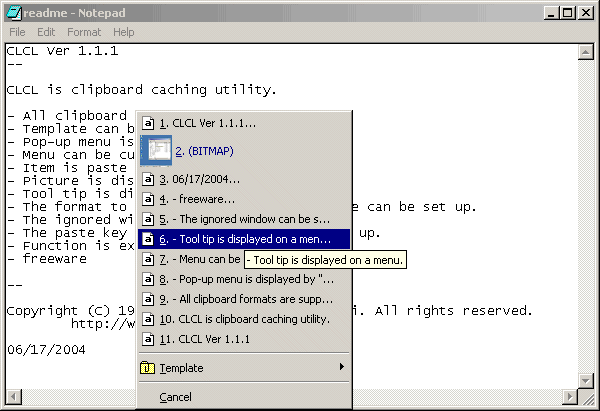
Tech Tip: Some Free Clipboard Programs

As appraisers we are constantly on our computer doing research and writing reports. We therefore use the cut and paste function of the windows clipboard with much frequency. It is a great tool but it does have its limitations.

Here are three free alternatives (sorry MAC users, they are all for Windows):

  • CLCL - CLCL is clipboard caching utility.
  1. All clipboard formats are supported.
  2. Template can be registered.
  3. Pop-up menu is displayed by "Alt+C."
  4. Menu can be customized.
  5. Item is paste automatically.
  6. Picture is displayed on a menu.
  7. Tool tip is displayed on a menu.
  8. The format to leave and the format to save can be set up.
  9. The ignored window can be set up.
  10. The paste key for every window can be set up.
  11. Function is extensible with plug-in.
  12. freeware
Click HERE to visit the CLCL site.
  • ARS Clip - ArsClip is a FREE (freeware) utility for the windows clipboard. ArsClip monitors the clipboard and keeps track of the entries. Press a configurable hotkey and select an item (or items) to quickly paste into a program. ArsClip used to be barebones, yet it has become a nicely featured program (due to user requests for changes). ArsClip remembers the last 15 (default) or more text entries entered into the Window's clipboard and can be configured to monitor non-text items.Visit the ARS Clip website by clicking HERE.
  • Ditto - Ditto is an extension to the standard windows clipboard. It saves each item placed on the clipboard allowing you access to any of those items at a later time. Ditto allows you to save any type of information that can be put on the clipboard, text, images, html, custom formats. Click HERE to visit Ditto website.
  • ClipX - ClipX is a tiny clipboard history manager, it can be recalled via a hotkey and supports both bitmap and text clipboards. ClipX is very un-obtrusive and will change the way you think about clipboard operations. Click HERE to visit the ClipX website

Most of the clipboard programs are also avaialable on Download.com where you may also find some user comments and ratings.

Thomas Kinkade - The Painter of Light?

As appraisers many of us have come across Thomas Kinkade "paintings" and "art". Depending on the intended use of the appraisal and the standard of value assigned, many time the paintings on the secondary market are worth very little, especially when compared to the cost from a Kinkade gallery. LiveAuctioneers has many Kinkade's in their sold listings, with many framed prints selling for under $100.00.

Kim Christensen of the LA Times runs an interesting and in depth article on Kinkade. Kinkade is now in arbitration with two past owners of Kinkade Galleries in VA. An arbitrator has ruled against Kinkade's company Media Arts Group and awarded the gallery owners $860,000.00. The article also goes into Kinkade's personal life, who holds himself out as a Christian but with a reported lifestyle that, at least from the articles point of view is hypocritical. One quote from a coworker of Kinkade was as a "Jekyll-and-Hyde character, whose behavior worsened as the alcohol flowed." Kinkade is reported to have made over $50 million between 1997 and 2005.

Christensen reports Kinkade has spun a hugely lucrative career from his distinctly romantic, idealized images of street scenes, lighthouses, country cottages and landscapes. It is a world without sharp edges, all warm and fuzzily aglow with setting suns and streetlights and luminescent windows.

Critics have described Kinkade's works -- with titles such as "Sunset on Lamplight Lane" and "The Garden of Prayer" -- as little more than mass-produced kitsch. But that has not deterred the multitudes who pay from a few hundred dollars for paper prints to $10,000 or more for canvas editions he has signed and retouched.

"It's mainstream art, not art you have to look at to try to understand, or have an art degree to know whether it's good or not," said Mike Koligman, a longtime fan who with his wife owns Kinkade galleries in San Diego and Utah.

Karen de la Carriere feels the same way. Framed Kinkades fill her living room walls and have transformed a long hallway into a veritable gantlet of glowing lithographs. Kinkade's art is both a personal passion and a business for the Los Angeles resident, who deals in the resale market for Kinkades, selling more than $25,000 of his works each month on eBay and her website.

Christensen continues Kinkade, who co-founded the company as Lightpost Publishing in 1989 and took it public in 1994, bought it back in 2004 for $4 a share. Investors who had put their faith and their fortunes in the Painter of Light -- a moniker he trademarked -- were left holding a mostly empty bag.

"I took a bloodbath, an absolute bloodbath," said De la Carriere, the Los Angeles art dealer, who said she invested her inheritance in Media Arts Group stock at more than $20 a share.

But even as the company ran aground, Kinkade and others in top positions prospered, according to testimony.

From 1997 through May 2005, Kinkade earned $53 million for his work, the company's assistant controller testified. That figure includes $11.8 million from top-of-the-line "studio proofs," small-edition canvas prints that Kinkade personally retouched, or "highlighted"-- with as much as 65% of the profit going to him.

Kinkade wasn't the only one who got rich.

Barnett, then head of retail sales and now an executive vice president, also made millions as the Signature galleries were failing. Unbeknownst to the dealers, he reaped commissions on all art sold to them at wholesale, averaging more than $2 million a year for 1999, 2000 and 2001, according to testimony.

To read the full LA Times article click HERE.

6/21/2009

Dealers Pleased at 40th Art Basel

After some of the depressing news from the Reyburn/Bloomberg report I posted on today comparing auctions segments from last season to this season, there is a glimmer of hope. I have not reported or mentioned much on Art Basel this past week and as it is considered one of the best art fairs and most important art fairs we cant ignore it either. The Art Newspaper had a very good article stating the for the most part dealers at the fair were pleased with the results. The dealers brought some of their best inventory, and many did sell. The article does state those that did sell were willing to negotiate on price and terms.

The article states many of the dealers came into the fair with low expectations and were pleasantly surprised by the better than expect results. The article mentions that some dealers also believe the bottom has been hit, and demand is becoming stronger and the decline has been short lived.

A few excerpts from the article which include some very interesting comments from dealers (I especially like the last bullet point):
  • Many of the 300 exhibitors came to the fair with low expectations and were surprised to find conditions less bleak than forecast. “I think the crisis is over in the art world,” said Basel-based dealer Miklos von Bartha (2.0/N5), who specialises in constructivist and non-figurative works.
  • The consensus among collectors, curators and critics was that dealers had brought important works
  • Collectors were eager to buy, but wary that prices were right.
  • When dealers were able to adjust prices, sales took place. A Richard Prince “Joke” painting from a consignor was priced $1.3m and found no takers. A more realistic price for the work today is about $800,000 says New York dealer Per Skarstedt
  • New York’s Galerie St Etienne (2.0/V3) also lowered prices. “We’ve rolled back prices to where we were in 2006,” said director Jane Kallir. “We essentially popped the bubble. This means we don’t have a crash—we have a correction
  • Many art world denizens said the continued art buying had a psychological root, that die-hard collectors were still attracted to the sport, financial meltdown or not.
  • The fair was really like in the old days: they came, they saw and they bought.”
To read the full Art News Paper article on Art Basel click HERE.

Contemporary Auction Sales Fell Over 70%

Scott Reyburn of Bloomberg has a very good article analyzing the current state of the Impressionist, modern and contemporary art markets. Although many feel the bottom has been hit and prices along with supply and demand are leveling out, Reyburn gives a very good perspective on how badly theses segments were hit. He states that contemporary and impressionist sales at the big three international houses (Sotheby's, Chrisite's, Phillips) were off by an incredible 70% from prior years sales.

I have covered many of the reasons for the lower sales here on the AW Blog, including guarantees, lower catalog estimates, the increases in private sales, and the economy. As new auction catalogs were issued, many of the auction houses included inserts on the benefits of private sales, taking away from the auction market sales. I do hope we are at the bottom, but the Reyuburn article is interesting as it pulls together all of the issues, and also compares to last year to reveal the enormous fall of this market. I do wonder on the 70% figure, it may be for strict auction sales but if you add in private sales, I would expect the decline to be far lower than the 70%. As always, with statistics and polls you have to be careful of what was and was not included.

Reyburn states The auction houses expect to make at least 100.9 million pounds ($165 million) in total. The equivalent sales last year had a low valuation of 334.7 million pounds. Reburn continues “Now that auctioneers aren’t offering guarantees, people are trying to negotiate private sales,” said Helena Newman, Sotheby’s London-based head of Impressionist auctions. “They’re saying, ‘This is what I want. If you can’t get it, I’d rather not sell.’”

Reyburn continues Estimates for contemporary-art auctions have contracted more. The average auction price of contemporary art has fallen 76.2 percent since May 2008, said London-based ArtTactic. In recent years, contemporary works had more speculative buying and re-selling than Impressionist pieces, said dealers. Sotheby’s expects to make at least 19 million pounds from its June 25 sale of contemporary works, less than a third of what it expected last year. The 17.4 million-pound low estimate for Christie’s sale on June 30 is 78 percent down on 2008. Phillips’s minimum valuation of 5.4 million pounds for its June 29 sale is 82 percent lower. “Over the last couple of years we could use guarantees to tease out high-value property,” said Cheyenne Westphal, Sotheby’s European chairman of contemporary art. “We could say a work would fetch $15 million and put a check on the table.

I highly recommend you reading the full article. Again the perspective and change in culture of the auction houses is evident. To read the Bloomberg article, click HERE.

6/20/2009

Another Round of Reductions at Chritie's

Bloomberg is reporting that Christie's again is reducing staff. Christie's a privately held company did not release the numbers of jobs being lost but did state it was less than the previous round of reductions. The rationale behind the cut is reducing costs due to the lower level of sale in the art market, especially those in the contemporary segment.

The NY Times is also reporting that Guy Bennett, a co-head of Christie’s Impressionist and Modern art department worldwide, has resigned from the auction house.

“I’m going to take some time off,” he said on Wednesday, “and see what my options are in the fall.”

A 12-year Christie’s veteran, Mr. Bennett has been one of the company’s biggest rainmakers. Most recently he ran the international Impressionist and Modern art department with Thomas Seydoux. Officials at Christie’s said Mr. Seydoux would assume full responsibility of the department worldwide.

It will be interesting to see where Guy Bennett shows up next. With his connections and expertise in the contemporary and modern art genre, possibly as a gallery owner, dealer, consultant/authenticator, or perhaps curator.

6/19/2009

New Video Posted

I have just changed the video on the AW Post. The new video is entitled Inside the Sotheby's Institute of Art and runs for about 8 minutes. The Institute offers 6 majors in three locations including Singapore, London and New York.

Since videos dont embed in the email feed you can visit the AW Blog site. Click HERE to visit the AW Blog and watch. The video box is at the top of the right column. You can enlarge to full screen by clicking on the small rectangle in the right corner of the video box.

Podcasts from Armacost Antiques Shows

I have mentioned this before, but the list continues to grow with some very interesting topics about fine and decorative art. Bob James owner of Armacost Antiques Shows has a series of podcasts on his website about collecting and understanding the fine and decorative arts from a variety of well known and knowledgeable dealers. Last year Francine Proulx, ASA, ISA AM of Art/Antiques Information Resources and I participated on a podcast about appraising.

The current list of podcasts include:

  • Country Furniture - Jim Emele of Emele's Antiques
  • Early Fireplace Equipment - Douglas Constant, Douglas Constant, Inc. Developments in design -- distinguishing American from English -- spotting reproductions -- and more!
  • Karl Bodmer Prints Tam O'Neill, Tam O'Neill Fine Arts, Bodmer's appeal -- favorite subjects -- advice to beginning collectors -- focusing your collection -- and more!
  • Chinese Export Porcelain Phil Dubey, Dubey's Art & Antiques, Major styles -- advice to beginning collectors -- recommended reading -- and more!
  • How to Shop for Antiques Bob James, Armacost Antiques Shows, Places to shop -- advantages of antiques shows -- tips on buying -- and more!
  • Audubon Prints Tam O'Neill, Tam O'Neill Fine Arts, Audubon's importance -- collecting on a budget -- advice for advanced collectors -- and more!
  • Early English Oak - John Fiske and Lisa Freeman, Fiske & Freeman: Fine & Early Antiques, Periods and styles -- collectors' favorite forms -- spotting reproductions -- and more!
  • Appraising Antiques - Francine Proulx , ASS, ISA AM Francine Proulx Appraisals & Todd Sigety, ISA CAPP, WSA Appraisals, Approaches to appraising -- uses for appraisals -- advice for collectors -- and more.
  • Quimper - Joan Datesman, Merry Walk Antiques, Periods and decorative patterns -- most highly-sought forms -- how to collect -- and more.
  • Windsor Chairs - Lee Hanes, Hanes & Ruskin Antiques, Origins of the style -- regional differences -- identifying reproductions -- and more.
  • The Wunderkammern - Keith Funston, Keith Funston Antiques, Origins of the phenomenon -- rules for collecting -- tips for today's collector -- and more..
  • 18th Century Brass - Eve Stone, Eve Stone Antiques, Manufacturing and uses—dating an object—appeal today—what to collect—and more.
  • 19th Century Maritime Paintings -Hamilton Meserve, Running Battle Antiques, Origins and significance ... identification ... financial side of collecting ... and more!
  • 19th Century Needlepoint - Marleen Krout, Perry-Joyce Fine Arts, Schoolgirl samplers ... embroidered pictures ... collecting tips ... and more.
  • Federal Furniture - Neil Greco, Birchknoll Antiques, Origins of neoclassical style... appeal today... how to start collecting... and more!
  • American Folk Art - Bev Norwood, The Norwoods' Spirit of America Defining folk art... relying on experts... help for serious collectors... and more!
  • 18th Century English Creamware - Joy Hanes, Hanes & Ruskin, Most prevalent forms... artisans’ aims... building a collection... and more!
To listen to any of the Podcasts visit the Armacost website by clicking HERE or go direct to the current Podcast page by clicking HERE. Note there is separate page for the archived podcasts at (click HERE for the archives) . There is some very worthwhile information contained in these podcasts, and most last no more than 5 or 10 minutes.

6/18/2009

Results: Paris Tribal Art Sales

Amy Page of Art Info is reporting mixed results for the recent Tribal Art sales at Christie's and Sotheby's in Paris this past week. At the Christie's sale, 322 lots were offered with only 197 selling for a 61% percent sell through rate. The Christie's sale totaled $1.42 million.

The Sotheby's session 1 sale offered 65 lots with 42 selling for a 64% sell through rate. The catalog estimate range for this session was $5.14 - $6.67 million. The sale only totaled $2.4 million including buyers premium. The second session did better, with 129 lots offered and with 86 selling for a sell through rate of just over 66%. The sale totaled $3.6 million. The two Sotheby's sessions totaled $8.3 million. The top lot at the Sotheby's sale was Kwele altar figure from Gabon (see image) which was estimated to sell for $625,000.00 to $834,000.00 and it hammered down at $1.35 million including buyers premium.

Page states The June tribal art auctions at Christie’s and Sotheby’s in Paris were mixed affairs. In particular, Christie’s strategy of not holding African and Oceanic art sales in New York while concentrating on strengthening its tribal sales in the French capital is obviously not working. The house’s resulting auction on June 16 was weak, filled with items of low value and even lower estimates. As a result, it was a boon for dealers who took the opportunity to replenish their stock at bargain-basement prices.

Page continued Speaking the morning after the sale, Fritts said that Sotheby’s had many offers for the unsold Guimiot lots, including some from an American collector who had been interested in all of the top lots but could not be reached by phone during the sale. She was confident that the final results would be much better in a day or so.

“The market is not slipping, as evidenced by the prices in the various-owner sale,” said Fritts (Sotheby’s international director of African and Oceanic art). She emphasized that crossover buyers continue to be players. “The Songye figure from the Guimiot sale went to a contemporary-art collector. It was only the second piece he bought from us. And the Fang figure sold to a collector of Impressionist art. They are really a very strong factor in the market.” Both were European collectors.

The article ends with the notation that there were satellite gallery sales of tribal art and the reports of sales were very postive. To read the full Art Info article, click HERE.

Canadian Art Market Heats Up

Fellow appraiser Stephen Sweeting, ASA passed along an article from the Canadian Globe and Mail on a fine art auction in in Vancouver at Heffel Fine Art. According to Stephen this sale is considered the last major auction event of the season, and the sale did surprisingly well. Three paintings sold for over $1 million Canadian, with the Wind in the Tree Tops (see image) by Emily Carr sold for $2.16 million Canadian. The sales price is the fourth most ever paid for a painting sold in Canada. Not a bad result during an economic downturn. To put the value in perspective, the current exchange rate is almost even at the moment with $1.00 US dollar equalling about $1.12 Canadian.

The final Heffel sales totaled $11.34 million Canadian, which was also $2 million Canadian over the total high auction catalog estimate. Over 87% of the lots sold.

The article states “Look at this room,” auctioneer David Heffel said at the end of the evening. “If the mood in here reflects the wider economy at all, then I’d say it was joyous.”

Two other paintings topped the million-dollar mark: Thomas (Tom) John Thomson’s, Birches and Cedar, Fall (1915) which reached an impressive $1,404,000, well over its $600,000-$800,000 estimate; and Jean-Paul Riopelle’s Jouet (1953).

The article continues The pre-eminent player in the Canadian fine art market, Vancouver’s Heffel Fine Art Auction House, held their sale late this year. Usually the Heffel auction kicks off the spring art auctions, offering a good marker of the industry economic landscape. This year, because the Heffel brothers had their hearts set on using Vancouver’s new convention centre for their auction, they have trailed Sotheby’s/Ritchies and Joyner Waddington’s Toronto sales. Following poorer than expected revenues in those earlier auctions, the Heffel catalogue became increasingly significant.

To read the full article on the sale, click HERE.

Sotheby's Debt Rating Struggles Continue


Philip Boroff of Bloomberg is reporting that Moody's is now reviewing Sothebys debt rating (currently below investment grade and considered junk). About a month ago I reported that Standard and Poors had reduced Sotheby's debt rating (click HERE to read). The Bloomberg piece is short, so I will post the complete article. On the other hand, Sotheby's stock has risen 50% since the beginning of this year, to $13.56 before the Moody's news, but still far below its high in 2007 of %57.00.

June 17 (Bloomberg) -- Moody’s Investors Service, which already rates Sotheby’s bonds below investment grade, or junk, said it placed its debt on review for a possible downgrade.

The review “reflects Moody’s concern that the duration and depth of the current cyclical downturn in the international auction market may be more severe” than originally expected, Moody’s said in a press release.

Moody’s current rating for Sotheby’s senior unsecured notes is Ba3, the third-highest speculative-grade rating. Standard & Poor’s Rating Services downgraded Sotheby’s debt last month.

Before the announcement, Sotheby’s shares rose 13 cents to $13.56 in New York Stock Exchange trading as of 4:15 p.m. While the shares are up 53 percent this year, they’re down from their closing peak of $57.64, reached on Oct. 10, 2007.

6/17/2009

Museums Still Reducing Expenses


Carol Vogel of the NY Times reports that the Guggenheim Museum will reduce staff by 8%. The 8% reduction in staff will impact about 25 positions at the museum. The interesting aspect of the article is the museum has seen record attendance, now at 1.1 million people per year. The job cuts will include reductions in all divisions, including curatorial staff.

Like many museums, the Guggenheim has been hit hardest in its endowment funds, which are reported to be down about 18% and now stands at $113 million.

Vogel reports “This is an exercise in making our income and our expenses be clearly aligned,” said Richard Armstrong, who was named director of the Guggenheim Foundation and the museum in September, succeeding Thomas Krens, who had led the institution for 20 years. “After six months it became clear to me, to the senior staff and to the board that expenses had to be reduced. And we have tried to be as careful as possible.”

Vogel continues In addition to the staff cuts, the Guggenheim is also economizing in all administrative areas. Staff travel, for example, has been reduced, as have other expenses. In total, Mr. Armstrong estimated, the museum will have trimmed its annual operating budget by about $6 million, to about $60 million.Still, he emphasized, no exhibitions have been canceled and the museum’s hours will remain the same. Attendance stands at an all-time high of 1.1 million visitors a year. “The shows will go on a bit longer, but our commitments remain intact,” he said.

To read the rest of the NY Times article, click HERE.

Antique Reference Book Review Site

You never know where or when something new or interesting will come your way. When posting about my proposed webzine I received a very positive email from Jerry Sampson who liked the idea, but more importantly he has started a blog on reviews of antique and appraising books. The site is Dedicated to the review of old and new reference materials regarding antiques, books, collectibles and personal property appraisal. He recently ran a very nice review of the 2008 edition of the Journal of Advanced Appraisal Studies. He has reviews of books ranging from fashionable plastic jewelry to spoons, oriental rugs and even auctioneering. The books are a mixture of old and new, and the reviews and site posts are growing.

As an example here is a post by Jerry on Adventures of an Auctioneer by Richard Harton. I'll make this one a short one for today and a slight diversion for your reading list. Remember as an appraiser you'll read topics that you think just don't fit into your academic reading list, but actually they do! This is Under the Hammer a work of NON-fiction but how best can I describe it?? Think... All Creatures Great and Small for the auction world. There is much to learn in this book from behind the scenes at auction houses. A wonderful, easy, smooth, read, highly enjoyable to those in the auction or appraisal trade. Often they mistakenly let appraisers and auctioneers two separate careers travel hand in hand, but that is just my call. Travel with Richard, as he begins his early auction career in the picturesque English country side until he reaches the polished, affluent auction houses in the larger cities. Funny stories of the exploits of consignors and auctioneers. A light read for your bookshelves. This hard back edition was published by St. Martins Press USA in 1991 with 269 pages. I found this easily on line for under $4.00. Nice flight book or for the beach. Check out the other titles that showcase further adventures with Richard in the English auction field.

To visit Antiques Reference Books Review click HERE.

6/16/2009

Update: Hearst Credenza Fails to Sell


As reported earlier (click HERE to read previous post), Bohnams and Butterfields was auctioning a renaissance revival credenza with a a William Randolph Hearst provenance in its sale of June 15th in California (see image on left). The pre sale estimate was $8,000.00 to $12,0000.00. The description was Property from the Fine Arts Museums of San Francisco, sold to benefit future acquisitions An Italian Renaissance style walnut credenza incorporating 16th, 17th century and later antique elements The rectangular top over three drawers carved with scrolling foliate vines centering simian mask pulls and narrow drawers carved with grotesque masks above three doors carved with loosely draped beauties divided and flanked by figures of plump putti ending in block feet.

The piece failed to make the reserve and did not sell. I had heard from Kent Anderson of Prices for Antiques, the on line auction database that Cowans just recently sold a Hearst piece after my first post. It was a Kas (see image on right) that was modified with an added pediment base and feet, but still brought just over $8,000.00. This pieces, as noted has a mixture of period and non period components, perhaps a reason it did not sell. Remember the original article posting stated that many experts felt that Hearst was more interested in a look and quantity, rather than quality. The results certainly appear to bear that out.

New Blog Look

As I mentioned yesterday, I was growing tired of the old basic Google Blogger template I was using (a color changed variation of Rounders 3 for those who may be interested). Recently on the official Google blog they mentioned several sites where new and more interesting templates were available. Problem was you had to upload them and update items and also host template images on the web.

I took the plunge and the new blog look is up and appears to be functioning. I hope you like the look. It will allow me to change items, include video and a few other more advanced features. The large image area at the top can and will be changed and hopefully include some interesting and useful content.

All posts and links seem to have survives the transition as well. In any event for those who visit the site, I hope you like the look. For those that get email delivery of the posts there should be no changes, at least I hope that is the case. In any event we will all find out shortly. If you are an recipient of the posts by email and want to look at the new blog, click HERE, and the link is www.appraiserworkshops.blogspot.com.

Thank you in advance for your patience if there are technology issues.

6/15/2009

Webzine Project

The feedback has been very positive of the webzine project. I do believe I will go forward with the idea and at the least develop a name and an format and online presence for future content (any good name suggestions out there). While doing that I will be talking with other appraisers and gauging their interest in participating in the project as contributors or being part of an advisory board for the site. I mentioned the Huffington Post as a comparison site for mixing blogging, opinions and news, but there is also another site, called the Cagle Post, at www.caglepost.com, the site is busier than I would like to see, but I think you can get the idea about posting to the site. One good comment was on the creditability and correctness of the content and comment sections which on the web can get rather unruly. All ideas are up for consideration and I am really just at the brainstorming and conceptualizing stage right now. As the idea and concept develops I will keep AW Blog readers informed. And, if you have any ideas to ad, it would be greatly appreciated.

One other housekeeping item, I am growing tired of the current blogger template and its restrictions. I want something with a wider column for the posts and not so long and narrow overall, and a bit more of a web 2.0 look (whatever that means). I also wanted a blog that easily handled expandable post summaries (for a long post, only a certain part shows in the main blog posting area, then you click a link to expand the post and read the balance). I think I found a good template, but I need to make some changes, replace the existing template and do all of this without deleting the past years worth of posts. I am doing some testing now, and it appears to work but when the switch is thrown you never know what might happen. But in the event the site goes down or a few posts are not made, or it looks different you now know what the cause might be.

Wish me luck.

Todd

USPAP - May 2009 Q&A's


A couple of good discussion points relevant to personal property appraiser are in the May 2009 USPAP Question and Answers. They include Effective Date and the Date of the Report and Relying On the Reports of Others. Click HERE to go the online PDF file for download or printing. The explanation mentions the three types of appraisal including retrospective, current and prospective, and deals with the term contemporaneous.

The USPAP Q&A's are listed below:

Effective Date and the Date of the Report

Question:
I have been engaged to perform a real property valuation assignment. The assignment is to develop an opinion of the market value of the subject property in its current “as-is” condition. USPAP states, “Current appraisals occur when the effective date of the appraisal is contemporaneous with the date of the report.” In this context, what defines contemporaneous with the date of the report?

Response:
In USPAP, there are three different types of appraisals: retrospective, current, and prospective. Statement on Appraisal Standards No. 3 (SMT-3) addresses retrospective appraisal assignments, while Statement on Appraisal Standards No. 4 (SMT-4) addresses prospective appraisal assignments.

“Current” appraisal assignments are based on the effective date of the appraisal being contemporaneous with the date of the report. Contemporaneous means arising, existing or occurring during the same time period. In this context contemporaneous is not intended to mean simultaneous. Because the “same time period” may very well differ from assignment to assignment, one single specific time period cannot be provided that can be used for all assignments. However, for an assignment to include a current appraisal opinion there must not have been a significant change in the property characteristics or market conditions between the effective date of the appraisal and the date of the report.

Relying On the Reports of Others

Question:
I am a business valuation appraiser and do not perform real property appraisal assignments. As a result, I sometimes rely on the results of a real property appraisal to determine the value of business equity. The real property appraisal report is not contained in my business valuation report; however, the real property value conclusion (the dollar amount) is indicated in my report. An example of this would be a real property holding company in which the value of the equity may be significantly dependent on the value of the owned real property. What is the appropriate way to address such reliance of the real property appraisal within my business valuation appraisal report?

Response:
The Comment to SR 10-3 states, in part:
When a signing appraiser(s) has relied on work done by appraisers and others who do not sign the certification, the signing appraiser is responsible for the decision to rely on their work. The signing appraiser(s) is required to have a reasonable basis for believing that those individuals performing the work are competent. The signing appraiser(s) also must have no reason to doubt that the work of those individuals is credible.

Additionally, the Conduct section of the ETHICS RULE states, in part:

An appraiser must not use or communicate a misleading or fraudulent report…


The business valuation report should specifically reference the source of the real property value and may incorporate that value conclusion by use of an extraordinary assumption. Disclosure of the extraordinary assumption could be similar to the following:

“The fair market value of the subject interest in XYZ Company is dependent on the market value of the real property owned by the Company, as provided to us. We have not verified the validity of this asset value, which we assume to be reliable. The use of this assumption might have affected our assignment results.”

The business appraisal report must contain a certification by the business appraiser(s). A signed certification related to the real property appraisal will be in the report provided by the real property appraiser (or in the workfile in the case of an oral report).

The business appraiser must rely on a real property appraiser because the business appraiser in this scenario is not competent to perform a real property appraisal or to review the real property appraisal.
In deciding that the individual providing the real property appraisal is competent, the business appraiser might note such things as the real property appraiser’s:

• declaration in a signed certification that the analyses, opinions and conclusions were developed, and the report was prepared, in conformance with USPAP;

• relevant experience, education, or references; or

• evidence of professional status, such as license, professional designation, or other recognition of professional or academic achievement.

It is important to note that the determination of another appraiser’s competency may not be established by a single factor, but instead may require a combination of factors. Ultimately, it would be the business valuation appraiser’s decision as to whether the real property appraiser is competent, and that decision must be based on reasonable criteria. In addition, it is of paramount importance that the business valuation appraiser has no reason to doubt that the work of the real property appraiser is credible.

6/14/2009

Appraiser Webzine - A Question for AW Blog Readers

I am now considering an additional project, but it will only succeed with the help and assistance of fellow appraisers. Currently there is no place on the internet for personal property appraisers to visit that is current, informative and applicable to all personal property appraisers from all associations and divisions, including the major associations and also the smaller appraisal groups. In short there is not a destination site for the personal property appraiser on the internet. Yes each organization has its own site and most of the more interesting content is for members only, but I know of no site that would be considered worthy for all appraisers.

What I would like to do is organize a webzine (not to be confused with an e-zine marketing tool) with a large group of content providers who will have access to the main posting page of the webzine. The way I envision this is there will be one major content item at the top of the site, then three columns underneath. One for the main webzine body posts for authorized contributors of appraisal related content (just like on a blog), another column for other functions such as links and a third for sponsors and miscellaneous items. A sample of a more advanced site in a webzine format is the Huffington Post (see image, and no I am not making a political statement, only referring to the news deleivery concept) at www.huffingtonpost.com. It is a combination blog and magazine on the web.

With that in mind I would like to assemble a cross section of ASA, ISA, AAA, NAA, and ANA members (forgive me if I left any groups out), independents and others smaller personal property organizations as well as related industries to post commentary on the webzine. The content might include news, but I am looking more for opinions, association news/press releases theory, methodology, current practices, assignment discussions, and assistance posts.

I would set the site frame work, have an advisory council and then perhaps 30-50 authors and guest authors to contribute content. Typically posts would be in the 300 to 1000 word range, as it is the internet and content should not be overly long.

My question is, do you as fellow appraisers and AW Blog readers think this concept would be worthwhile and beneficial. If there are 30-50 authors and each pledges to contribute every month to month and half, the content should change frequently with little assistance by me once the site is set up and formatted. In other words it will be self sustaining so longs as the contributors post new content on a scheduled basis. It will also not be geared toward any one group or association, of course there can be news and information about these groups, but what I am looking for is diverse content and appraisal related news that will assist all personal property appraisers.

There is more and more standardization coming to this newly emerging "profession" and we need additional outlets for publishing, news, and current events. This webzine could be a partial solution and fill a current void for a website dedicated to all personal property appraisers just as the Journal of Advanced Appraisal Studies filled a void and a need for a venue to publish.

If you think it is a good idea please let me know. Additionally, if you are interested in being one of the regular author/contributors please let me know. Remember, the being a contributor on a regular basis would have a minimal commitment, only a short contribution over 4 - 6 weeks period (more if you so desire). I believe I can easily set this process up, but I would need the cooperation and dedication of fellow appraisers for the content. If that is achieved, the webzine will be self sustaining with content and therefore require minimal upkeep.

Keep in mind that this is just an idea and in the conceptual stage, but I do think if done properly it could work. If any income were derived from the site it would be used to one offset some expenses which would be minimal, and the balance would be used to advertise and grow the site.

Any thoughts and ideas are welcome, either posted directly on the AW blog or privately sent back to me. I look forward to your comments.

Best regards,

Todd

PS Next month will be the one year anniversary of the Appraiser Workshops blog. I am very pleased with the results and the dedicated following that has developed for the blog and its content both through the email delivery system and daily visits to the blog. The audience and daily visits continues to grow, and that makes the project worthwhile. Thank you for all of your support and encouragement as the blog has grown and emerged over the past year.

6/13/2009

Some Refreshing News

Peter Aspen of the Financial Times just posted a very good article previewing the upcoming Old Master sales. Aspen states auction houses are still very concerned about the contemporary art market, but the more traditional Old Master market segment, as well as traditional high quality antique furniture and silver are holding steady. This goes along with recent AW Blog posts that perhaps the we have bottomed out.

Aspen points to several areas, the expectations for the upcoming Old Master sales and the recent Grosvenor House show where sales were reported as strong.

Aspen states While prices are in decline for the spot paintings, dead animals and assorted conceptual riddles that have dominated the contemporary art market over the past decade, a new - or rather an old - type of art work is finding favour instead.

The market for old master paintings and traditional collectors' favourites such as antique furniture and silver are holding firm despite the unfavourable economic conditions.

While this month's arts sales in London will have the auction houses bracing themselves for further price falls in the high-profile modern and contemporary sector, they will approach next month's old masters sales in more confident mood.

Aspen continues At the Grosvenor House Art and Antiques fair held in London this week, dealers reported brisk trade in traditional areas such as top-end furniture and silver. The fair is celebrating its 75th anniversary, having been founded in 1934 to give the antiques trade a boost after the Great Depression.

Lewis Smith, director of silver dealers Koopman Rare Art, described the opening day as "the best we have had for 10 years".

"It has been a very good six months," he said. "Suddenly people have realised that money looks a poor prospect in comparison with great silver."

Perhaps some market segments have reached bottom as we look and hope for more balanced markets in the future.

To read the full Financial Times article, click HERE.

6/12/2009

Results: London Mid Season Russian Art Sales

This past week both Christie's and Sotheby's London locations held their mid season Russian art sales. Expectations were a bit subdued, but the sales were organized and operated with current market conditions in mind.

Christie's held its sale on the 9th offering 198 lots. Of the 198 lots 128 sold. for a sell through rate of 65%. The sales total, including buyers premium was $6.2 million. Chrisite's specialists stated the sale was smaller in volume than the corresponding auction last year, there continues to be a great hunger in the market for works of Russian art which are particularly rare, fresh to the market and of exceptional quality. Today's sale saw eight of the top ten lots sell above their high estimate as a result of fierce bidding from predominantly private collectors.

Sotheby's held several Russian sales, one was for Russian Works of Art, Faberge and Icons, the other was a day sale for Russian Paintings. The Russian Works of Art sale had 146 lots offered with 97 selling for a sell through rate of 66.4%. The total sale generated $7.68 million, including a pair of Imperial Porcelain Palace Vases (see image) which sold for $4.3 million (estimate of $1.98 million to $2.97 million). That is a rather large percentage of the total sale figure.

The day painting sale generated $6.8 million including buyers premium. The painting sale offer 156 lots with 101 selling for a sell through rate of 64.7%. The evening sale generated $12.5 million in sales including buyers premium, with 27 lots offered and 17 selling for a 63% buy through rate.

Sotheby's also held a Russian contemporary art sale ($1.48 million in sales) and a Russian and Continental books and manuscripts sale ($1.7 million in sales).

If my math and sales are correct, Sotheby's had a Russian week with just over $30 million in total sales including buyers premiums.

Sotheby's specialists stated The first test of the Russian art market in London this year, our June sales have provided us with new and important information about the state an direction of this market, and a barometer for assembling future auctions in these new conditions.

Whilst it is clear that our clients are more selective than ever before in the new reality, they are prepared to compete tenaciously for works of high quality that are both fresh to the market and rare, particularly for
traditional and classical art of the 19th and early-20th centuries. The rediscovered Brodsky and the painting by Kustodiev represented unprecedented saleroom opportunities to collectors and the prices achieved - driven by competition from several bidders on each lot - set new auction records. Attractively estimated works of art with superlative provenance, for example the collection of paintings by Gorbatov elicited tremendous interest; the section was over 75% sold by lot and totaled more than £1.85 million.

Overall, we are extremely pleased with the sale series total and sell-through rate achieved and with the activity we saw
from the CIS which demonstrate that the Russian Art Market in the adjusted reality is solid and healthy.